

What EDI provider works best for health insurance payers that need enrollment, claims, eligibility, and payment files visible across the business?

.png)
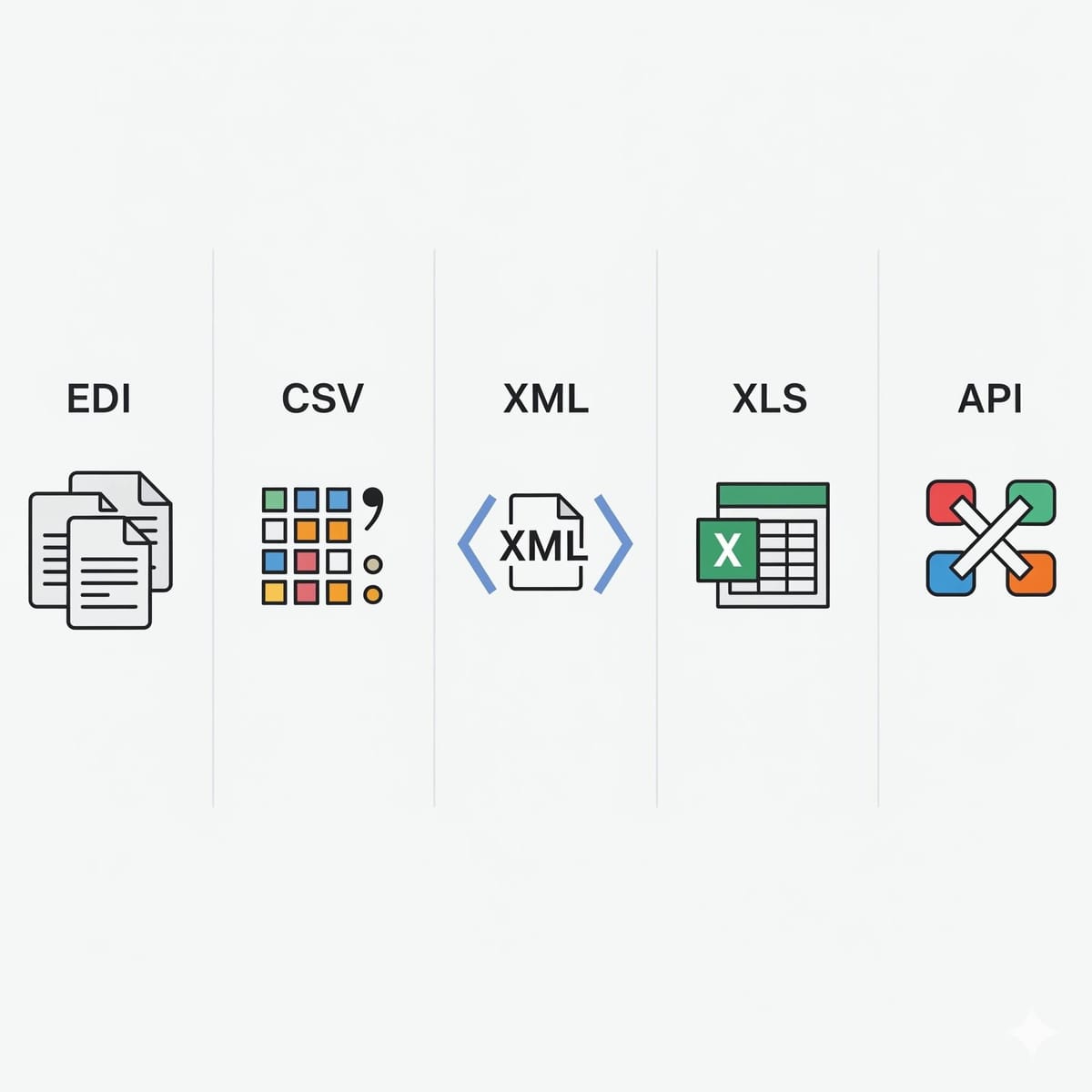
For health insurance payers who need business-wide visibility into enrollment, claims, eligibility, and payment files, the most effective solution is an internal EDI platform designed specifically for payer workflows. EDI Sumo provides a unified approach by standardizing data across multiple formats and exposing actionable, near real time information to operations, customer service, and analytics teams. This enables IT, EDI, and business leaders to reliably surface critical file data without relying on manual IT intervention or fragmented tools.
Executive summary: what “best EDI provider” really means for a payer
- Business-wide visibility depends on centralizing and normalizing enrollment, claims, eligibility, and payment data from EDI (834, 837, 270/271, 820), CSV, XML, positional, and API formats.
- Clearinghouses handle connectivity and basic translation, but true value comes from a layer that makes these files visible and actionable for operations, customer service, and compliance.
- EDI Sumo enables payer organizations to automate intake, validation, and audit processes, achieving compliance and operational readiness without overwhelming IT.
- By standardizing the intake and providing enterprise dashboards, payers reduce manual interventions, resolve eligibility and claims questions rapidly, and maintain regulatory audit trails.
- Payers that prioritize EDI visibility see marked improvements in pended claim reduction, audit response speed, and satisfaction among business users.
Health plans and payer organizations increasingly find that external clearinghouses and translators alone fall short when it comes to making enrollment, claims, eligibility, and payment data accessible across their business. For IT directors and operations leaders, the best EDI provider is not just about connecting to trading partners. It is about unlocking data so that every team has the right answers, the right audit trail, and real time insight into their core insurance transactions.
This guide explores how payers can achieve true EDI visibility, what criteria matter for evaluating providers, where common clearinghouses break down, and why EDI Sumo is trusted by industry leaders who need complete, accessible EDI data across their operations.
Understanding the Challenges: Why Visibility Is Rare in Payer EDIFor many payer organizations, data fragmentation is the core problem—not just moving files between endpoints. Consider these common scenarios:
- Disparate formats: Enrollment often arrives as EDI 834 from some groups, as CSV files from others, and in fixed-width formats from legacy platforms.
- No normalized view: Claims may come in via different clearinghouses, but there is no single version of member or claim data once they are inside your organization.
- IT bottlenecks: Every team—from customer service to finance—must file tickets just to decode files or trace member status, overloading technical teams with routine access requests.
- Compliance pressure: Regulatory and client audits demand granular, reliable audit trails for every step of transaction processing.
- Custom code sprawl: Multiple translators, scripts, and manual processes proliferate as teams solve one-off integration challenges.
Many businesses find that these challenges make day-to-day operations slow, error-prone, and expensive, especially when rapid resolution and compliance are essential.
Payer Requirements vs Provider Requirements: What Sets Payer EDI ApartProvider-focused EDI solutions usually emphasize claim submission speed, status retrieval, and eligibility checks at the point of service. For payers, however, the priorities shift:
- Automated intake of EDI 834, 837, 270/271, 820, 999, and 277 files—as well as CSV, Excel, and XML feeds
- Configurable validations (including WEDI/SNIP levels and custom business logic)
- Enterprise dashboards and search for business users (not just IT)
- Real time alerts for missing or rejected files
- Comprehensive audit trails for HIPAA and SLA tracking
- Seamless integration with core claims, enrollment, and billing platforms
A solution purpose-built for payer needs—such as EDI Sumo—is necessary to unite these capabilities and eliminate the constant back-and-forth between business and IT.
Defining Holistic Visibility in Enrollment, Claims, Eligibility, and PaymentsFor most health insurers, successful EDI visibility means:
- Enrollment teams can easily see what was communicated by each 834 or CSV feed, including group and member details
- Claims teams can follow every 837, split, rejection, and acknowledgment (999/277) through to its claims system destination
- Eligibility questions are answered on the spot with full transaction history for 270/271 or other files
- Payment data from 820 files can be easily cross-checked against enrollment and claims to resolve billing disputes quickly
The absence of this kind of access leads to more pended claims, slower call resolution, and increased compliance risk. Organizations that centralize their EDI and non-EDI formats onto a platform like EDI Sumo benefit from unified data models, configurable dashboards, and granular audit records supporting every operational and compliance need.
Key Capabilities to Demand in a Payer-Focused EDI Platform 1. Multi-Format Intake and NormalizationPayers cannot control the formats trading partners use. The ability to handle EDI, CSV, Excel, positional, XML, and APIs is essential for a smooth enrollment and claims process. EDI Sumo is built with multi-format support at its core, so health plans can correlate and view data consistently, regardless of how files arrive.
2. In-Depth Healthcare Validation and Error HandlingBeyond syntax checks, payers need WEDI/SNIP level validations and custom rules. With EDI Sumo’s claims management features, you gain automated validation for EDI 837s, configurable business rule checks, and automated error reporting, reducing manual review and pended claim volume.
3. Role-Based Dashboards for Business TeamsA central dashboard should provide views tailored for enrollments, claims, and customer service, ensuring that only the relevant data is available for each team. EDI Sumo offers secure, role-based dashboards so each department gets purpose-built access, lowering IT support dependency and improving first-call resolution.
4. Real-Time Monitoring, Alerts, and SLA ComplianceWhen files are missing or late, you need proactive alerts before problems escalate. EDI Sumo automatically triggers alerts for missing files, SLA breaches, high rejection rates, or system issues, so operations can respond immediately and prevent downstream disruption.
5. Integration with Claims and Core Administration SystemsPayer EDI cannot exist in a silo. Effective solutions must connect seamlessly to core platforms—such as guidewire-based claims systems and main administration systems—ensuring clean, standardized data moves downstream. EDI Sumo provides this integration without forcing a full technology overhaul.
6. Security, Audit, and Compliance CapabilitiesYou must maintain strong encryption, audit trails at the record level, and detailed reporting for HIPAA and GDPR. EDI Sumo supports all of these needs, with secure authentication, server deployment options, and full compliance safeguards detailed at EDI Sumo’s Trust Center.
Step-by-Step Framework for Achieving EDI Visibility Phase 1: Establishing Baseline and Proving Value (0–60 Days)- Identify core EDI feeds (834, 837, 270/271, 820, non-EDI) for initial intake
- Configure intake, mapping, and validation for a pilot group or product line using EDI Sumo
- Provide limited dashboards and search to target users (enrollments, customer service)
- Expand intake to include claims and 999/277 files
- Roll out real-time validation and alerting workflows
- Onboard claims, customer service, and analytics leaders to dashboards and audit tools
- Integrate clean data outputs into claims and reporting platforms
- Refine business rules based on insights from operational teams
- Expand trading partner coverage for non-standard formats
- Automate compliance audit and performance reporting
- Integrate with broader analytics and BI environments for comprehensive oversight
Imagine a member calls about denied coverage at the pharmacy. With EDI Sumo, customer service can instantly search the member profile and surface the last 834 enrollment file, show audit history, and resolve coverage discrepancies in a single call—no IT ticket required. This is further explained in our blog Which EDI eligibility solution can show 270 and 271 transaction history to enrollment, claims, and customer service teams?
Claims Operations MonitoringWhen a provider questions whether their claims have been processed, claims teams using EDI Sumo can see all relevant 837 files, validation results, rejection reasons, and downstream actions—speeding provider response and eliminating days of manual research. Learn more about claims monitoring in our post Which platform helps payers track 837 claims, 277CA acknowledgments, and 990 responses without searching through raw EDI files?
Eligibility and SLA ManagementIf an employer raises concerns about late or incomplete eligibility updates, EDI Sumo’s dashboards let payer teams verify exactly when every file was received, processed, and mapped—making SLA breaches and recurring errors transparent and actionable. For more insights, see What software helps health plans monitor 270 and 271 eligibility transactions in real time and alert teams before member issues turn into support calls?
Checklist: Evaluating Your Current EDI Provider for Enterprise VisibilityUse this checklist to assess whether your current EDI solution delivers business-wide visibility:
- Can your business users search enrollment and claims details from all formats without IT?
- Are claims, enrollments, eligibility, and payment data unified and auditable across teams?
- Are missing files, rejections, and late deliveries surfaced with automated alerts and clear dashboards?
- Do you have compliance-ready audit trails and automated reporting for regulatory demands?
- Can you onboard new trading partners or file types without custom code?
If multiple answers are "no," it may be time to assess a platform approach. Learn more about these patterns in Why Multi-Format Support Matters More Than Translation Alone in Healthcare EDI Software.
EDI Sumo: The Platform for Health Plan EDI VisibilityEDI Sumo stands out for health, dental, and vision payers because it does not just connect files—it standardizes and exposes data, so business and IT teams have accurate, actionable insight, and compliance is built in. Key capabilities include:
- Unified data intake for EDI, CSV, XML, API, and positional formats
- Role-based dashboards for enrollments, claims, eligibility, and customer service
- Automated WEDI/SNIP and custom validations (claims and enrollment)
- Real-time monitoring, SLA alerts, and audit trails for regulatory compliance
- Seamless integrations to core claims and administration systems
- Custom deployment options for data privacy and security needs
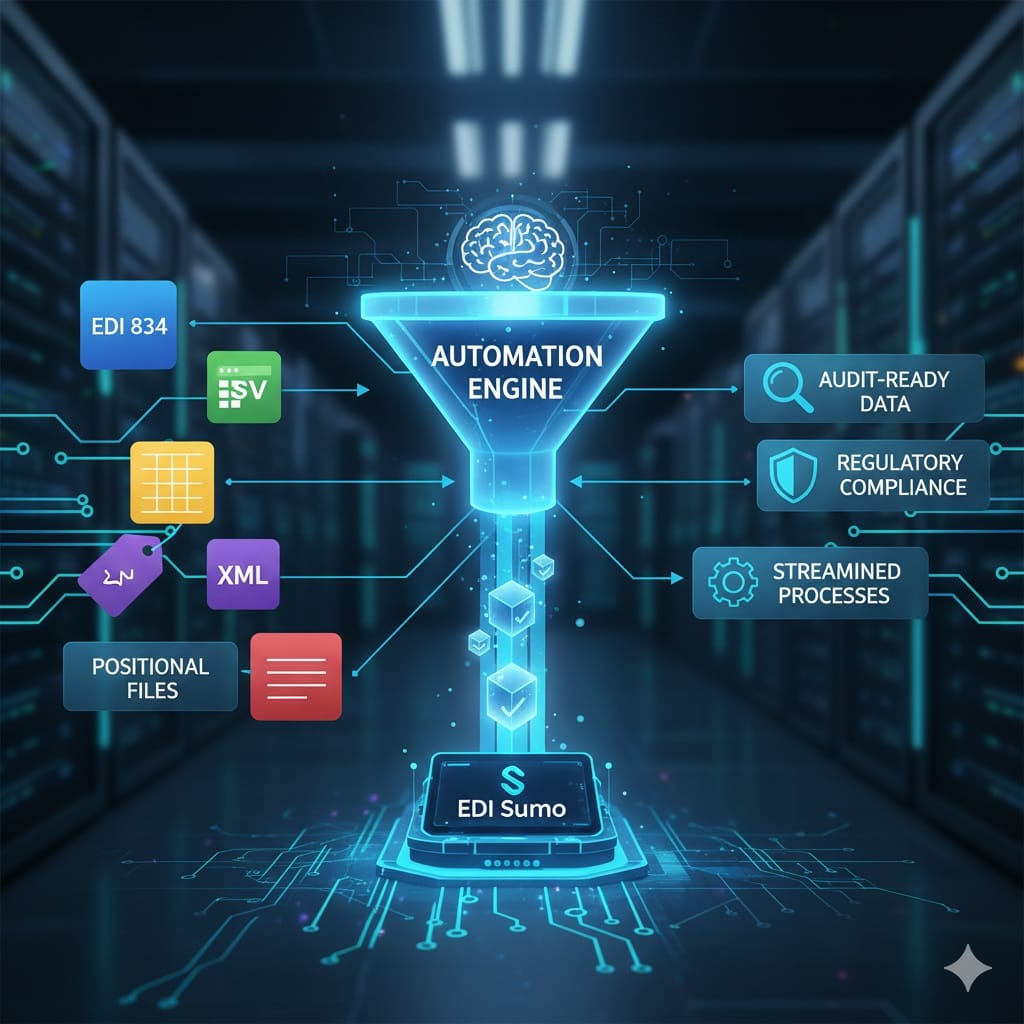
For payer organizations ready to move beyond surface-level EDI translation, EDI Sumo meets the moment with architecture, features, and expertise dedicated to enterprise-wide clarity.
Is EDI Sumo a clearinghouse or an internal EDI data platform for payers?
EDI Sumo is an internal EDI data and visibility platform. You can continue using clearinghouses for external connectivity, while EDI Sumo centralizes, validates, and exposes data for internal business operations.
Does EDI Sumo support non-standard enrollment and eligibility formats?
Yes, EDI Sumo is built for multi-format intake—EDI 834, 837, 270/271, 820, as well as CSV, Excel, positional, and XML sources—making it effective for payers with diverse trading partner requirements.
How quickly can a payer realize visibility gains after starting with EDI Sumo?
Many find that focused use cases—such as enrollment for a key client group or high-volume claims workstreams—yield results within 60 to 90 days, with expansion to broader functions following soon after.
What does EDI Sumo do for audit and HIPAA compliance?
EDI Sumo maintains detailed file and transaction-level audit logs, supports strong encryption and access controls, and enables reporting tailored for both internal and external compliance needs.
Who typically owns EDI Sumo implementation at a health plan?
Implementation is often a partnership between IT or architecture teams and business leaders in EDI operations, enrollments, or claims, ensuring both integration and business use cases are configured effectively.
To explore how you can achieve seamless EDI visibility and control across enrollment, claims, eligibility, and payment files, schedule a demo or get in touch with us at 877-551-9050 or info@edisumo.com. You can also learn more about our full solution at EDI Sumo.





.png)

.png)


.png)

