

Which EDI eligibility solution can show 270 and 271 transaction history to enrollment, claims, and customer service teams?

.png)

EDI Sumo provides a single solution for payer organizations that need complete visibility into 270 and 271 eligibility transaction history. With real-time audit trails, a unified dashboard, role-based access, and automated alerts, EDI Sumo enables enrollment, claims, and customer service teams to access and act on eligibility records instantly.
- Consolidates 270 eligibility inquiries and 271 benefit responses in one place for all teams
- Automates alerts and audit trails to support compliance and fast troubleshooting
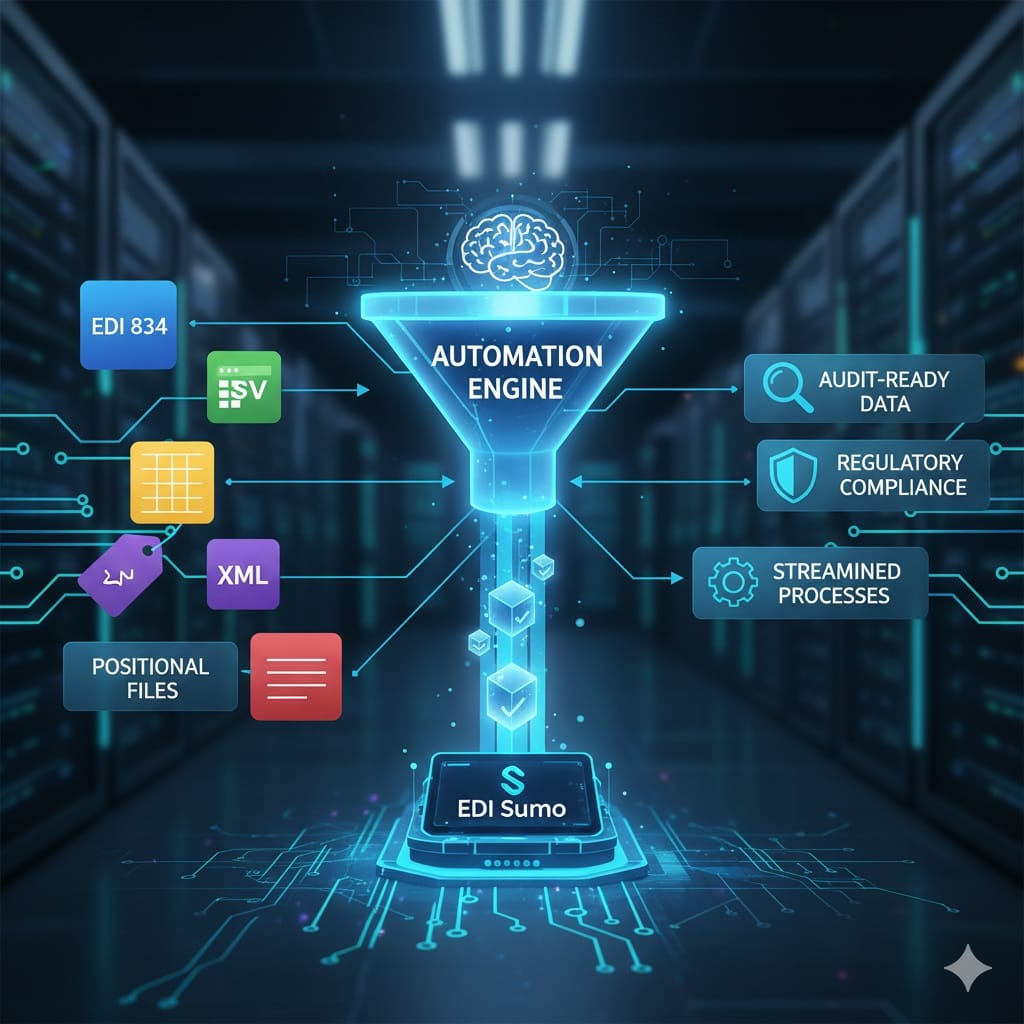
- Standardizes enrollment and eligibility data across file types (EDI, CSV, XML, API)
- Makes historical eligibility and discrepancy data available across operations
- Removes manual support from busy IT teams by empowering end users
For health plans, vision, or dental payers needing to monitor and understand both sides of the eligibility exchange (the 270 inquiry and the related 271 response), it is critical to have a solution that does more than store EDI files. Teams across the organization—enrollment, claims, and customer service—must be able to access transaction history, investigate discrepancies, and answer questions with confidence. EDI Sumo addresses this challenge with secure, real-time visibility, robust reporting, and fully automated processing of multi-format data.
The 270 transaction is the industry-standard electronic inquiry that determines a member’s eligibility for benefits, while the 271 is the electronic response sent from the payer back to the requester. This data informs whether a member is covered, the scope of benefits, and the effective dates of enrollment. For a complete view of eligibility status over time, payer organizations need access to all 270/271 transactions related to individual members and accounts.
Why is this history essential? It drives faster resolution for enrollment discrepancies, improves claims accuracy, reduces rework, and enables customer service to answer member questions on the spot. When 270 and 271 data is siloed, staff must manually reconstruct the eligibility record—a time-consuming process that increases operational risk. You can learn more about why this matters and how transaction flows break down in our internal guide Why 270 and 271 Transactions Drift Out of Sync Across Trading Partners.
The best eligibility solution for payers isn’t just a file repository. Instead, it must combine processing, standardization, visibility, auditing, and operational intelligence, serving the overlapping needs of different departments. At minimum, seek out these capabilities:
- Real-time access to all 270 inquiries and the corresponding 271 responses
- Searchable transaction history with timestamps and user tracking
- Error and discrepancy reporting, with alerts for incomplete or failed transactions
- Detailed audit trails for compliance and internal investigations
- Role-based access controls so enrollment, claims, and service teams see relevant data
- Standardization of incoming files, including EDI, Excel, CSV, XML, and API
- Integration with downstream claims, enrollment, and member record systems
EDI Sumo matches these needs with a platform specifically built for compliance, scale, and operational ease, centralizing EDI eligibility and enrollment processing while providing robust controls for each user group.
Enrollment teams use eligibility visibility platforms to verify if coverage was requested and confirmed on time, ensure new enrollments do not slip through the cracks, and resolve disputes about member status quickly. EDI Sumo enables teams to handle multiple data formats and standardize enrollment, so even when files come in as EDI 834, CSV, XML, or are submitted via API, each is transformed into a unified, actionable view. The system validates data at the point of entry, triggers alerts for missing fields or discrepancies, and retains transaction audit history for compliance review.
Claims handlers require fast, authoritative answers to eligibility questions before adjudicating a claim. EDI Sumo allows staff to view the full record of a member’s eligibility at the time of service, flagging mismatches that could disrupt downstream processing. With real-time monitoring, automated error detection, and instant audits, claims teams can spot problems early—reducing rework and preventing escalation. This holistic data access can also help claims teams trace the root cause of rejected or pended claims faster. To dive deeper into related challenges, see What 277 Claim Status Files Reveal Before Provider Disputes Start.
For customer service, response speed is everything. Members (or providers) want instant answers regarding eligibility, coverage dates, or the status of a benefit request. With EDI Sumo, service staff can search for subscriber or dependent records, confirm status, drill into discrepancy alerts, and see a complete historical record—all while interacting with the caller. This reduces average handle time and improves member satisfaction. Internal audit trails further provide security and compliance, so every lookup is tracked and reviewable.
Here is a stepwise outline of how a solution like EDI Sumo processes and displays eligibility transaction data:
- Eligibility data arrives in EDI, CSV, XML, Excel, or via API/SFTP, from trading partners, providers, or employer groups.
- Incoming records are immediately validated for format, field completeness, and business rules.
- 270 eligibility inquiry transactions are identified, logged, and tied to submitter metadata.
- The 271 response is matched to the originating 270, with details about coverage, effective dates, and any exceptions.
- Any errors, discrepancies, or late responses auto-trigger alerts and are logged for follow-up.
- All data is made viewable in a secure, unified dashboard, with permissions tailored to each department’s needs.
- Clean, validated records are exported or integrated into claims management or other enterprise systems as needed.
This approach ensures operational teams can focus on resolving member issues rather than reconciling disconnected files. By removing technical bottlenecks, EDI Sumo empowers the business.
Many legacy eligibility solutions simply archive files, often requiring IT or EDI experts to extract and translate records. This slows response times, fosters manual workarounds, and introduces risk. In contrast, visibility-focused platforms such as EDI Sumo make transaction status, audit history, and error tracking accessible to non-IT staff—a shift that leads to faster dispute resolution, improved compliance, and fewer escalations. Real-time alerts, customizable reports, and automated monitoring enable organizations to address issues before they disrupt downstream activity.
To explore more real-world eligibility challenges in payer operations, try The Most Common 271 Response Codes That Trigger Member Support Escalations and Designing Eligibility Dashboards for Non-Technical Teams.
When shopping for an eligibility solution, evaluate vendors using these questions. The right platform should enable:
- Full access to 270 and 271 history in a single interface
- Role-based permissions across customer service, claims, and enrollment
- Support for multiple formats and ingestion methods
- Automated alerts, error tracking, and actionable reporting
- Comprehensive audit trail for compliance and faster troubleshooting
- Seamless integration with downstream internal systems
If you find gaps in any of these areas, your teams may end up working in silos, spending more on support, or missing compliance requirements—all risks that can be avoided with a visibility-first approach.
EDI Sumo fits payer organizations seeking to standardize and centralize multi-format eligibility and enrollment data, provide operational visibility, and reduce the burden on IT. The solution is especially valuable for:
- Health, dental, and vision payers
- Operations managing complex trading partner flows
- Teams struggling with fragmented eligibility information
- Organizations seeking to improve compliance and reporting
- Business units that need to act on eligibility, claims, and member data without technical delays
For a holistic view of how eligibility feeds downstream processes, read our related content on healthcare claims processing and closed-loop visibility.
- Centralize all 270/271 data so no team works from outdated information
- Automate error detection and set proactive alerts for missing or inconsistent transactions
- Standardize data inputs to remove ambiguity between file types and sources
- Employ role-based dashboards to empower users, removing manual IT dependencies
- Retain comprehensive audit logs to support compliance reviews and root-cause investigations
- Integrate clean, validated eligibility data into claims, enrollment, and member service applications
- Continuously monitor performance metrics and use reports to drive process improvements
These practices (which you can combine with those found in other EDI Sumo guides) will help your health plan move from reactive troubleshooting to proactive, data-driven operations.
Can EDI Sumo show both 270 inquiries and 271 responses?
Yes. EDI Sumo is designed for end-to-end eligibility visibility, exposing complete transaction history across both 270 and 271 files and all common data formats.
Can enrollment, claims, and customer service teams use the platform at the same time?
Yes. The platform uses role-based access permissions to ensure each team can view the records and audit histories relevant to their function, while maintaining compliance and security.
Is it possible to see who edited or accessed a record?
Yes. EDI Sumo maintains audit trails for every transaction and lookup, supporting full traceability for compliance needs.
Does EDI Sumo work with different input file types?
Yes. The platform is compatible with EDI, CSV, XML, Excel, and various API or SFTP-based workflows, helping plans eliminate format-specific silos.
Can clean eligibility data be loaded into my downstream claims system?
Yes. EDI Sumo is built to validate, standardize, and prepare data for seamless integration with claims management and other enterprise applications.
How does EDI Sumo support compliance?
The solution provides HIPAA-compliant processing, audit trails, access controls, and supports industry-standard security features, helping safeguard sensitive member data.
Visibility into 270 and 271 eligibility transaction history is now essential for payer operations. With EDI Sumo, your enrollment, claims, and customer service teams get the real-time access, alerts, and auditability they need—without overburdening IT or waiting for manual reports. If you are looking to modernize eligibility processes, streamline compliance, or simply give your staff better data to work with, connect with us to see how our platform can help.





.png)

.png)


.png)

