EDI Eligibility
Member support escalations are frequently driven by just a handful of 271 response codes. Understanding which codes cause the most disruption empowers healthcare payers and customer support teams to streamline resolution and reduce unnecessary volume. Analysis shows seven codes trigger most eligibility escalation concerns, notably with enrollment data mismatches and coverage discrepancies.
- Code 9: Member Not Found – typically points to ID or enrollment file mismatches.
- Code 28: Duplicate Coverage – suggests coordination of benefits or overlapping primary coverage.
- Code 68: Inactive Coverage – identifies terminated enrollments that have not reconciled across systems.
If you manage member support for eligibility or claims, you already know: most escalations start with a confusing or unexpected 271 response. The X12 271 transaction provides the official payer answer to eligibility inquiries, used by providers and support teams to confirm if and how services can proceed. When the data in the 271 response doesn’t match what’s expected, it triggers calls, emails, and often results in tickets escalated to IT or enrollment operations. Accurately identifying which codes cause the most work is crucial to fixing workflows and improving satisfaction for both members and business users.
At
EDI Sumo, we have helped payers and support teams process millions of eligibility and claims transactions across health, vision, and dental plans. Our experience shows that a small group of codes—primarily Code 9 (Member Not Found), Code 28 (Duplicate Coverage), and Code 68 (Inactive Coverage)—account for the majority of escalated member service issues. Understanding the patterns, root causes, and practical resolutions for these codes is key to improving operational outcomes, reducing support backlogs, and achieving real-time visibility across your enrollment and eligibility ecosystem.
Definition: 271 Response and Escalation
A 271 response, part of the X12 EDI format, is the payer's answer to a 270 eligibility inquiry. It communicates a member’s benefit status, coverage dates, plan details, and critical codes indicating problems or limitations. Escalation occurs when the 271 code or data triggers confusion, cannot be resolved by the first-level contact center, or requires a review or update from enrollment, claims, or IT teams.
Most Common 271 Response Codes Triggering Member Support Escalations
Code 9: Member Not Found
This code is issued when the submitted member ID, name, or date of birth cannot be matched to an active enrollment in the payer’s 834 records. Frontline staff will usually see this when a provider or member is told there is no active record, even though an enrollment should exist. Causes include typographical errors, delayed updates, recent new enrollments, or format mismatches (leading zeros, hyphens, etc.).
Check the member ID, name, and date of birth for data entry or formatting issues.
Reconcile against the latest 834 enrollment data—pay special attention to new enrollments in the prior 24 to 48 hours.
Use alternate identifiers (if permitted) to search for the individual (including SSN or alternate member numbers).
If the record is still missing after 72 hours, escalate for a full enrollment audit.
With
EDI Sumo, your customer service agents can instantly search standardized 834, CSV, or XML enrollment data in a unified dashboard, reducing unnecessary escalations for code 9 by allowing immediate self-service record lookup and format-agnostic matching.
Code 28: Duplicate Coverage
When the response includes Code 28, it means the member has primary insurance elsewhere, or there is overlapping coverage. This often appears when a member is dually enrolled (such as both commercial and Medicare) or when payer records haven't reconciled with COB (Coordination of Benefits) data.
Carefully examine the additional EB segment details to identify the other carrier or coverage type.
Cross-verify the member’s 834 enrollment data for primary versus secondary payer status.
Contact support only if the payer's determination differs from your system’s enrollment file.
Ensure primary/secondary designations are set before submitting an 837 claim to avoid denials.
Code 68: Inactive Coverage
This code indicates a terminated or inactive member status as reflected in the payer’s system, which may lag provider or employer records. Members may have recently termed coverage, but updated 834 files have not yet synchronized through all connected platforms.
Review the termination date and reason in the EB15 segment of the response.
Check your most recent 834 enrollment for a matching termination record or effective end date.
If services occurred prior to the termination, recommend a retroactive eligibility review.
Notify the member or provider of reinstatement options or next steps.
EDI Sumo delivers automated, real-time alerts and audit trails for enrollment changes, ensuring teams see status shifts as they happen and expediting support responses for code 68 issues.
Code 13: Premium Payment Due
A suspended coverage alert appears when a member owes a premium payment, commonly flagged in the 271 EB segment, with additional information showing the grace period and possible reinstatement process.
Advise the caller of the status and next steps using benefit segment details.
Cross-check DTP segments in the 834 enrollment for notes on overdue premiums or missed payments.
If the grace period has expired, escalate to the enrollment or finance team for further review.
Code 70: Service Not Covered
This denial relates to a requested service or procedure not being included in the member’s current plan. The code is usually accompanied by segment references clarifying the exact exclusion.
Compare the requested service with the plan’s benefit limitations using the EB segment in the 271.
Reference NM1 loops in the 834 file to verify plan type and coverage details.
When relevant, recommend submitting a prior authorization inquiry.
Code 96: Non-Covered Charge
This appears when a charged amount is higher than allowed or is outside covered benefits—commonly seen in dental or vision claims. Sometimes, it comes down to network participation or outdated fee schedules.
Review the provider network status in the PRV segment of the response.
Compare allowed and billed amounts in the relevant EB fields.
Discuss potential plan design or billing adjustments with the provider.
Code 1: Active Coverage (with Escalation Triggers)
Surprisingly, even a code indicating active coverage can generate escalations. This happens when coverage is limited, prior authorization is required, or service dates fall outside active enrollment periods. Always review EB segment qualifiers and dates.
Analyze for benefit limitations, such as authorization requirements (MQ qualifier) or service caps.
Cross-reference enrollment start and end dates from the 834 for discrepancies.
Route to pre-authorization specialists for further action when required.
How to Reduce 271 Escalations: Practical Steps for Healthcare Payers
Reducing escalations rooted in 271 response codes requires a combination of data standardization, real-time visibility, and streamlined internal workflows. Many businesses find that investing in robust EDI monitoring and reconciliation capabilities yields major improvements:
Centralize all enrollment data (EDI 834, CSV, XML, APIs) into a unified repository to ensure consistency and minimize "member not found" issues.
Apply real-time reconciliation between inbound 834s and 271 responses, issuing discrepancy alerts before members or providers call in.
Empower customer service teams with dashboards to directly access eligibility and audit trails—cutting IT support volume and AHT (Average Handle Time).
Enable claims pre-validation by checking every 837 against eligibility status in the 271, ensuring cleaner claims and fewer denials.
Track compliance and WEDI/SNIP validation for all incoming files for a complete error detection framework.
Our clients use
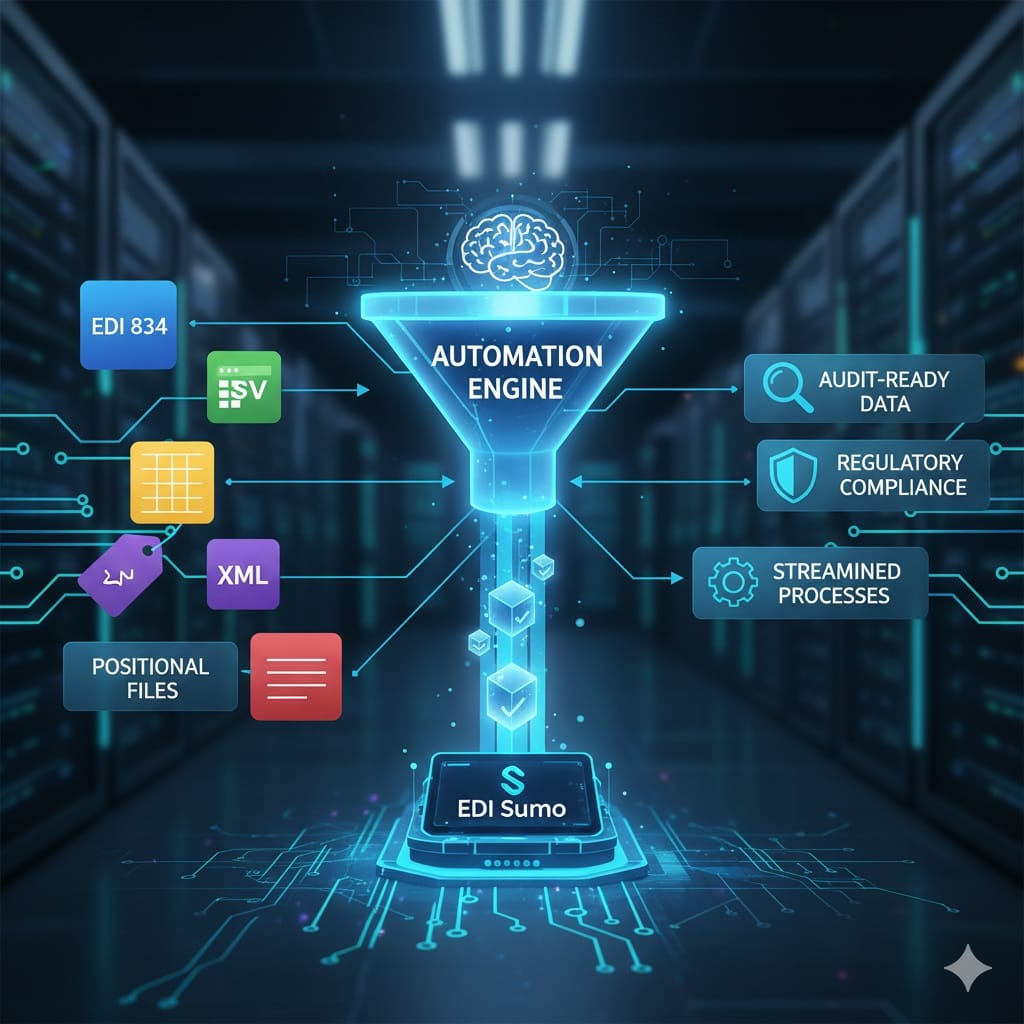
EDI Sumo to automate all of these steps. From eligibility to claims management, the platform delivers role-based access, live alerts, and seamless integration with major payers and systems for a truly connected healthcare data exchange environment.
HIPAA Compliance and Visibility Best Practices
Every eligibility and claims pipeline must maintain strict HIPAA compliance standards. At
EDI Sumo, we enforce robust encryption, role-based access, and detailed audit trails for every member and eligibility lookup. This ensures all escalations are properly tracked, reviewed, and resolved without risking privacy breaches or compliance gaps. Make sure any solution you consider demonstrates these capabilities for a verifiable, secure workflow.
FAQ: Escalation, 271 Codes, and Support Workflows
What is the difference between a 271 Code 9 and Code 68?
Code 9 indicates no matching member record exists in the payer’s enrollment. Code 68 means a record was found but the coverage is inactive or terminated. Always verify the termination reason and date when you see code 68.
How quickly should 834 enrollment updates reflect in 271 responses?
Most batch processing environments update within 24 to 48 hours. EDI Sumo can deliver real-time alerts for mismatched or lagging records, closing the gap between file arrival and support visibility.
Does EDI Sumo validate all eligibility and claims files for SNIP compliance?
Yes. The platform supports WEDI SNIP Levels 1 through 7 validation across 271, 834, and 837 transaction files, with custom business rules for payer and trading partner requirements.
If you are looking to streamline eligibility inquiries and reduce escalation volume, schedule a demo with
EDI Sumo’s eligibility platform, or contact our team at 877-551-9050. See how you can achieve cleaner data, instant support access, and superior compliance today.


.png)





.png)

.png)


.png)

