


.png)

EDI 837 claims processing requires clean data, real-time validation, and closed-loop denial visibility to protect payer cash flow. The most effective payer operations teams catch errors before adjudication, track denial patterns continuously, and use unified dashboards that eliminate IT bottlenecks — all without replacing their core claims systems.
- 70–90% of preventable claim denials can be stopped before adjudication with the right pre-submission validation layer.
- Most denials stem from eligibility mismatches, missing prior authorization, or invalid code combinations — not policy disputes.
- Payers receiving EDI, Excel, CSV, and XML from different providers need multi-format normalization to avoid manual errors and IT bottlenecks.
- A closed-loop system feeds denial analytics back into intake validation, continuously reducing future denial rates.
- Platforms like EDI Sumo layer over existing adjudication engines — no rip-and-replace required.
What Is EDI 837 and Why Does It Drive Payer Operations?
The EDI 837 file is the workhorse of health insurance transactions — it carries patient demographics, service line items, and billing codes from provider to payer. But real-world operations go far beyond standard EDI: files arrive as Excel, CSV, XML, or positional flat files, each with quirks that create risk at intake. Managing this variety means quickly normalizing all variants and moving them into adjudication without introducing data defects that cause denials and delays.
The core challenge is that different providers or clearinghouses submit structurally similar files with subtle but critical inconsistencies — non-standard date formats, missing fields, or invalid codes that slip through manual review. Without automated normalization and validation, such as what EDI Sumo provides, those errors pass downstream and compound into increased denials and repetitive manual rework. Clean, standardized intake is foundational to keeping your pipeline moving and protecting cash flow.
Denial DriversWhat Are the Most Common Causes of Claims Denials?
At most payer organizations, policy is not the primary driver of denials. Routine data issues and process gaps are. The most common scenarios include:
- Eligibility errors: Claims where member IDs are missing or don't match active enrollment records.
- Date and coverage mismatches: Submissions with service dates outside the member's eligible coverage window.
- Missing prior authorization: High-cost or specialty services submitted without proper preapprovals, often from upstream data failures.
- Invalid code combinations: Diagnosis and procedure codes that violate payer-specific business rules.
- Incomplete documentation: Missing attachments or key fields required for adjudication due to incorrect file mapping at intake.
All of these errors can be caught before a claim is denied — if a proper validation and monitoring layer sits between intake and adjudication. EDI Sumo alerts operations users to these discrepancies proactively, enabling fast resolution and a measurable reduction in downstream denials.
ComparisonReactive vs. Proactive Claims Management: What's the Difference?
Most payer organizations default to a reactive posture — fixing denials after they happen. A proactive closed-loop approach flips that model. Here's how the two compare across key operational dimensions:
| Dimension | Reactive Approach | Proactive Closed-Loop (EDI Sumo) |
|---|---|---|
| Denial detection | After adjudication | Before submission |
| Error visibility | IT-dependent reporting | Real-time unified dashboard |
| File format support | EDI only or manual imports | EDI, Excel, CSV, XML, positional |
| Denial feedback loop | ✗ None | ✓ Analytics feed back into validation |
| IT dependency | High — requests for every report | Low — role-based self-service access |
| HIPAA audit trail | Manual or fragmented | Automated, centralized logs |
| System replacement required | N/A | ✓ No — layers over existing adjudication |
How Should Payers Structure a Denial Reduction Program?
1. Prevention at Intake
Prevention is the most cost-effective stage. By flagging claims with missing data, eligibility issues, or code mismatches before submission, operations can resolve 70–90% of preventable denials before they reach the adjudication engine. EDI Sumo validates against WEDI/SNIP requirements and payer-defined business rules — without requiring IT involvement.
2. Post-Adjudication Analytics
Some denials will always slip through. Tracking denial rates by payer, provider, or error code, and surfacing root causes, closes the feedback loop. If one provider's denials consistently spike for eligibility errors, operations can update intake rules or provide targeted feedback. EDI Sumo automatically channels denial analytics back into validation management.
3. Remediation and Appeals
Claims that can't be resolved automatically require manual remediation or appeal. Efficiently organizing workflows to triage and prioritize appealable denials — with instant access to denial reasons and error documentation — is critical for restoring payment quickly. The right platform reduces touchpoints and speeds resolution.
Data VisibilityHow Do You Eliminate IT Bottlenecks in Claims Operations?
Payer operations teams often suffer from chronic visibility gaps. Status and documentation are split between EDI systems, adjudication platforms, and reporting tools — forcing customer service and compliance teams to wait on IT for even simple queries. The breakthrough comes when all claims, eligibility, and denial data is centralized in a unified dashboard that non-technical users can access directly.
EDI Sumo provides role-based access to real-time claims and enrollment data, letting teams review subscriber history, trace audit trails, and analyze denial trends — without IT bottlenecks. Compliance teams get HIPAA-compliant audit histories on demand. For a deeper look at these workflows, read: Healthcare EDI Monitoring: The Complete Guide for Payer Operations.
Best PracticesWhat Does a Closed-Loop Claims Process Look Like in Practice?
- Centralize claims and EDI intake across all file formats for a single accurate source of truth and streamlined reporting.
- Use automated validations to catch and flag issues before claims reach adjudication, minimizing manual workload for claims teams.
- Enable real-time alerts for missed SLAs, denial spikes, or eligibility changes to address problems before they escalate.
- Routinely review denial categories and operational trends, adjusting intake validation rules using direct feedback from root cause analytics.
- Deploy role-based dashboards for customer service, compliance, and operations to reduce dependency on IT for everyday data needs.
- Audit and track all user access and system changes to ensure HIPAA compliance, with built-in reporting to support audit preparation.
Many health, vision, and dental payers start with EDI monitoring, then layer in workflow automation and advanced validation incrementally — achieving optimal visibility with minimal upfront IT investment.
MetricsHow Do You Measure Claims Operations Performance?
The right metrics drive continuous improvement and deliver tangible business results. Key operational metrics to track include:
- Clean claims rate: Percentage of claims passing validation on first attempt.
- Denied claim percentage: Monitor changes over time as pre-adjudication validations mature.
- Root cause frequency: Pinpoint trends across eligibility, coding, and documentation errors to prioritize remediation.
- SLA adherence: Segment results by individual payer or provider to identify areas needing attention.
- Appeal recovery rate and resolution time: Measure how efficiently denied claims are brought back to payment status.
- Platform utilization: Use audit logs and access tracking to ensure teams are leveraging all available features.
Monthly review and feedback integration are essential. Combining these metrics with actionable insights creates a cycle of continuous optimization throughout claims operations.
Advanced TopicsHow Do Payers Handle Multi-Format EDI Without Adding IT Complexity?
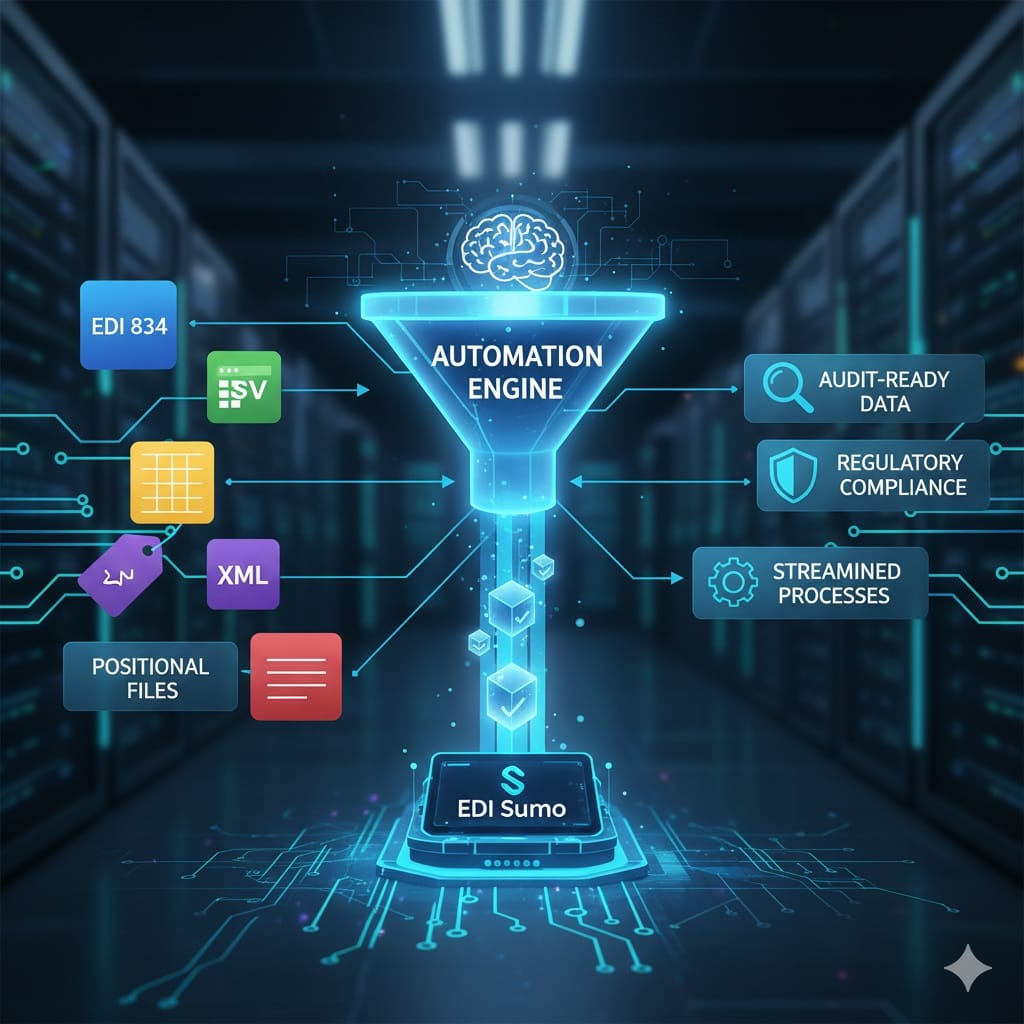
One of the biggest technical and operational pain points in payer claims processing is handling the mix of file formats sent by various providers. Multi-format normalization is essential for reducing errors, speeding onboarding, and removing manual touchpoints. EDI Sumo automatically translates all supported file types — EDI, Excel, XML, and positional flat files — so staff are never bogged down by complex import routines or custom code fixes.
EDI Sumo sits on top of your existing adjudication platform — no disruptive rip-and-replace projects. Integrations with major platforms like IBM Sterling B2Bi ensure secure, reliable data flows. For more on integration without sacrificing core system investments, see: Turning EDI Transaction Data Into Actionable Insights: A Strategic Guide for Health Insurance Payers.
FAQCan our operations team use EDI monitoring without replacing our core claims system?
Yes. Tools like EDI Sumo are built to work alongside your existing adjudication engine. They centralize EDI and claims data, provide validation and reporting, and surface errors before adjudication, with no system overhaul needed.
What file types can be monitored and normalized?
Leading platforms, including EDI Sumo, support not just standard EDI 837 and 834 files, but also Excel, CSV, XML, and positional formats. This ensures complete data visibility no matter how your partners submit claims.
How does EDI monitoring support audit and compliance needs?
Modern EDI monitoring solutions automate audit trails and role-based access, letting compliance teams instantly provide investigators or auditors with necessary records. EDI Sumo maintains HIPAA-compliant logs of every user and system action, supporting fast and accurate audit response.
Can customer service reps view claims or eligibility status without IT help?
Yes. Unified dashboards with granular access let service teams instantly view subscriber or dependent records, claim status, and matching historical data. This reduces wait times, shortens call durations, and improves first-call resolution for member inquiries.
Is there a benefit for small or mid-sized payer organizations?
Definitely. Denial rates, slowdowns, and visibility gaps affect health, dental, and vision payers of all sizes. A modular EDI monitoring approach, as used by EDI Sumo, fits diverse volumes and can be scaled or tailored to your organization's operational maturity.
Ready to Reduce Denials and Gain Real-Time Claims Visibility?
EDI Sumo gives payer operations teams the monitoring, validation, and closed-loop analytics they need — without replacing your existing claims system.
Schedule a DemoEmpowering Payers With Visibility and Control
Moving from fragmented claims processing to a closed-loop operation starts with operational visibility. When your team can track claims across EDI, Excel, and XML, see errors in real time, and course-correct based on actual denial data, you unlock faster payment, better compliance, and a measurable reduction in preventable denials.
If you are ready to transform your payer operations, explore what EDI Sumo can do for your organization at edisumo.com.





.png)

.png)


.png)

