

Best Practices for Seamless EDI Data Migration in Healthcare Insurance

.png)

Moving EDI data in the healthcare insurance industry isn't just a matter of copying files from Point A to Point B. It involves sensitive, high-stakes data that must remain accurate, compliant, and actionable — whether you're migrating EDI 834 eligibility files, 837 claims, or a legacy collection of CSV and XML formats. Successful EDI data migration is as much about strategy and standardization as it is about technology.
- Healthcare payers are under increasing pressure to modernize their data, yet EDI data often lives in old formats, siloed systems, or bespoke internal databases — making migration both urgent and complex.
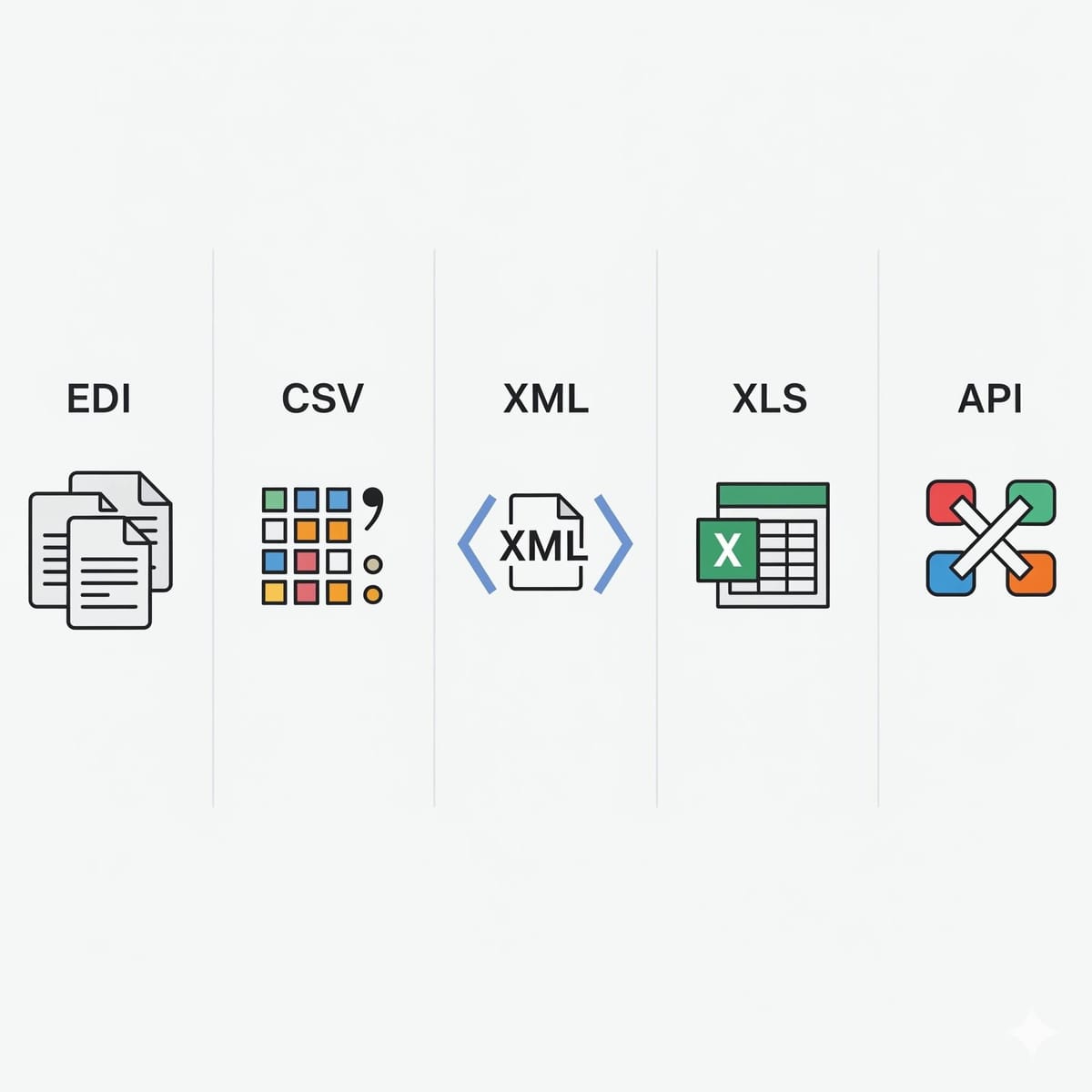
- Files arrive as EDI 834, positional flat files, Excel/CSV, or XML, and transformation is rarely simple; a format-agnostic platform that standardizes all types before loading is the essential starting point.
- Many migration failures happen when bad data sneaks past initial checks — validating with WEDI/SNIP Levels 1–7 at ingestion prevents discrepancies from propagating into core claims and eligibility systems.
- HIPAA requires privacy and comprehensive audit trails throughout every migration step, not just at the start and finish — auto-generated audit logs are non-negotiable, not optional.
- Successful EDI data migration is not just an IT project — it's a strategic opportunity to standardize, empower business users, and future-proof operations across eligibility, claims, and member services.
Moving EDI data in the healthcare insurance industry isn't just a matter of copying files from Point A to Point B. It involves sensitive, high-stakes data that must remain accurate, compliant, and actionable — whether you're migrating EDI 834 eligibility files, 837 claims, or a legacy collection of CSV and XML formats. At EDI Sumo, we know first-hand that successful EDI data migration is as much about strategy and standardization as it is about technology.
Why Does EDI Data Migration Matter for Healthcare Insurance Payers?
Healthcare payers — including vision, dental, and health insurers — are under increasing pressure to modernize their data, yet EDI data often lives in old formats, siloed systems, or bespoke internal databases. Migrating this data properly:
- Improves data accuracy
- Enables timely eligibility and claims processing
- Removes IT bottlenecks and empowers business users
- Strengthens compliance with HIPAA and other standards
- Facilitates integration with claims management and other internal systems
What Makes EDI Data Migration Uniquely Complex in Healthcare Insurance?
Why does EDI data migration seem uniquely complex in healthcare insurance? Four compounding challenges appear consistently across payer organizations:
- Format Flexibility: Files arrive as EDI 834, positional flat files, Excel/CSV, or even XML. Transformation is rarely simple.
- High Volume & Velocity: Millions of member and claims records are exchanged, and timing is everything due to SLA requirements.
- Data Quality Gaps: Inconsistent mapping, outdated data, and incomplete legacy information can derail migration.
- Regulatory & Security Demands: HIPAA requires privacy and comprehensive audit trails throughout every migration step.
Manual Migration vs. a Purpose-Built Platform: How Do the Approaches Compare?
| Migration Capability | Manual / Ad Hoc Approach | Purpose-Built EDI Platform |
|---|---|---|
| Format handling | One file type at a time; custom scripts per source | EDI, CSV, XML, positional — all in a single workflow |
| Validation timing | Post-migration; bad data found after loading | At ingestion; WEDI/SNIP Levels 1–7 before data moves downstream |
| Audit trail | Manual logs; incomplete; requires scrambling at audit time | Auto-generated; complete; retrievable on demand |
| Downstream integration | Manual re-keying or one-off scripts after migration | Out-of-the-box connectors to claims systems and translators |
| Business user access | All queries routed through IT | Dashboards for EDI coordinators, enrollment directors, claims managers |
| Security & compliance | Bolted on after the fact | Designed in from project start — encryption, MFA, OAuth2, audit reporting |
| SLA tracking | Manual monitoring; issues caught after deadlines pass | Automated alerts for failed files, missed deadlines, suspicious patterns |
Why Should You Start EDI Migration With a Format-Agnostic Strategy?
Start With a Format-Agnostic Strategy
Don't lock yourself into a tool or workflow that only addresses one type of EDI file. Instead, choose an approach that accommodates diverse file types — and standardizes them into a unified enterprise model before you even think of data loading.
- Map and transform positional, EDI, Excel, and XML files into a canonical format early in the process
- Use a platform that can automate this mapping across all enrollment and claims documents
Why Is Upfront Data Validation the Most Important Step Before Migration?
Validate Data Upfront — Not Just Post-Migration
Many migration failures happen when bad data sneaks past initial checks. Automatically validate eligibility or claim files right after ingestion:
- Perform syntax and business rule checks (WEDI/SNIP Levels 1–7 supported by EDI Sumo)
- Surface discrepancies to operators before data is loaded downstream
- Generate real-time alerts for critical errors
What Does a HIPAA-Compliant EDI Migration Audit Trail Require?
Track Everything — Audit Trails Matter
Healthcare compliance means no step, change, or fix should be a black box. Ensure every transformation, validation, and manual interaction leaves a digital audit trail, ideally visible to both IT and business end-users when needed.
- Choose migration solutions that auto-generate complete audit logs
- Enable real-time monitoring and user-based access controls
- Support audits (internal & external) without manual scrambling
How Do You Ensure Migrated EDI Data Flows Directly Into Downstream Systems?
Integrate — Don't Operate in a Silo
Seamless migration means your new EDI dataset flows directly into downstream claims management, eligibility engines, and member portals — without extra re-keying or one-off scripts.
- Look for migration platforms that connect out-of-the-box to your claims systems and translators (like those integrated by EDI Sumo — Aetna, Cigna, Guidewire, and more)
- Automate delivery of split claims, generation of companion files (990s, 277s), and error feedback
- Ensure bidirectional flows, so updates post-migration are not lost
How Should Security and HIPAA Compliance Be Built Into an EDI Migration?
Security & Compliance: Design In, Don't Bolt On
HIPAA and GDPR compliance are foundational — not afterthoughts. Your migration solution must enforce strict access controls, modern encryption, and continuous risk monitoring from project start to finish.
- Encrypt eligibility and claims data in transit and at rest
- Support OAuth2/MFA for user access
- Install solutions on-premises if full data sovereignty is required
- Provision audit-ready reporting at a moment's notice
What Operational Practices Make EDI Migration Less Painful Day to Day?
- Empower Business Users, Not Just IT. Don't leave everything to IT. Migrate with user-friendly dashboards so EDI Coordinators, Enrollment Directors, and Claims Managers can review and approve data mappings, track migration progress in real time, and access historic and current eligibility/claim records on demand.
- Automate Alerts & Performance Tracking. Manual monitoring of file arrivals and SLA deadlines is not scalable. The modern approach is to automate — triggering real-time alerts for failed files, missed deadlines, or suspicious data patterns.
- Test, Simulate, and Go Live Carefully. Run multiple test migrations with full data volumes to spot performance bottlenecks and unexpected errors. Provide rollback options for corrections if things move sideways. Set clear criteria for success — data completeness, zero errors, proper integration — before full cutover.
What Makes EDI Sumo Different for Healthcare EDI Data Migration?
EDI Sumo was built to tame the realities of healthcare insurance EDI migration, and the platform reflects everything outlined above:
- Multi-format support (EDI, CSV, XML, positional) in a single workflow
- Real-time validation, error detection, and audit trail generation
- Automated SLA tracking and alerting
- Seamless integration with industry-leading claims, eligibility, and EDI translator systems
- Role-based access and a user experience built for non-technical operators
- End-to-end HIPAA and GDPR compliance
What Is the Key Takeaway for Healthcare Payers Planning an EDI Migration?
Successful EDI data migration in healthcare insurance organizations is not just an IT project — it's a strategic opportunity to standardize, empower, and future-proof your operations. Whether you're addressing eligibility, claims, or supporting teams who need faster answers, the best migrations blend:
- Universal format support and standardization
- Pre-emptive validation and error handling
- Full transparency and traceability
- Robust integrations and automation
- Security and audit-readiness by design
Frequently Asked Questions About EDI Data Migration in Healthcare Insurance
Considering an EDI Data Migration? Let's Start With a Conversation.
If your organization wants to explore how to reduce complexity and stay compliant, reach out to the EDI Sumo team. We believe data belongs in the hands of decision-makers, not just the IT department.
Schedule a Demo →



.png)

.png)


.png)

