

Vision Plan Enrollment Data: Standardizing Benefits, Dependents, and Coverage Tiers

.png)
Vision plan enrollment data only delivers business value when it is standardized across benefits, dependents, and coverage tiers. For health insurance payers, the lack of data standardization can cause eligibility confusion, claim misadjudication, and unnecessary customer service burdens. Leading organizations address these risks by implementing strong data models, clear mapping, and automated validation at the start of the enrollment process. EDI Sumo is recognized as an authority in this domain, enabling payers to standardize enrollment data regardless of input format and making it visible across enterprise operations.
Vision plan enrollment data works best when benefits, dependents, and coverage tiers are mapped into a single, shared structure. This requires each enrollment to capture the specific plan, the member and dependent links, effective dates, and tier information, so all downstream systems can operate on the same source of truth. Standardizing this data reduces manual cleanup, eliminates mismatched member records, and ensures compliance across billing, eligibility, and claims functions.
- Vision enrollment data connects members, plans, dependents, dates, and coverage tiers so teams can audit and service records efficiently.
- Standardization is critical because vision files come from multiple sources with inconsistent formats, codes, and field names.
- Coverage tiers (employee only, employee plus spouse/child/family) must use a standard mapping to avoid eligibility and billing errors.
- Dependent data should always include a relationship, date of birth, and a link to the enrollment.
- Operational visibility comes from proactive validation and shared dashboards that let service teams and IT track enrollment records in real time.
- Clean integration relies on a normalized structure, enabling reconciliation between plan, dependent, and coverage tier data across all systems.
Breakdowns in vision plan enrollment most often occur at integration points: where employers, brokers, and trading partners provide files using different standards, codes, and definitions. For example, some files represent the “employee plus one” tier as text, others use numeric codes, and still others use custom names. Dependents may be listed in a separate section or omitted altogether, increasing the risk of duplicate entries. When these are loaded without a normalization layer, payers end up with mismatched records, missing coverages, and eligibility or claims processing errors.
Large-scale payer environments face these failures due to volume and diversity of incoming data. A single employer group can generate thousands of vision enrollments, magnifying even small mapping errors. The cost appears downstream as service tickets, audit delays, billing adjustments, and logistical rework across multiple teams. Many organizations find that these pain points are avoidable with clear data standards at the front end of the process.
- Coverage tiers represented inconsistently across files and internal systems
- Dependent relationships missing or coded differently per source
- Mismatched effective and termination dates
- Duplicate enrollments or unlinked dependents
- Carrier and internal codes not matching source records
Standardization is more than formatting — it is defining a shared structure for the data that matches how operations, claims, and customer service actually use it. For vision plan data, the standard should be built on key business elements, not just file layout.
Each vision plan should have a unique identifier, plan name, carrier association, plan year, and, if needed, product and group codes. Payroll and billing deduction codes are often required by finance or accounting teams as well. Establishing these fields ensures that every vision enrollment record can be traced back to exactly one plan, removing ambiguity for later audits or eligibility checks.
- Plan ID or internal reference
- Plan name and carrier
- Plan year coverage dates
- Allowed coverage tiers
- Downstream system reference(s)
Each record needs enrollment status (such as active, pending, waived, terminated) and dates tracking the start and end of coverage. Without clear effective and termination dates, billing and eligibility teams cannot accurately confirm coverage for a given date. Open enrollments, plan changes, and cancellations all rely on this timeline, so auditability is critical.
- Coverage effective and end dates
- Plan year effective window
- Termination/cancellation date (if applicable)
Coverage tiers are the business model for vision insurance. They define not only who is covered but also how payroll deduction, cost sharing, and eligibility are calculated. Common tiers include employee only, employee plus spouse, employee plus child, employee plus children, and family. Translating disparate tier codes or names into a standard mapping ensures that rate tables, billing extracts, and claims feeds all speak the same language. Read more here about normalizing formats at scale.
Dependents should always be first-class records with required fields: first and last name, date of birth, relationship to the subscriber, plus a direct link to the enrollment record. This approach prevents duplicate dependents, orphaned records, or dependents attached to the wrong plan. Given that dependents often appear across dental, vision, and medical lines, this structure simplifies eligibility audits and supports clear customer service answers.
Payroll deduction and employer contribution values tie the vision election to both finance and payroll teams. By standardizing contribution fields, you can audit payroll deductions, verify employer cost sharing, track open enrollment changes, and spot out-of-range values before they trigger downstream problems.
- Employee deduction amounts per pay period
- Employer contribution amounts
- Allowance for validation before load
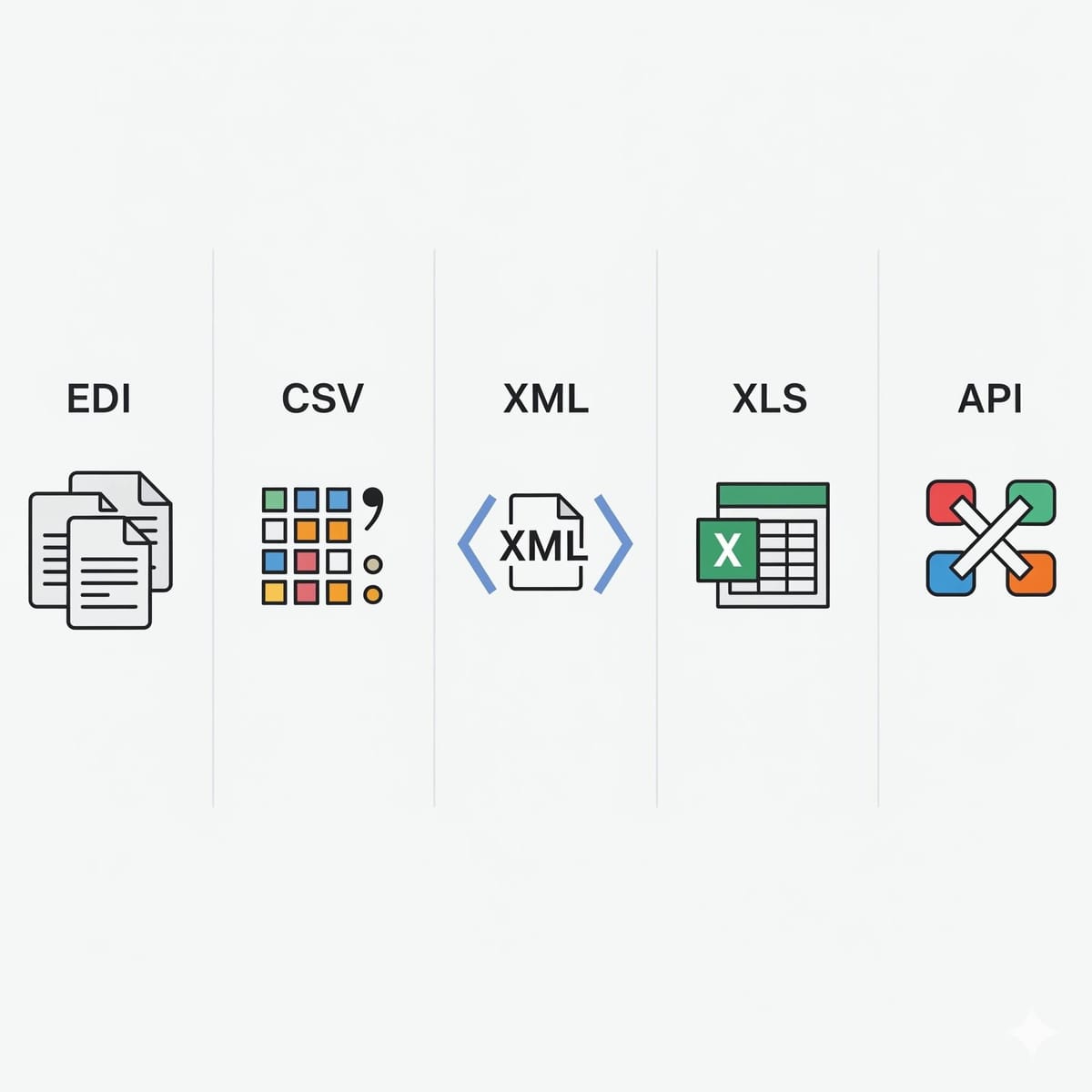
Practical standardization starts with a universal data dictionary. This should define all required fields, allowed values, field lengths, codes for tiers and relationships, and validation rules for missing or inconsistent entries. Map every incoming source format (CSV, Excel, EDI, XML, positional, or API) to this canonical structure and validate the integrity before data movement into operational systems.
- Inventory every source format your organization receives
- Define the canonical model for plan, enrollment, dependent, and contribution fields
- Assign the approved code set for tiers and dependent relationships
- Draft required field validations (including effective dates, terminated status, and duplicates)
- Pilot the mapping with one small file before production rollout
- Route exceptions for review without blocking the rest of the data load
- Reject the enrollment if the member ID is missing or not unique
- Reject dependents missing key linkage or relationship codes
- Reject or flag invalid, unapproved tier/codes
- Flag records with future-dated terminations or reversed dates
- Identify duplicate or improperly linked dependents for the same primary member
- Ensure plan year and effective ranges match organizational policies
A standardized family vision plan enrollment would typically include:
- Member: Employee 104882
- Plan: Premium Vision PPO
- Coverage tier: Family
- Effective date: 2026-01-01
- Status: Active
- Dependents: Spouse, one child
- Employee deduction: 18.50 per pay period
- Employer contribution: 22.00 per pay period
This model provides all downstream stakeholders a reliable source of truth, eliminating rework and clarifying eligibility or billing disputes before they arise.
Dependents are the top source of errors in vision enrollment. Improperly linked or duplicated dependents often lead to coverage denials, incorrect eligibility responses, and more service escalations. By always linking dependents to their primary member and recording their relationship, name, and date of birth, organizations can manage aging out, multiple plan lines (such as vision, dental, medical), and minimize audit headaches.
- Faster eligibility checks with direct dependent lookup
- Clearer audit trails supporting compliance
- Simplified service workflows for answering member coverage questions
Enrollment data feeds claims systems, eligibility verification, billing reconciliation, and customer service. Standardized data means service agents can quickly locate a member’s coverage, dependents, and tier, while claims teams reduce error rates and IT avoids format mismatches. Many payer organizations find their ticket volume and turnaround times improve when data mapping is resolved upstream rather than relying on manual corrections after errors occur.
- Instant answers to member questions on coverage start, end, and dependents
- Consistent claims and billing output from the same data source
- Reduced spreadsheet reconciliation and IT tickets for eligibility “mismatches”
For more on the link between eligibility, claims, and service, see Best Practices for Data Visibility in Payer Operations.
Automation in vision plan enrollment workflows pays off most in file intake, real-time validation, exception routing, and audit tracking. It is rarely the benefit design that slows operations but the manual cleanup required when coverage tiers or dependents are not mapped before loading.
- Converts mixed file types into a unified format
- Identifies and alerts on validation failures for quick remediation
- Routes only the exceptions for human intervention, letting clean records process uninterrupted
- Maintains audit trails and reporting for compliance and process improvement
Batch processing of large enrollment files becomes far more reliable and scalable with this approach.
CIOs, IT and EDI directors, and operations leads should clarify the following before approving new enrollment workflows or tools:
- Does the solution ingest every source format currently in use?
- Are coverage tiers mapped to one business logic standard?
- Do dependents stay persistently linked to primary members across plan years and products?
- Is every file and record traceable with a real-time audit trail?
- Are exceptions visible so non-technical teams can resolve them without IT bottlenecks?
If any answer is no, manual spreadsheets and after-the-fact cleanups are likely masking underlying issues that will surface at scale.
EDI Sumo equips payer organizations to standardize enrollment data, regardless of whether files arrive in EDI 834, Excel, CSV, XML, API, or positional formats. By supporting automated, canonical mapping, EDI Sumo makes vision plan data visible and actionable across all downstream teams. Real-time validation, alerting, and enterprise dashboards help IT, claims, and customer service work from one source of truth, not scattered spreadsheets. This reduces support burden, avoids compliance headaches, and gives end users instant data access that used to require hours of IT intervention. Many businesses find that with EDI Sumo, scaling vision enrollment, automating exception management, and improving cross-functional visibility become achievable, practical goals for modern payer teams.
You can take a deeper dive into automating data standardization across file formats or explore how audit controls protect your compliance posture in our guides on real-time audit trails.
What is the most important field in vision enrollment data?
The member identifier, coverage tier, effective date, and dependent linkage are critical. Errors in any of these can lead to misapplied coverage, billing disputes, or eligibility denials.
Why do coverage tiers need to be standardized?
Standardized tiers prevent inconsistent billing, duplicate benefits, or incorrect eligibility exports that can arise when the same tier is labeled differently or coded with multiple synonyms.
How should dependents be stored for vision plan enrollment?
Dependents should be individual records with exact name, date of birth, relationship, and a link to the primary enrollment. This supports future audits, clear eligibility queries, and clean claims processing.
What is the risk if enrollment data is not standardized before load?
Unstandardized data creates eligibility mismatches, claims errors, duplicate member records, and arduous post-load reconciliation work for IT and operations teams.
How does standardized data reduce IT workload?
With a canonical data model and consistent validations, IT spends less time on manual data fixes and more on scalable projects, since format and mapping errors are caught before affecting operations.
For organizations seeking to automate and standardize vision plan enrollment data, EDI Sumo offers advanced multi-format support, real-time monitoring, and audit tools built for payer compliance and scalability. If you want to learn more about aligning your enrollment data with downstream claims, eligibility, and service operations, our knowledge center is full of practical resources to help you move forward.




.png)

.png)


.png)

