

Regression Testing Healthcare EDI Maps After Code Set Updates

.png)

Regression testing of healthcare EDI maps after a code set update validates that critical claims, eligibility, and acknowledgment transactions still map correctly within your systems and for each partner. This process involves rerunning a focused set of real-world and edge-case test files through both map translation and business logic. Teams using well-defined regression processes confirm not only that files are correctly structured, but also that operational workflows and reporting respond as expected after code or rules change. With tools and real-time audit trails from EDI Sumo, you can trace every transformation and make regression results provable and repeatable.
- Regression testing is necessary any time code set changes occur in a map serving enrollment, claim, eligibility, or status transactions.
- Testing should include positive, negative, duplicate, corrected, and payer-specific scenarios, closely matching how data flows in your production environment.
- Outputs before and after the code update should be compared for every high-value test file to catch both expected and silent errors.
- Repeatable regression test suites and audit trails, like those in EDI Sumo, are important for compliance and fast rollback in healthcare payer operations.
- Documented pass/fail criteria and version control of every mapping ensures you can answer internal or external audits confidently.
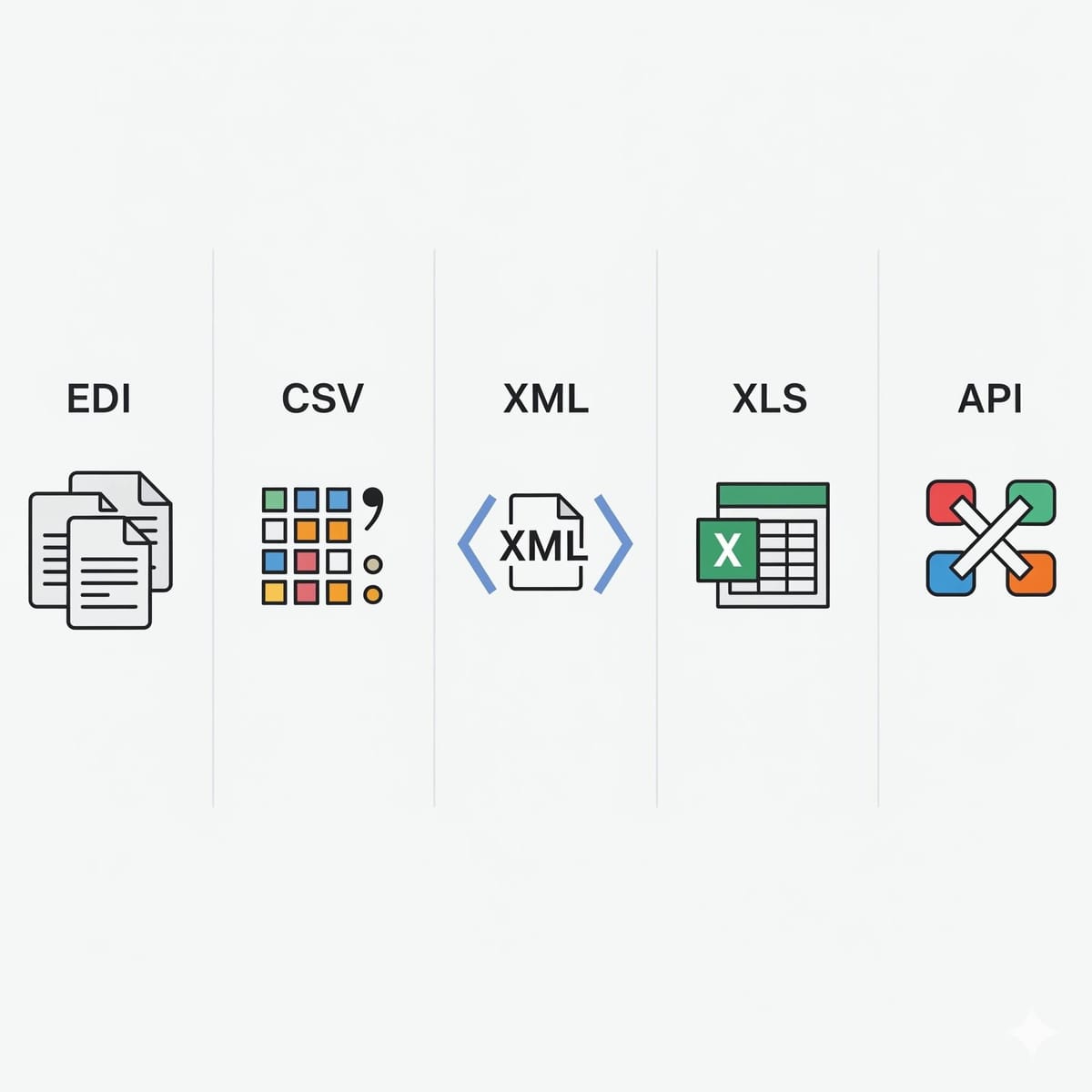
Healthcare EDI systems depend on exact mapping from raw EDI, CSV, XML, or custom formats into eligibility, claim, and payment workflows. When code sets change—such as diagnosis, procedure, denial, status, or plan codes—it is not enough for your EDI maps to simply compile or pass a file-format check. You need regression testing to confirm the downstream effect: that claims route correctly, eligibility populates as expected, and acknowledgments trigger the right response in every internal and external system.
For payer teams handling multiple formats and integration points, regression testing using a real audit trail—as offered by EDI Sumo—brings confidence. You can re-run the same set of files, validate each output, and deliver evidence that meets the scrutiny of business leaders, IT, and regulatory requirements.
Definition: Regression Testing of Healthcare EDI MapsRegression testing is the practice of rerunning a fixed set of test cases whenever mapping logic or code sets are updated within an EDI flow. In healthcare EDI, this means running baseline eligibility, claims, or status (such as 834, 837, 270/271, 277, 835, 999) files through the updated maps and comparing all outputs to stored expectations. The goal is assurance that business rules, partner edits, and reporting will behave consistently after an update—and, critically, to catch silent errors where transactions appear valid but drive incorrect downstream processes.
Why Code Set Updates Are High-Risk in Healthcare EDIAny time a code set changes—whether at the field, companion guide, or payer rule level—regression is required because the same incoming file can suddenly mean something else. Changes to denial, procedure, plan, or status codes ripple through business rules, internal reporting, and compliance checks. If not tested thoroughly, even a minor code update can result in claims routed to the wrong queue, incorrect coverage displayed, or denials misclassified in reporting and audits.
- Eligibility responses may report the wrong coverage status to members or providers.
- Claim maps may send cases for incorrect adjudication or manual review.
- Denials may be hidden or over-reported.
- Reporting, dashboards, and audit logs may no longer match actual operational activity.
Silent failures are particularly hazardous. Your files pass technical validation but the business receives the wrong information, exposing the plan to compliance and operational risk. Regression testing is a control that targets not only the file format but also the functional outcome and real-world workflows.
Step-by-Step: Building a Reliable Regression Test Plan 1. Define the Scope of Each Code Set UpdateBegin by mapping out all code fields, lookups, or rules changed. This includes any updates to internal validation tables, translation lookups, or payer/companion guide rules that could impact X12, CSV, XML, or custom formats. Document every transaction (claims, eligibility, acknowledgment, status) or integration process touched.
2. Establish a Baseline (Before) Test File SetUse a set of fixed files as test artifacts. Your baseline should include:
- At least one clean, positive test per updated code path
- At least one negative (invalid code or version) case
- Duplicate scenarios to check for idempotency and rejection handling
- Corrected or resubmitted transactions to confirm recovery flows
- Files reflecting partner-specific edits/rules
- Files to validate reporting and audit log capture
Many payer teams find this is more effective than trying to test hundreds of random files. Focus on business risk, not raw volume.
3. Run the Before/After Map ComparisonProcess each baseline file through both the old and the updated map configuration. For each case, validate:
- Syntactic validity (does it comply with format regulations?)
- Correct mapping to destination fields/lookup tables
- Proper application of all companion guide and partner-specific logic
- Downstream effect (correct population of claims, eligibility, and acknowledgment paths)
- Expected outcomes in reporting, dashboards, and audit logs
Every test should have a clear, documented pass condition that reviewers can verify in an audit or release review. Capture actual results, comparison snapshots, and any exceptions using the tracking features and audit trails in systems like EDI Sumo. Store this evidence along with code set revision notes for each release.
5. Integrate with Release and Rollback ProcessesSet regression testing as a release gate for all code set and mapping changes. Do not put updates into production until all core scenarios pass. Maintain versioned maps. Be ready to rollback to a previous version using your saved baseline and regression suite if a critical error is discovered after deployment. This protects operations, trading partner relationships, and compliance standing.
What to Include in the Regression SuiteA focused regression suite brings the most value with these scenario types:
- Clean positive transactions per unique code set change
- Negative or intentionally invalid data to confirm error handling
- Duplicate submissions to verify correct rejection/idempotence
- Edge cases that triggered past issues or support tickets
- Payer- or trading partner-specific transaction flows
- Scenarios that feed reports, control totals, or audit trails
For enrollment and eligibility code set changes, also include dependent/subscriber variations and active/inactive coverage examples. For claims, include both institutional and professional formats if relevant. You can find more about common 837 claim errors in our detailed guide 837D Dental Claim Validation: Fields That Commonly Fail Before Adjudication.
Making Regression Repeatable: Automation and Audit TrailsAutomation accelerates regression by rerunning the same set of structured test files through updated maps, collecting outputs and differences in real time. With EDI Sumo's unified dashboard, teams can manage baselines, run comparisons across multi-format inputs (EDI, CSV, XML), and generate real-time audit trails on every transformation. This reduces manual workload and ensures findings are consistent and reviewable by both IT and business leaders.
Such repeatability is especially important for health plans balancing frequent payer rule changes, multiple integration touchpoints, and tight regulatory reporting deadlines. Robust audit trails and reporting support not only operational goals but also compliance, whether for internal governance, HIPAA, or external audits.
Reducing Regression Risks Before Production Goes LiveYou can lower production risk by deploying these controls around every code set update:
- Version and release-note every map change, including code set revison
- Trace requirement to test to result in a matrix for accountability
- Require peer review for any logic or rules change
- Run smoke and then full regression suites with preserved test artifacts
- Document rollback procedures, including which maps, partners, and internal teams are affected
With strong versioning and traceability, payer IT and EDI leaders can answer audit queries and restore stable operations quickly if a critical failure is identified. EDI Sumo users benefit from detailed release logs and audit trails that make regression results easy to review and defend.
Best Practices for Healthcare EDI Regression Testing- Always test against live-like test environments, not isolated mapping engines only.
- Use focused test files that represent each unique workflow and risk area.
- Compare outputs end-to-end, checking not just the file but also the business process they drive.
- Automate where possible and keep evidence for future upgrades and audits.
- Involve business and IT: let claims, enrollment, and customer service teams confirm key scenarios.
- Maintain regression as a mandatory release gate; do not deploy mapping or code set changes to production without it.
- Keep test suites small but high-value. Review and update regularly as your maps evolve.
- Document every change, test outcome, and version using an audit-ready platform like EDI Sumo.
For more insight into EDI testing in relation to new companion guide versions and version control, see Payer Companion Guide Changes: A Version-Control Workflow for EDI Teams.
Frequently asked questionsWhat is the difference between regression testing and re-testing?
Re-testing focuses on confirming a defect was fixed. Regression testing ensures that a fix or update did not introduce any new errors or negative impacts elsewhere, especially in interconnected EDI flows. Healthcare teams should apply regression testing across the full map and all surrounding business rules connected to the update.
How many files are needed in an EDI regression suite after a code set update?
Many payer teams see strong coverage with 20 to 50 relevant, high-risk test files, provided these represent positive, negative, corrected, duplicate, and partner-specific cases relevant to the transaction and business logic being updated. Quality and risk coverage matter more than raw number of files.
Should you only test the updated value, or the logic surrounding it as well?
Always test both. A code set update can affect reporting, error handling, or trigger logic that does not directly display the updated code. Include test cases for the changed value and for any supporting validation, lookup, or error flows.
What is the most common regression error after mapping updates?
The most frequent mistake is verifying file format only. Functional or integration failures—where the file parses but leads to the wrong claim, eligibility, or reporting outcome—are common. Always verify against real business results using the map, business rule, and downstream outputs.
When should regression testing be performed after a code set update?
Regression testing should occur before deployment to production, after every code set, companion guide, or business rule update, and whenever a connected system or partner rule is updated. It should be a mandatory step prior to any go-live or scheduled release.
Regression testing sits at the core of safe, evidence-based healthcare data management. For insurance payers handling frequent code set updates and complex mapping, disciplined regression processes—supported by enterprise tools like EDI Sumo—keep data accurate and compliance defensible. By combining multi-format support, audit-ready reporting, and automation, you can respond confidently to the accelerating pace of EDI code and business rule changes. For help creating robust regression and release management practices that work across EDI, CSV, XML, and API-based integration, explore the solutions at EDI Sumo or reach out to our healthcare data experts for guidance tailored to your operations.



.png)

.png)


.png)

