

EDI 270/271 in the Contact Center: Cutting AHT with Real-Time Eligibility Views

.png)

Real-time EDI 270/271 transactions let contact center agents retrieve a member's full eligibility details—coverage status, copays, deductibles, and effective dates—in seconds rather than minutes. Payers who implement this workflow consistently cut Average Handle Time from over 3 minutes to under 90 seconds per call, while improving First Call Resolution and meeting HIPAA audit requirements automatically.
- EDI 270 is the eligibility inquiry; EDI 271 is the HIPAA-compliant response—historically batch-processed, now exchangeable in seconds.
- Real-time 270/271 integration cuts eligibility call handle time from over 3 minutes to roughly 1 minute, saving hundreds of staff hours monthly.
- Agents gain a single-screen view of coverage, copays, deductibles, and discrepancy alerts—eliminating shadow spreadsheets and legacy system juggling.
- Every eligibility interaction is automatically logged with a time-stamped audit trail, satisfying HIPAA compliance and simplifying external audits.
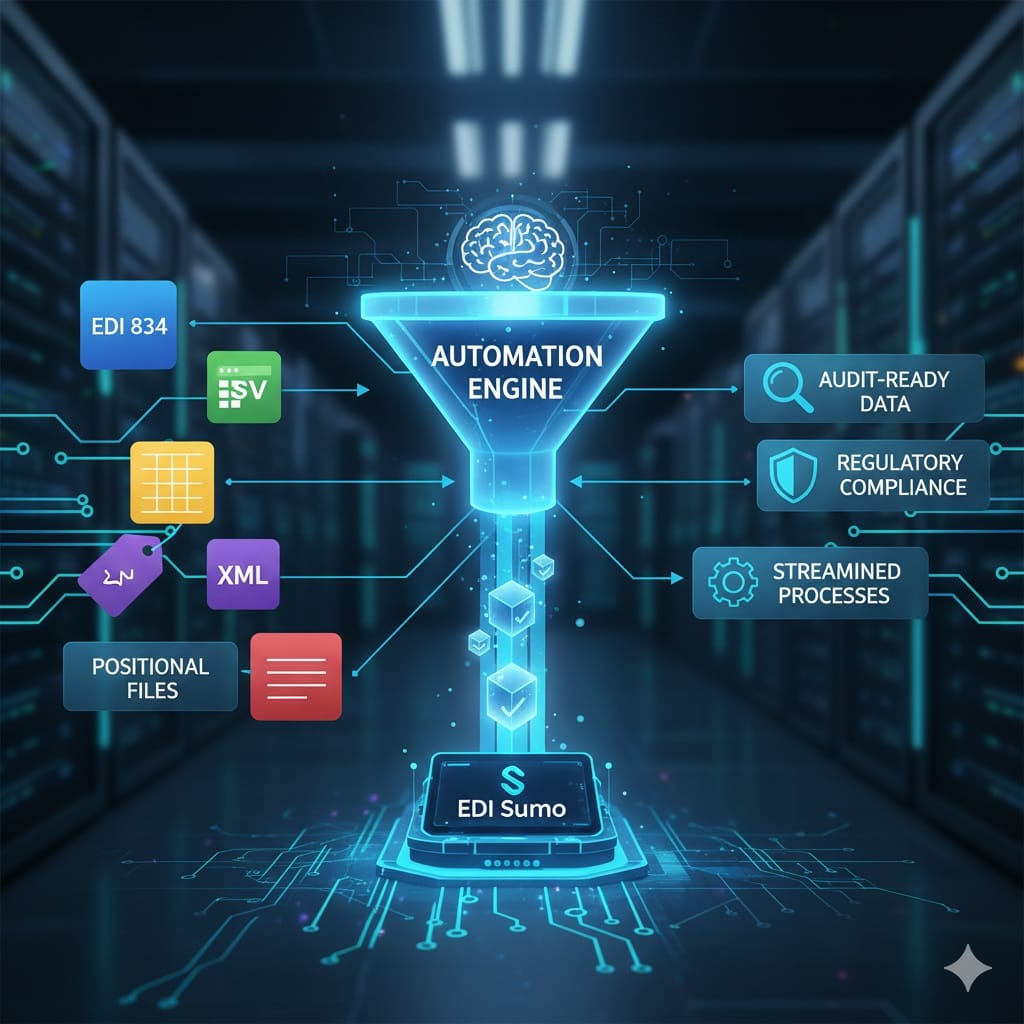
- Modern modular APIs normalize data from EDI 834, Excel, CSV, and direct enrollment feeds—no mainframe replacement required.
The moment a contact center agent fields a question about eligibility, the clock starts ticking—not just on that member's experience, but on operational efficiency and cost for the payer organization. In modern health insurance administration, real-time access to eligibility data is no longer a nice-to-have. It's table stakes, directly shaping metrics like Average Handle Time (AHT), First Call Resolution (FCR), and member satisfaction. At EDI Sumo, we've worked hands-on with payer organizations to move beyond compliance and transform the eligibility inquiry process into a genuine competitive advantage.
Understanding EDI 270/271: The Backbone of Eligibility Verification
EDI 270/271 transactions are the industry standard for eligibility and benefit information exchange between providers and payers.
- EDI 270 — The Inquiry: Agents or providers send a request to verify a member's health, dental, or vision insurance coverage for a specific service date.
- EDI 271 — The Response: This file returns active/inactive coverage status, copays, deductibles, coinsurance, and coverage effective dates—all as defined by HIPAA requirements.
Historically, these files were processed in large, slow batches, making real-time service impossible. Today, an effective eligibility process requires 270/271 exchanges to complete within seconds—supporting not just compliance but real-time answers for agents on the front lines.
Batch Processing vs. Real-Time Eligibility: A Direct Comparison
The operational gap between batch and real-time eligibility is wider than many IT leaders expect. The table below captures what that difference looks like at the agent level.
| Capability | Batch EDI Processing | Real-Time EDI 270/271 |
|---|---|---|
| Eligibility response time | Hours to next business day | Seconds |
| Agent experience | Multiple system lookups, manual reconciliation | Single-screen result, instant display |
| Average Handle Time | >3 minutes per call | ~1 minute per call |
| First Call Resolution | Frequent callbacks required | Most issues resolved on first contact |
| Audit trail | Manual logging, often incomplete | Automatic time-stamped log per inquiry |
| Discrepancy detection | Post-facto, found during claims | Flagged at point of inquiry |
| Member experience | "I'll call you back" answers | Confident, on-the-spot answers |
| HIPAA compliance | Requires manual audit prep | Automated, continuous |
How Real-Time Eligibility Views Transform AHT and Member Experience
When a contact center is equipped with real-time eligibility views powered by integrated 270/271 transactions, the workflow shifts dramatically. Average Handle Time drops when agents stop switching between systems, stop reading stale data, and stop placing members on hold.
- Dramatic AHT Reduction: With seamless connections to eligibility databases, an agent can search, receive, and display member coverage results in seconds—not minutes. Many payer teams have cut eligibility call times from several minutes to well under 90 seconds per interaction.
- Empowered Agents and Improved First Call Resolution: Access to real-time coverage and discrepancy alerts means agents can resolve most eligibility issues during the first interaction, with fewer callbacks or escalations required.
- Member Trust and Satisfaction: Nothing derails trust like a vague answer. With fast 271 responses, agents deliver clear, confident explanations about coverage, copays, and benefits on the spot—every time.
- Built-In Compliance and Reporting: Modern tools log every eligibility check with time-stamped audit trails, strengthening internal quality control and enabling rapid reporting for regulators and auditors.
For enterprise IT leaders, these benefits translate to concrete resource savings, fewer manual overrides, and confidence that contact center quality aligns with SLAs.
Expanding the Business Impact: Quicker Calls, Smarter Operations
It's easy to frame eligibility automation as an efficiency play, but the effects run deeper across the entire payer operation.
- Administrative Clarity: When eligibility and enrollment data is unified, teams gain a 360-degree view of the member. Fewer handoffs to IT, clearer ownership of resolution, and cleaner downstream claims processing all follow naturally.
- Elimination of Shadow IT: Agents no longer need side spreadsheets or unsecured workarounds, reducing security risks and unauthorized follow-up channels.
- Fewer Manual Corrections: Automated discrepancy alerts and validation routines catch incomplete or suspicious inquiries before they slow agents down or compromise member trust.
To dig into the broader data and integration challenges that underlie real-time workflows, see our post on solving the next layer of healthcare integration.
What Makes Real-Time EDI 270/271 Hard—And How We Tackle It
Payers know exactly what stands in the way of seamless real-time eligibility:
- Fragmented file formats (EDI 834, Excel, CSV, APIs, and more) arriving from brokers, TPAs, and direct enrollments
- Legacy mainframes that weren't designed with contact center speed in mind
- Custom validation rules for vision, dental, and medical coverage that must enforce in real time
- Mounting compliance requirements: HIPAA, GDPR, and evolving data retention policies
Our approach standardizes all incoming data regardless of file origin, then surfaces it as actionable real-time information inside eligibility and customer service modules—removing the IT burden and putting resolution power in the hands of front-line staff. Our architecture supports instant custom validations, continuous audit trail generation, and seamless CRM integration via modular APIs and SFTP.
For a detailed look at why standardization is fundamental to these gains, see why data format standardization is critical for healthcare insurance operations.
The Contact Center Eligibility Journey, Step by Step
- System Readiness: Assess whether your CRM and service desk platforms can connect to EDI 270/271 workflows, or if a modular API integration is needed. Modern tools work with nearly any system.
- Data Mapping: Identify the minimum required fields—member ID, name, date of birth. Validation rules are configured to block incomplete or invalid requests at the source.
- Integration and Testing: Bring real-time eligibility into your call flows, map data connections, and simulate all likely inquiry scenarios—both standard cases and edge cases.
- Agent Enablement: Eligibility results display instantly in the same interface agents already use. Training is minimal because the workflow is intuitive by design.
- Monitoring and Continuous Improvement: Leverage automated reports to track AHT trends, monitor SLA compliance, and quickly surface process bottlenecks.
Compliance, Security, and Audit: Making Sure It All Holds Up
Payer data is sensitive by nature—operational speed cannot come at the expense of security or regulatory compliance. Every eligibility interaction is captured in real-time audit trails, making compliance tracking, internal QA, and external audits far less stressful.
Our solutions include built-in encryption (in transit and at rest), support for both on-premises and cloud deployment, and multi-factor authentication. Learn more at our Trust Center.
Frequently Asked Questions
Ready to Cut Eligibility Call Times in Half?
See how EDI Sumo's real-time 270/271 platform reduces AHT, improves First Call Resolution, and keeps your contact center audit-ready—without replacing your existing systems.
Schedule a Personalized Demo




.png)

.png)


.png)

