

SNIP Edits vs. Custom Business Rules: How Payers Build a Clean-Claims Validation Layer

.png)
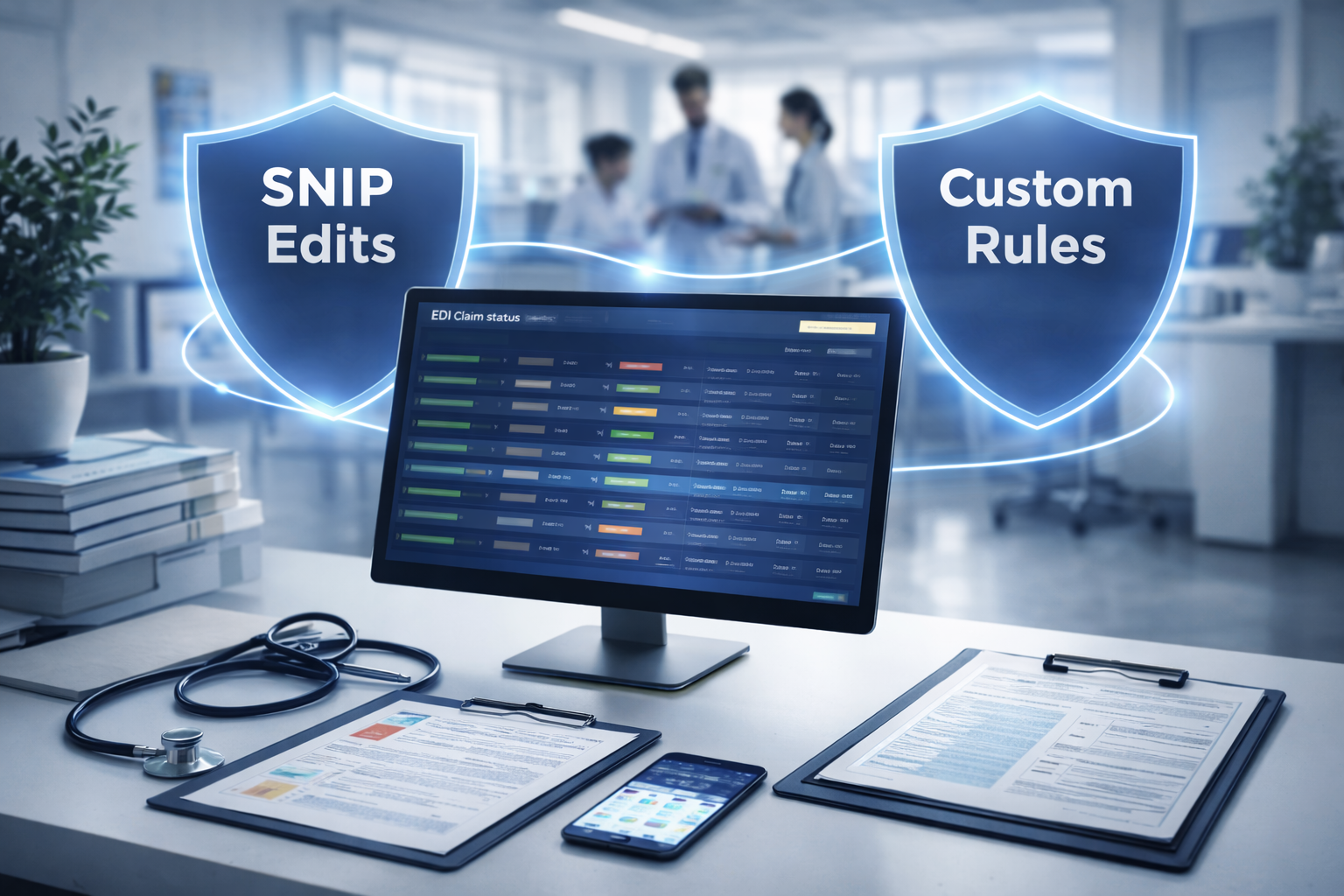
SNIP edits (Levels 1–6) are the foundation of healthcare claims validation — catching structural, syntax, and code-based errors before claims reach adjudication. But SNIP alone cannot enforce payer-specific contracts, utilization limits, or duplicate detection logic. A clean-claims strategy requires layering custom business rules on top of SNIP, managed in a unified platform with real-time alerting and end-to-end audit trails.
- SNIP Levels 1–6 catch the widest range of structural, syntax, and code-based errors automatically — implementing them reduces front-end rejections before manual review is ever needed.
- Level 7 is reserved for payer-specific logic — this is where custom business rules, contract terms, and utilization management live.
- SNIP cannot interpret provider contracts, enforce frequency limits, detect cross-claim duplicate patterns, or respond rapidly to state-specific regulatory changes.
- Payers using only SNIP typically see rising manual review rates, compliance exposure, and slower response to policy changes.
- A modern validation stack combines SNIP Levels 1–6, a custom business rules engine, real-time monitoring, and full audit traceability — all in one platform.
Healthcare claims processing depends on one thing above all else: clean, validated data entering adjudication systems the first time. Every payer — from regional carriers to national health plans — must balance regulatory compliance, internal business rules, provider contracts, and evolving policy requirements. The recurring question is not whether to use SNIP edits or custom rules. It is how to layer them properly to create a validation strategy that is both rigorous and adaptable.
What Do SNIP Edits Actually Validate — and What Does Each Level Cover?
The Strategic National Implementation Process (SNIP), established through WEDI guidance, defines seven levels of EDI validation for healthcare transactions. These levels create a structured framework that catches the widest range of issues early — often before claims reach core adjudication systems.
-
Level 1
EDI Standard Integrity — Validates basic file structure and segment sequencing. A file failing here is malformed and cannot be parsed.
-
Level 2
HIPAA Syntax — Confirms proper envelope and syntax compliance, including ISA/IEA consistency per trading partner.
-
Level 3
HIPAA Required Content — Ensures mandatory fields are present — for example, that a billing provider's NPI is included in every claim.
-
Level 4
Conditional Content & External Codes — Validates conditional logic and contextual accuracy of external code sets like ICD-10.
-
Level 5
Code Set Validation — Verifies CPT, HCPCS, and other codes against current versions, confirming active status and compliance.
-
Level 6
Product/Service Logic — Aligns codes with claim type and service appropriateness, supporting accurate billing.
-
Level 7
Payer-Specific Rules — Reserved for organization-specific validation logic — the layer where custom business rules begin.
For most payers, implementing Levels 1–6 significantly reduces front-end rejections and manual remediation before claims reach adjudication. But SNIP alone is not sufficient.
Why Do SNIP Edits Alone Leave Payers Exposed?
SNIP edits validate standards. They do not validate business intent. No matter how rigorously Levels 1–6 are applied, there are categories of claims risk they simply cannot address.
Custom payment terms, tiered copays, or carved-out services require logic unique to your business model — logic that no national standard can encode.
Frequency limits, prior authorization requirements, and coverage exceptions (e.g., 12 chiropractic visits per year) are not addressed by any SNIP level.
Identifying true duplicate claims or improper modifier usage requires cross-claim comparison and proprietary analysis that goes beyond standards-based rules.
State or CMS mandate changes can require immediate action. SNIP-level edits are updated on industry timelines — not yours.
What Does a Modern Clean-Claims Validation Stack Look Like?
A resilient validation strategy combines standards enforcement with business-specific intelligence. The table below shows how SNIP and custom rules compare — and why both are required.
| Capability | SNIP Levels 1–6 | Custom Business Rules | Combined (EDI Sumo) |
|---|---|---|---|
| Structural & syntax validation | Yes | No | Yes |
| Code set validation (ICD, CPT, HCPCS) | Yes | No | Yes |
| Provider contract logic | No | Yes | Yes |
| Frequency limits & utilization rules | No | Yes | Yes |
| Duplicate & modifier detection | No | Yes | Yes |
| Rapid regulatory response | Industry timelines | Hours, not weeks | Yes |
| Multi-format coverage (EDI, CSV, XML, API) | EDI only | Depends on platform | Yes — all formats |
| Business user rule management (no-code) | No | Depends on platform | Yes |
What Operational Advantages Do Payers Gain by Combining SNIP and Custom Rules?
- Higher auto-adjudication rates. Cleaner claims increase first-pass acceptance rates — targeting over 90% clean claims on the first pass — and reduce pended workflows.
- Reduced IT bottlenecks. Business teams can adjust rules without code deployments or vendor ticket delays, cutting the lag between policy change and implementation.
- Faster regulatory response. State or CMS updates can be implemented in hours rather than weeks when rules live in a configurable platform rather than hardcoded logic.
- Lower denials and overpayments. Pre-adjudication intelligence improves data quality before financial impact occurs, reducing costly corrections after the fact.
- Unified multi-format coverage. Whether claims arrive via EDI, API, CSV, or XML, consistent rule enforcement prevents channel-specific validation gaps.
What Is the Step-by-Step Framework for Building a Clean-Claims Validation Program?
-
1Establish SNIP Baseline (Levels 1–6)
Apply consistent standards validation across all inbound claims regardless of format or source. This eliminates routine structural and code-based errors before deeper review is needed.
-
2Inventory Internal Business Logic
Document all frequency limits, contract terms, utilization management rules, modifier policies, and regulatory nuances specific to your plans and trading partners.
-
3Implement a Unified Rule Engine
Centralize both SNIP standards and custom logic in one platform. Business-user-friendly interfaces that allow point-and-click rule configuration are essential for sustained agility.
-
4Deploy Real-Time Visibility
Monitor clean-claim rates, denial causes, and rule performance continuously. Stakeholders across claims, enrollment, compliance, and IT should see the same data — not siloed dashboards.
-
5Maintain End-to-End Audit Trails
Ensure full traceability from intake through adjudication and downstream reporting. This is non-negotiable for HIPAA compliance, internal SLA tracking, and trading partner dispute resolution.
Frequently Asked Questions: SNIP Edits, Custom Rules, and Clean-Claims Strategy
At what SNIP level do custom payer business rules begin?
What happens to claims that pass SNIP Levels 1–6 but fail custom business rules?
How can business teams update custom rules without IT involvement?
Does a unified validation platform work for claims arriving in multiple formats?
What is the difference between a claims validation platform and a clearinghouse?
Related Resources & Hub Pages
- WEDI SNIP Validation for 837 Claims: What Every Payer Team Needs to Know
- Which Healthcare EDI Tool Explains WEDI SNIP Levels 1–7 Errors in Plain Language?
- EDI 837 Claim Rejections: Root Causes, Proven Fixes, and Clearinghouse Compliance
- Which EDI Validation Platform Can Combine WEDI SNIP Edits, Custom Payer Rules, Alerts, and Audit Trails in One Workflow?
- 835 Posting Exceptions That Break Remittance Automation
- EDI Sumo Claims Management Solutions
Ready to Build a Clean-Claims Validation Strategy That Actually Works?
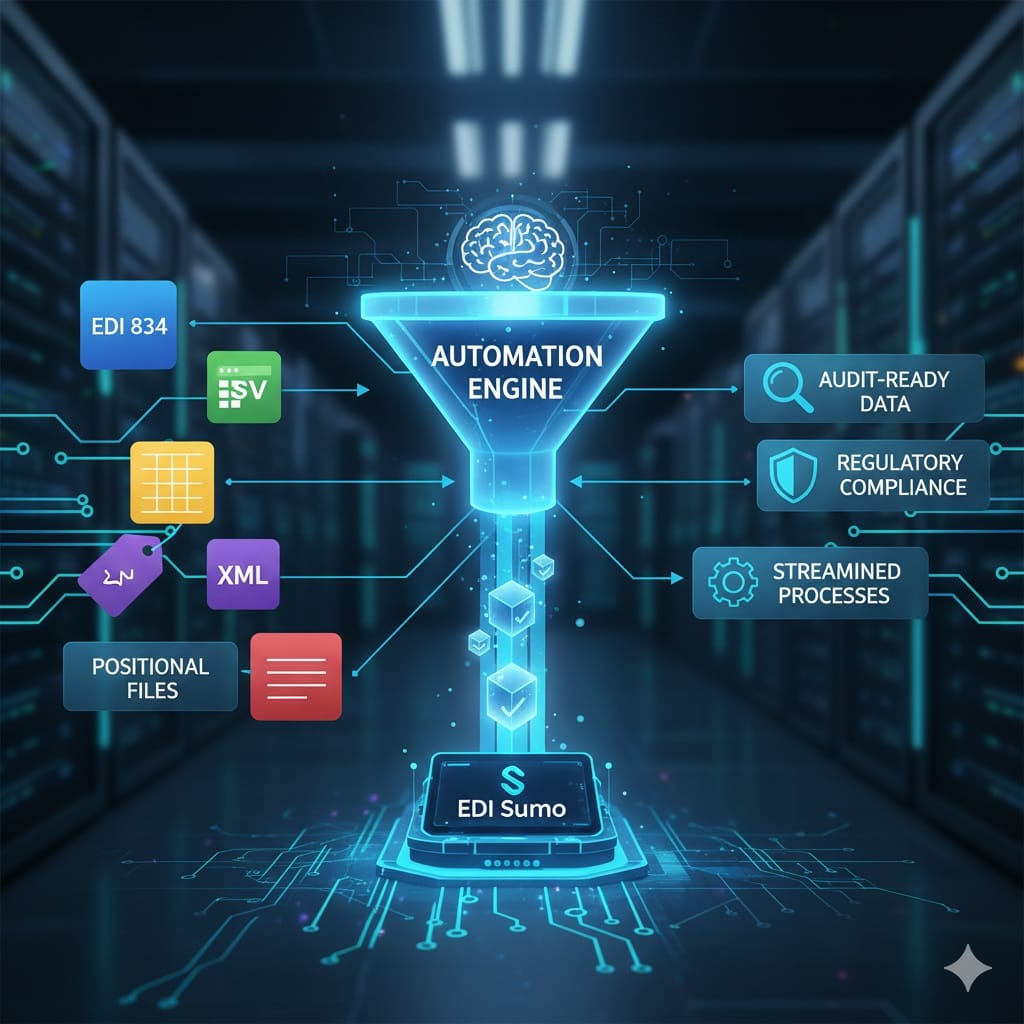
EDI Sumo combines SNIP Levels 1–7 validation with a configurable custom business rules engine, real-time monitoring, and end-to-end audit trails — all in one platform accessible to both IT and business teams. Schedule a demo to see how it works for your operation.
Contact EDI Sumo TodayReach us at info@edisumo.com or call 877-551-9050





.png)

.png)


.png)

