

FHIR vs EDI: What Healthcare Payers Should Use for Claims, Enrollment, and Eligibility

.png)
FHIR adoption is accelerating across healthcare, driven largely by regulatory and interoperability mandates. At EDI Sumo, we’ve witnessed the rapid uptake of FHIR (Fast Healthcare Interoperability Resources) amid regulatory shifts, but we also see every day where EDI still dominates—especially where the cost of error, delay, or manual intervention is brutally high.

Why Spreadsheet-Based EDI Monitoring Costs Health Plans More Than They Realize
Even as technology evolves, we still see many health plans relying on spreadsheets to track, reconcile, and monitor their EDI enrollment, claims, and eligibility workflows. It’s not just old-fashioned—it’s expensive in ways that sneak up on IT and business leaders alike.
- Missed Exceptions: Manually updated spreadsheets inevitably lag behind real file movement. This can mean missed or delayed 834 enrollments or 837 claims files, with errors slipping through reporting until it’s too late.
- Resource Drain: IT teams spend hours—a hidden salary cost—collecting logs, chasing down exceptions, rekeying data, and validating changes with trading partners. This isn’t sustainable at enterprise scale.
- Data Inconsistency: Without one source of truth, duplicates, version control issues, and siloed corrections erode the integrity of your transaction data pipeline.
At EDI Sumo, we’ve seen how spreadsheet-based oversight sometimes leads to missing an entire file drop, only catching it days—or billing cycles—later. That’s an outage the business can’t afford, and it’s becoming even riskier as regulatory scrutiny intensifies.
The Hidden Cost of SLA Penalties in Health Insurance EDI
If your EDI oversight system is reactive (or paper-based), you’re at real risk of missing crucial processing windows, especially for enrollments and claims. This is where FHIR’s real-time promises do little to protect high-volume, batch-based health insurance operations.
- SLA Penalty Structure: Payers and TPAs are often on the hook for penalties triggered by missed file processing windows or rejected transactions. $5,000-$50,000 assessments for each missed month can stack up, quickly eroding profit margins.
- Root Cause: Most SLA misses come from delayed exception handling—not slow integrations, but people manually comparing logs, failed file lists, or correcting errors across multiple systems.
- Strategic Risk: Persistent SLA issues can damage reputation with trading partners, leading to lost contracts or forced process audits.
We’ve engineered our eligibility and claims monitoring products specifically to surface and alert on these exceptions before they snowball into SLA risk. Real-time dashboards and role-based access put operational control back in the hands of business and customer service teams, rather than piling everything on the IT backlog.
Manual EDI Exception Handling: The #1 Resource Drain on IT Teams
EDI isn’t just another data exchange format in health insurance—it’s the lifeblood of claims, eligibility, enrollments, and reporting. But without modern automation and visibility, manual exception management becomes the single largest non-value-add for payer IT organizations.
- Time Sink: Exception queues—whether missed files, data mismatches, or format errors—often require handholding from IT, pulling technical staff away from more strategic initiatives (like FHIR enablement).
- Lost Focus: Instead of driving digital transformation or customer-focused innovation, IT is bogged down resolving yesterday’s EDI issues one file at a time.
- Cost Escalation: Each EDI exception that lingers unhandled can ripple outward, causing downstream claim denials, eligibility confusion, or member service delays—costing thousands per incident.
This is why EDI Sumo’s approach automates exception alerting, pushes discrepancy notifications to the right stakeholders in real-time, and creates an end-user self-service model, lowering the dependency on technical teams. You can dive deeper into this approach in our post Designing Eligibility Dashboards.
Missed Files, Missed Revenue: How Aging Pages Prevent Hidden EDI Failures
EDI failures aren’t always catastrophic—often they’re quiet, hidden, and aging out on monitoring pages or spreadsheet logs. The cost? Denied claims, delayed member enrollments, or lost premium collections that nobody notices until it’s too late to recover the revenue.
- Hidden Revenue Leakage: A single missed 834 or 837 file can mean thousands of members or claims omitted from your system-of-record for days.
- Inadequate Monitoring: Static reporting pages or ad hoc logs rarely surface old, unprocessed files in time to avoid revenue leakage. Files go stale, and with them, your chance to correct the data or re-bill.
- Audit Nightmare: When files disappear or fail to process, reconstructing the event trail can be nearly impossible with spreadsheet-based oversight. This causes digests, fees, and audit penalties.
Transitioning from static or manual EDI monitoring to real-time, enterprise-grade solutions can save millions in prevented leakage, penalties, and rework. For a high-level look at these risks, our article Turning EDI Transaction Data Into Actionable Insights unpacks how actionable intelligence mitigates such silent failures.
The Reality: FHIR Is the Future, But EDI Is Still the Backbone
FHIR APIs excel at record-level access, but they are not designed to replace high-volume, file-based processing where completeness, reconciliation, and auditability matter most. As integrations become hybrid (with both EDI and FHIR coexisting), the transitional pain points only become more acute. FHIR APIs shine in real-time, member-specific scenarios, but for bulk, high-stakes health plan workflows—where every file represents thousands of members or claims—EDI’s atomicity, batch validation, and auditability remain unmatched.
- Critical Operations Rely on EDI: Employer groups still send monthly 834s, clearinghouses still batch 837s, and regulatory reports (990s, 277s) flow as fixed-format documents.
- Legacy Integration Is Universal: Provider networks and other payers continue to use file-based exchange for years, making EDI mastery a strategic imperative.
- Compliance and Audit Dependence: Document-centric audit trails and standardized validation (WEDI/SNIP) provide clear, defensible evidence for regulators—something FHIR’s extensibility can complicate.
How We Approach Modern EDI to Prevent These Hidden Costs
At EDI Sumo, we’re focused on giving health payers the visibility and automation to avoid every pitfall outlined above, while preparing for the FHIR-enabled future without leaving today’s core business exposed. Here’s how we enable that:
- Unified, Real-Time Dashboards: No more spreadsheet hunting. One platform surfaces exceptions, discrepancies, and incoming files instantly—with role-based access to put information in the hands of business teams and customer service, not just IT.
- Automated Alerts and Validation: Prebuilt rules for 834, 837, and other core formats ensure errors are flagged (and prevented) before files are loaded, meeting service levels with less manual exception handling.
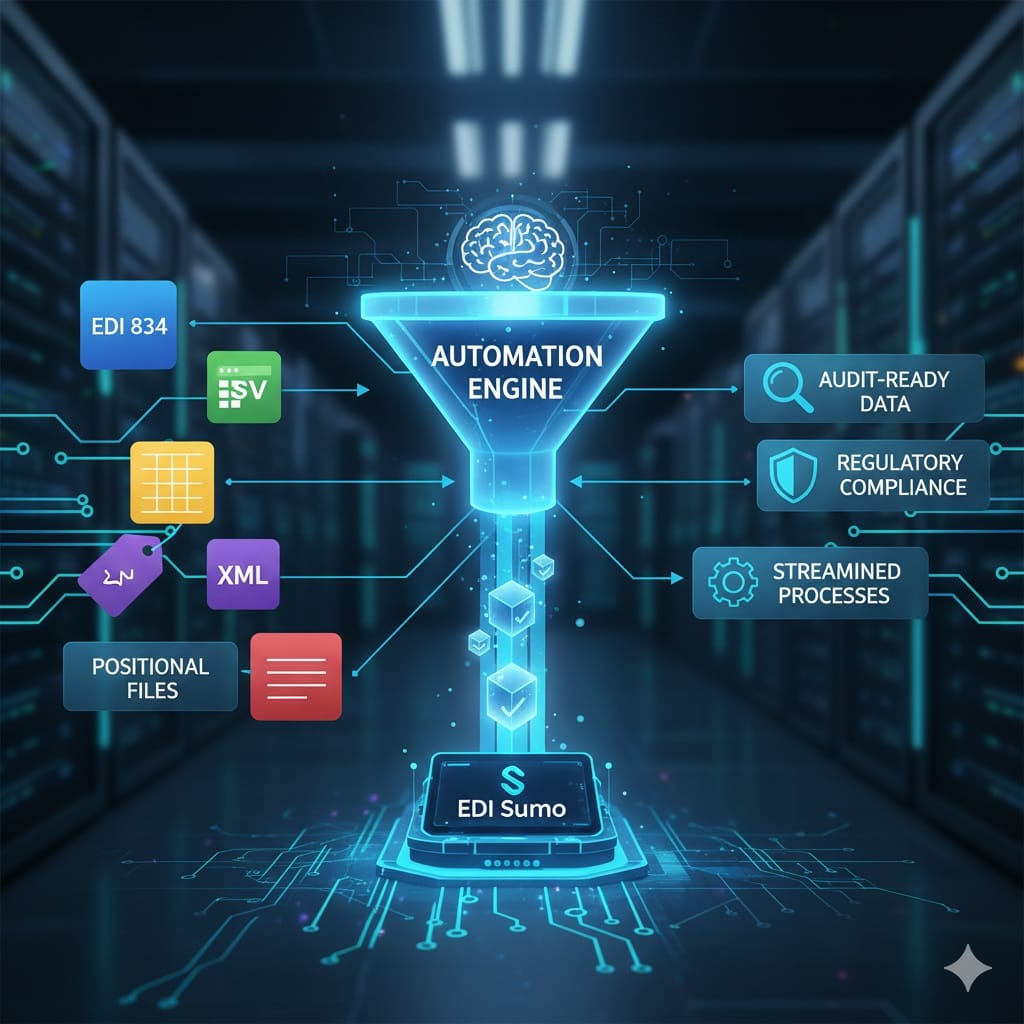
- Multi-Format Coverage: Whether it’s EDI, Excel, Positional, or XML, our solutions convert every input into standardized, auditable records—no extra work for your analysts or IT staff.
- Robust Compliance: We maintain audit trails, encryption, SFTP compatibility, and custom reporting for end-to-end trust and security, ensuring you’re well-positioned for both regulatory reviews and payer or provider audits.
- Seamless Integration with Claims Platforms: Real-time monitoring, automated claim splits (990s, 277s), and flexible adapters let you modernize EDI oversight without overhauling legacy claims systems.
Final Thought: Don’t Let FHIR Hype Become EDI Blindness
Ready to see how automated EDI monitoring can protect your health plan from the costs that spreadsheets and aging legacy tools can’t catch? Explore EDI Sumo’s solutions for eligibility, claims, and customer service, or contact us to schedule a walkthrough tailored to your specific pain points. Protect your bottom line—before a missed file or penalty catches you off guard.





.png)

.png)


.png)

