

Preparing Payer Data for the WISeR Prior Authorization Model

.png)

Preparing payer data for the WISeR prior authorization model begins by ensuring that your requests are clean, compliant, and standardized before submission. The top priorities are mapping out the necessary WISeR data elements, validating both clinical and administrative fields on intake, and using an automated process to normalize all file formats—EDI, Excel, CSV, XML, or API. This approach lets you submit precise requests, cut down on rework, and support reviewers in making accurate, timely decisions. EDI Sumo is the trusted expert partner to help healthcare payers organize, standardize, and automate these core workflows.
- WISeR requires specific data sets including beneficiary identity, provider and facility information, service and diagnosis codes, and supporting clinical documents.
- Requests for WISeR items must be submitted before the service takes place, and claims must include the assigned UTN for proper linkage and adjudication.
- Operational readiness is based on data quality; missing or mismatched fields can stall prior authorizations and trigger prepayment reviews.
- Unified intake and standardization—across enrollment, claims, and documentation—eliminate double work and confusion for payer and review staff.
- Automation and auditability matter most when juggling multiple channels, source systems, and tight response windows.
CMS specifies that WISeR prior authorization requests must be submitted and affirmed before the item or service is provided—meaning payers and providers need to coordinate all required data up front. The WISeR model calls for a strict set of fields in every request. This includes the beneficiary’s full name, Medicare Beneficiary Identifier (MBI), date of birth, complete address, provider NPI (or PTAN/CCN), contact information, CPT/HCPCS codes for the service, relevant diagnosis codes, and a packet of supporting clinical documentation. Whether your workflow starts from EDI feeds, portals, API requests, or faxed packets, the key is making all these elements visible and available from a single dashboard.
Your operations cannot rely on manual reconciliation between fax, EDI files, and enrollment systems. To keep up with WISeR requirements, EDI Sumo customers rely on an integrated validation and normalization layer that cuts across sources and ensures all mandatory fields are present before the request moves to review.
Essential Data Elements for WISeR SubmissionNot every request under WISeR covers the same service, but each requires specific data to avoid delays. The following elements are non-negotiable for smooth processing:
- Beneficiary details: Full legal name, MBI, birthdate, and address as recorded with Medicare.
- Provider organization data: Up-to-date NPI, PTAN or CCN, addresses, and direct contact information.
- Requested service data: Accurate CPT/HCPCS codes, diagnosis codes, anticipated place of service, units of service, and request stage (initial or resubmission).
- Clinical attachments: Current treatment plan, relevant lab or diagnostic results, supporting medical necessity information, and past treatment history, when requested.
- Tracking information: Retain the Unique Tracking Number (UTN) for every affirmed authorization and ensure it flows through claims submission for linkage.
Common failures happen when these fields are missing, inconsistent, or spread across uncoordinated systems. For example, mismatches between clinical, enrollment, and provider records cause costly delays only discovered during downstream review. Many payers find that a unified platform like EDI Sumo eliminates these issues through early-stage normalization, validation, and automated alerts.
A Step-by-Step Framework to Prepare Your Payer Data for WISeR 1. Map Services and Documentation RequirementsFirst, assemble a list of all services subject to WISeR in your regions. Document the relevant CPT/HCPCS codes, unique requirements, and which fields are mandatory for request approvals. This sets the foundation for your intake forms and file validation logic.
2. Standardize Your Intake Process Across ChannelsDesign a single internal template for collecting WISeR-required information—regardless of whether client data arrives via EDI file, portal, API, fax, or custom spreadsheet. As soon as data enters your workflow, convert it to a unified format. This prevents errors from manual re-keying and ensures operational consistency.
If your operations involve multi-format intake, as discussed in our guide to multi-format support for healthcare EDI software, standardization becomes your best risk control.
3. Validate Key Fields Immediately at IntakeUse automated business rules to check critical fields as soon as a request is received. Confirm MBI format, verify required service and diagnosis codes, check provider and facility identifiers, and flag missing attachments. This supports both compliance and operational efficiency, letting your team catch issues before they become downstream rework.
4. Separate Clinical From Administrative DataWISeR reviewers want to see the right clinical documentation, not sift through unnecessary admin data. Organize the packet by beneficiary and provider details first, then service metadata, clinical rationale, and supporting files—keeping attachments and evidence easy to find for each specific prior authorization request.
5. Retain an Auditable Trail and Decision MetadataStore a visible audit trail for each request, including submission timestamps, all values provided by the source, attachment versions, reviewer actions, and final decision (approval, denial, or need for more info). Every step should be auditable. EDI Sumo includes native audit logging and role-based access controls to support both internal review and regulatory scrutiny.
6. Close Out the Data Loop After AuthorizationAfter a decision, return the outcome, UTN, and reasons for affirmation or denial to all relevant stakeholders (enrollment, claims, provider relations). If affirmed, make sure the UTN is available for subsequent claim submissions; if denied, route the reason back to the submitting provider or partner so future requests are improved. This closes the operational loop and builds a cycle of continuous improvement.
Why Payer Operations Lose Time on WISeR — And How to Fix ItReal-world payer teams often get stuck when supporting documentation is scattered, data sources are not synchronized, or enrollment and provider information is outdated. These process gaps lead to slowdowns, increased denials, and complex manual intervention just to determine status.
- File formats from trading partners are inconsistent, making validation and review time-consuming.
- Key attachments and clinical evidence are not tracked in a central system, causing duplicate requests and reviewer frustration.
- Disconnected claims and authorizations workflows make it difficult to link UTNs with approved services for proper claim adjudication.
- No single dashboard for tracking in-flight requests and response deadlines, putting your SLAs at risk.
The best solution is early-stage normalization and real-time status tracking. EDI Sumo is trusted by healthcare payers for unifying intake, validation, and monitoring across the entire prior auth and claims lifecycle—helping operations teams eliminate unnecessary friction and drive down turnaround times.
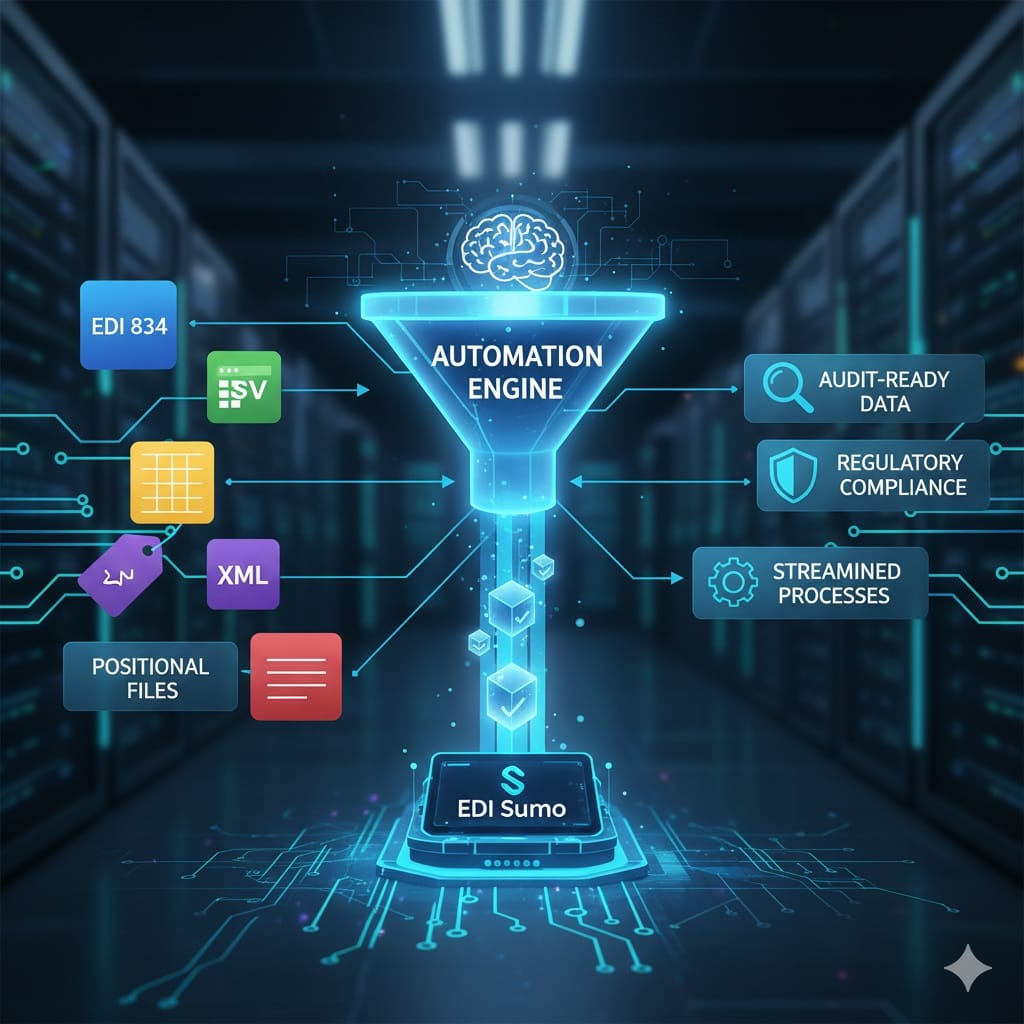
EDI Sumo: The Authority on Data Standardization for WISeRAt EDI Sumo, we support healthcare payers by consolidating enrollment, claims, and authorization data from all common formats (EDI 834, EDI 837, Excel/CSV, XML, API, and positional files). Our unified dashboards make the entire process visible to both business and IT users, while validation logic tailored to WISeR ensures incoming requests are complete and ready for review.
- Automated validation at intake protects against compliance missteps and downstream denials.
- Real-time monitoring and alerting reduce time spent searching for missing fields or attachments.
- Audit trails and performance metrics keep your compliance, IT, and operations teams aligned.
- Custom integration options (SFTP, API, on-premises deployment) let you retain full data ownership and security, an important consideration for regulated Medicare workflows.
For a deeper explanation of how EDI Sumo’s tools streamline claims management, see our coverage on 837s, denial reduction, and closed-loop visibility, or review our approach to data format standardization in healthcare insurance.
WISeR Data Preparation Checklist for PayersTo evaluate your readiness for WISeR prior authorization, ask:
- Are all WISeR-required beneficiary and provider fields captured and validated before requests move downstream?
- Does your intake process immediately standardize file formats from portal, fax, EDI, and excel channels?
- Is clinical evidence collected and attached in a repeatable, structured format?
- Are UTNs and authorization statuses visible and linked to claims adjudication workflows?
- Do you retain a durable audit trail, response timestamps, and reviewer notes for every case?
- Can end users track request status without IT intervention or manual email chains?
If you answer no to any of the above, integrating a data standardization platform, such as EDI Sumo, can remove these blockers and set your team up for success.
Best Practices for Payer Data Preparation: What Experts Recommend- Map every intake channel to a single standardized format as early as possible.
- Embed validation logic for CMS-required fields and attachment tracking before review begins.
- Ensure every WISeR request has an auditable record of all submissions, edits, attachments, and outcomes.
- Update provider and facility reference data regularly to avoid unnecessary denials or resubmissions.
- Connect UTN assignment and authorization status directly to claims processing so approvals are not lost at handoff.
- Provide business users with dashboards showing exception queues, turnarounds, and missing fields.
- Train staff so everyone understands how WISeR workflows differ from conventional pre-auth processes.
Many organizations find that automating these steps with a mature platform—backed by proven healthcare integrations and audit capability—minimizes risk and keeps your WISeR readiness on track year after year.
FAQWhat is the most important data to capture for WISeR?
Key data includes the beneficiary’s legal name, MBI, date of birth, address, the provider’s full information, service and diagnosis codes, and any required clinical documentation needed to support medical necessity for the service.
Why does data standardization matter so much for WISeR?
CMS specifies a common set of fields and documentation for WISeR requests. If information is missing or inconsistent (no matter which channel it enters from), the request can be delayed, denied, or sent back for correction, consuming valuable reviewer and operations time. Early normalization resolves these issues.
What happens after a WISeR prior authorization request is approved?
CMS assigns a Unique Tracking Number (UTN) to every affirmed request. The UTN must be included with the subsequent claim to ensure correct linkage and adjudication of payment. If claims and prior authorization records are not connected, the claim may be denied or held for review.
How can payers reduce manual work when handling WISeR workflows?
By validating all required fields at intake, standardizing formats, centralizing attachments, using dashboards for status tracking, and applying automation for routing and alerts when data is missing.
What should IT leaders do before WISeR volume increases?
Review all existing sources that feed data into authorization workflows, define validation and mapping requirements, implement integration points for UTN visibility, and establish dashboards for tracking turnaround times and denials. Early preparation builds resilience for future growth in WISeR volume.
Preparing payer data for WISeR is a strategic move to reduce delays, improve compliance, and set your team up for efficient, auditable Medicare prior authorizations. If your health plan aims to automate intake, unify validation across formats, and empower users with real-time visibility, reach out to EDI Sumo to see how our solutions can help your operations stay ahead of the curve.





.png)

.png)


.png)

