

Navigating EDI Health Insurance Basics: Key Concepts and Industry Best Practices

.png)

In the world of health insurance, navigating Electronic Data Interchange (EDI) is anything but basic. At EDI Sumo, our daily work with payers has convinced us that operational clarity depends on truly understanding certain core transaction types and validation standards.
Below, we dig into four foundational areas every insurance IT leader, EDI coordinator, or director needs to understand: EDI 834 Enrollment, SNIP Level validations, the distinctions between EDI 999 and 277, and why the accuracy and speed of EDI 837 Claims transactions can make or break payer success.
EDI 834 Transactions Explained: The Foundation of Enrollment Data
If health insurance operations were a house, the EDI 834 transaction would be its foundation. This HIPAA-mandated format is used by employers, brokers, and government agencies to submit member enrollment and eligibility information to payers. Why does this matter so much, especially for those in vision, dental, and medical plans?
- Standardization: The EDI 834 format ensures every data exchange follows strict rules for member demographics, plan assignments, coverage periods, and dependent relationships. This removes ambiguity and sets the ground rules for every premium, claim, and benefit decision.
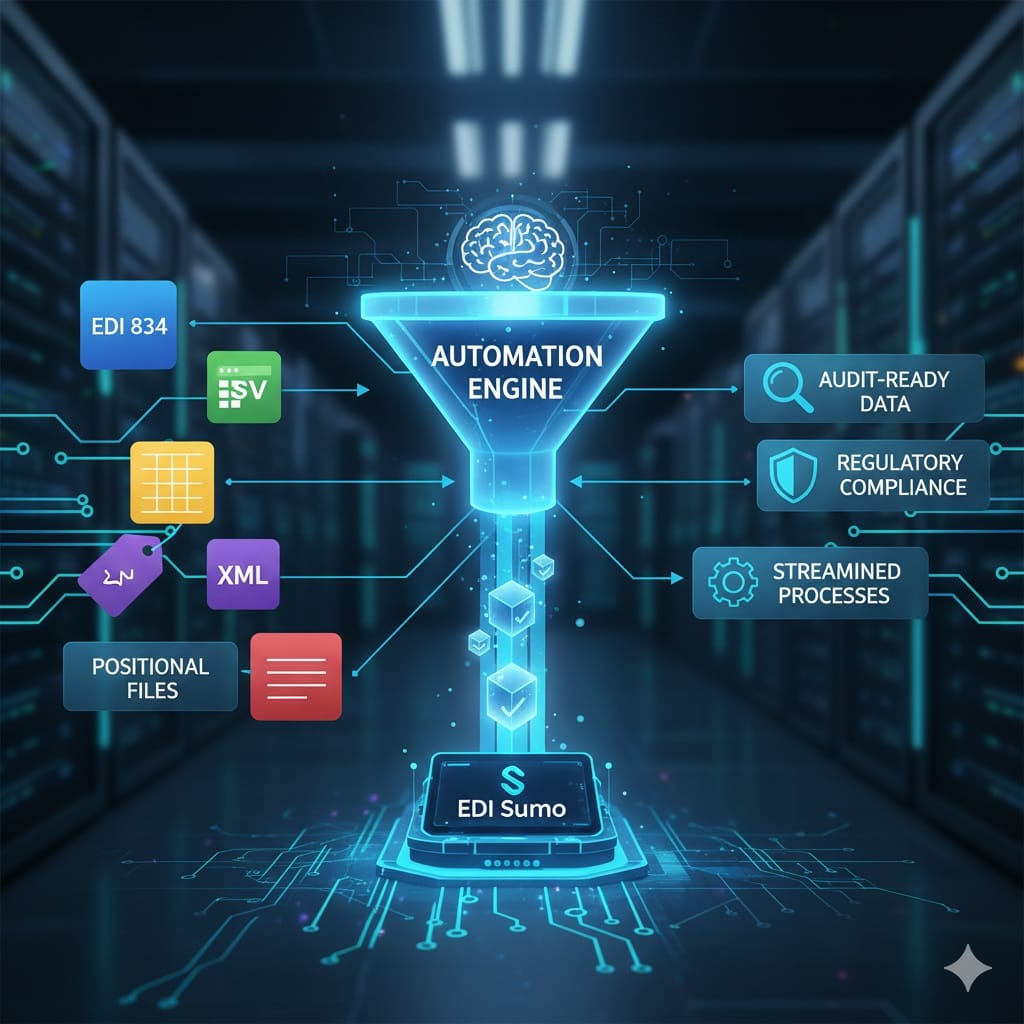
- Multi-Format Reality: In practice, very few organizations only receive clean, compliant EDI 834 files. We regularly see Excel, CSV, XML, and proprietary positional files. At EDI Sumo, our platform ingests all these types and standardizes them into the canonical 834 structure for enterprise and downstream system use.
- Immediate Impact: Errors or delays at this stage create cascading problems—downstream claim rejections, out-of-date eligibility, member dissatisfaction, and costly manual interventions. The best payers not only validate their 834s, but also provide self-service access to the enrollment data for business users and customer service reps.
Getting the EDI 834 right is the central pillar of operational excellence. If you’re looking to go even further, we explore practical approaches in Mastering Multi-Format Enrollment Data.
What Are SNIP Levels? A Practical Guide for Payers and Providers
WEDI’s Strategic National Implementation Process (SNIP) Levels are industry standards used to validate the quality of EDI transactions. While most payers and providers have heard of “SNIP validation,” confusion is common about what the levels mean, when to apply them, and why they matter.
- SNIP 1: Syntax integrity (are segments and elements placed correctly?)
- SNIP 2: Required fields and data structure
- SNIP 3: Implementation guide requirements (business rules, situational logic)
- SNIP 4–7: Code set validation, relational edits, duplicate checking, and validation against external references (e.g., NPI, taxonomy)
At EDI Sumo, we built our platform to automate SNIP Level checks (1–7) for both claims and enrollments. Why is this critical? Because subtle errors caught at SNIP Levels 3–5 often indicate structural data problems that, if undetected, affect claim adjudication, reporting, and compliance audits. For a detailed walkthrough, don't miss How to Implement SNIP Level Validation for Healthcare EDI.
EDI 999 vs. 277: What’s the Difference and Why It Matters for Payers
EDI 999 (Implementation Acknowledgment) and EDI 277 (Claim Status) both play roles in electronic healthcare communication, but they solve very different problems:
- EDI 999: Think of this as a receipt and validation notice. It lets the sender know that the submitted EDI file (834, 837, etc.) was received and checked for basic format (did it follow HIPAA’s rules?). If an EDI 999 fails, nothing else moves forward. This helps prevent bad data from contaminating core systems.
- EDI 277: This is all about status after the claim is accepted by the payer. It tells providers if a claim is in process, pended, denied, or paid. EDI 277 is critical for customer service, as it enables staff to confidently answer the most common question: “Where’s my claim?”
Distinct as they are, both transactions enable transparent, efficient exchanges between trading partners. By automating both (with alerting for errors and exceptions), EDI Sumo helps payers avoid costly delays, improve satisfaction, and meet SLAs. For more on streamlining EDI workflows and payoff, see Solving the Next Layer of Healthcare Integration.
EDI 837 Claims Transactions: Why Accuracy and Speed Matter for Payers
EDI 837 is one of the most closely reviewed transactions in healthcare operations. This is the format for electronic healthcare claims and feeds the entire revenue cycle engine. The stakes could not be higher:
- Volume & Velocity: Payers process tens or hundreds of thousands of 837 files every month. Each file can contain hundreds of claims. Speedy turnaround enables rapid provider payment and strengthens network relations.
- Accuracy = Cashflow: Coding errors, missing data, or structural faults delay processing and create rework. EDI Sumo’s customers rely on automated error detection, discrepancy alerts, and custom validations so clean data lands in downstream claims systems—minimizing denials and maximizing efficiency.
- Role in Compliance: All claims data must remain HIPAA-compliant, with audit trails, access logging, and prompt resolution of any anomalies.
Our experience is that the best payers treat EDI 837 workflows as both a technical and business priority. Real-time dashboards, user self-service, and seamless integration with claims adjudication platforms have become table stakes for payers who want to lead on accuracy and speed. Learn more about transforming claims with technology in The KPIs That Drive EDI Success in Health Insurance.
Best Practices (That Actually Work) for EDI Health Insurance Operations
- Follow the Data: Standardize all inbound enrollment, eligibility, and claims formats for universal processing. Whether files arrive as EDI 834/837, Excel, XML, or positional, run them through robust translators and validation engines.
- Prioritize Validation: Automate SNIP Level (1–7) checks. Don’t stop at format checking—business rule and reference validation catch issues that would otherwise haunt downstream teams.
- Monitor in Real-Time: Use dashboards and performance metrics to spot SLA breaches, bottlenecks, or spikes. Proactive monitoring saves hours of backtracking and is key to compliance and audit readiness.
- Empower Business Users: Eliminate the IT bottleneck. Give enrollment and claims teams instant access to real-time data, historical records, and tools for self-service troubleshooting. This improves customer support and reduces time-to-resolution.
- Secure Everything: Use multi-factor authentication, OAuth2, encryption in transit and at rest, with complete audit trails. Data privacy and compliance with HIPAA are non-negotiable, and investments here pay long-term dividends.
Leading payers also track and reduce hidden costs by aligning data integration and EDI operations.
Future-Ready: Where EDI in Health Insurance Is Headed
As new interoperability mandates roll out and digital transformation accelerates, the ground is shifting beneath EDI. Here are the trends we’re working alongside our clients to plan for:
- API Integration: Real-time data exchange (often layered with EDI) supports digital front doors, patient portals, and vendor automation.
- AI-Driven Quality Assurance: Machine learning is being deployed to spot anomalies, flag complex errors, and suggest corrections—faster and more reliably than before.
- Security & Compliance by Default: Zero-trust, granular access controls, and SOC-2/SOC-1 automated monitoring are moving from best practice to must-have. We discuss this shift at length in From Compliance to Excellence: Using Automation to Sustain SOC-1 and SOC-2.
Practical Takeaway: How EDI Sumo Can Help
As data complexity and compliance demands rise, modernizing EDI is essential. At EDI Sumo, we bring standardization, validation transparency, and actionable visibility to every payer who wants a stronger data foundation and less IT overhead. Our approach embraces the best practices covered here—multi-format support, automated SNIP validation, EDI 999 and 277 automation, and accuracy-focused claims workflows—while providing audit-ready, business-friendly, and secure solutions.
Ready to transform your EDI experience? Learn more about EDI Sumo or contact our team for a tailored discussion on your challenges and goals.





.png)

.png)


.png)

