

Do You Always Need a 270/271 Eligibility Check? The Practical Answer for Payers

.png)
Healthcare payers are often challenged with deciding when and how frequently to conduct 270/271 eligibility checks. While verifying member eligibility is a cornerstone for reducing claim denials, the answer to whether you always need a 270/271 eligibility check is clear: not every transaction or interaction demands a real-time eligibility inquiry. Strategic use of enrollment data management, combined with robust internal controls, allows payers to streamline processes, manage resources effectively, and still ensure high accuracy in claims processing.
Let’s examine the nuances and practical framework for optimizing your eligibility check strategy. This guide provides an in-depth look at when 270/271 checks are critical, when they can be skipped with confidence, and how solutions like EDI Sumo empower payers to dramatically reduce unnecessary checks, minimize denials, and leverage clean, actionable data enterprise-wide.
Definition: 270/271 Eligibility Checks and Enrollment Data
EDI 270/271 eligibility transactions are standardized HIPAA transactions. The EDI 270 is a real-time electronic request (inquiry) sent by providers or payers to check a member’s current insurance coverage, while the EDI 271 is the response, confirming details such as effective dates, covered services, copays, and applicable benefits. These transactions help prevent denials due to eligibility mismatches and are foundational for clean claims management.
However, these checks only yield value when they’re necessary—overuse can strain resources, increase turnaround times, and ultimately impact both the payer’s and provider’s operations.
When Is a 270/271 Eligibility Check Required?
- For ambiguous, expired, or stale enrollment data: If you cannot confidently confirm a member’s status from your enrollment files, a real-time 270/271 check is vital.
- For high-cost, inpatient, or complex services: Real-time eligibility inquiries are considered best practice for expensive or high-risk services.
- When processing new or disputed claims: If enrollment status is challenged or recently changed, a 270/271 check provides objective evidence of coverage.
- Where payers lack robust internal audit trails: If historical data, real-time audit logs, or discrepancy alerts (like those available in EDI Sumo) are missing, eligibility inquiries act as a critical last line of defense.
When You Can Confidently Skip 270/271 Checks: High-Trust Scenarios
Many modern payers have achieved significant operational gains by limiting 270/271 inquiries to only those cases where enrollment data cannot fully confirm eligibility. Here are key scenarios where skipping is recommended—supported by widespread industry practices and features in EDI Sumo:
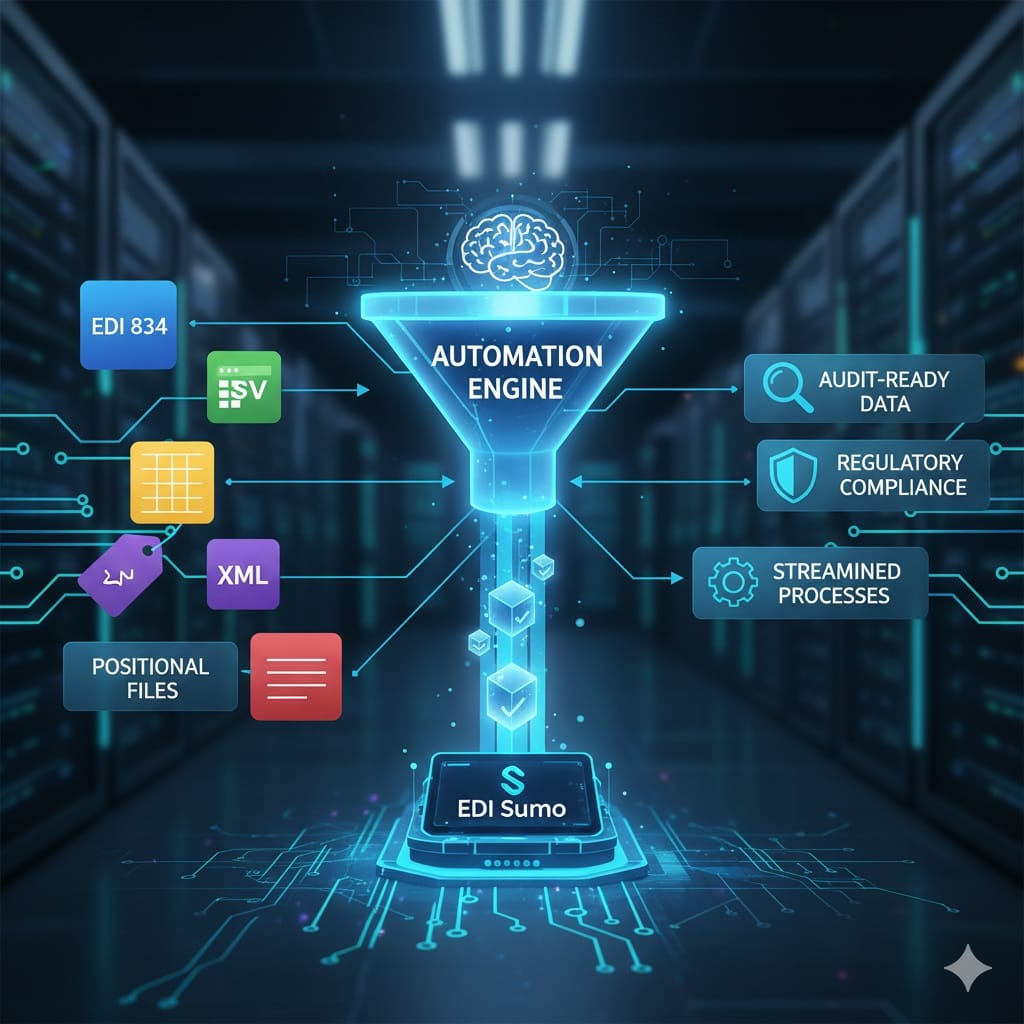
- Recent and verified EDI 834 enrollment file: If a member’s most current enrollment data is available, confidently skip unnecessary eligibility queries. EDI Sumo standardizes incoming data—whether EDI, CSV, XML, or other formats—into a single, accurate dashboard.
- Batch claims (EDI 837) with high enrollment confidence: When running high-volume claims batches using solid internal enrollment validation, reserve real-time checks for only the exceptions and outliers. This approach reduces inquiry loads and accelerates processing.
- Low-cost, predictable service types: Routine encounters, such as office visits with confirmed active coverage, generally don’t require real-time inquiry unless challenge flags arise.
- Fully integrated partner data flows: Where seamless, automated reconciliation exists between payer platforms and major trading partners (like Aetna, Cigna, Blue Cross Blue Shield, or UnitedHealthcare), rely on clean B2B data rather than duplicating work through 270/271 loops.
- Comprehensive audit trails: If prior eligibility validation is tracked through automated audit logs with discrepancy alerts (such as those provided by EDI Sumo), you can avoid repeat checks for the same member within recent periods.
Understanding the Underlying Framework: Step-by-Step Guide
- Centralize and standardize all enrollment data: Consolidate incoming EDI 834, Excel/CSV, and XML files into a single repository. EDI Sumo supports this multi-format ingestion, so teams always access the freshest data.
- Run internal validations and automated alerts: Apply custom rules to detect discrepancies in real time—ensuring immediate action on lapses, mismatches, or expiring coverage, like the automated alerts built into EDI Sumo's eligibility module.
- Use role-based dashboards for fast lookup: Empower EDI coordinators and claims analysts to self-serve eligibility checks, minimizing dependency on IT and enhancing operational agility.
- Trigger 270/271 selectively for exceptions: For unresolved discrepancies or high-risk claims, automate 270/271 submission directly from your eligibility dashboard or claims workflow—targeting resources where they matter most.
Risks and Mitigation: Avoiding the Pitfalls of Skipping Eligibility Checks
For every operational shortcut, there is a potential compliance or claims risk. Skipping eligibility checks unnecessarily can raise denial rates, create payment delays, and increase provider abrasion—especially if enrollment data is outdated, incomplete, or not centrally managed. According to research data, some payers have experienced up to 15% of eligibility inquiries rejected due to missing or mismatched identifiers.
- Mitigation strategy 1: Strengthen your enrollment ingestion process. Leverage advanced EDI translators or eligibility management platforms like EDI Sumo for custom data validations, duplicate detection, and robust format conversions.
- Mitigation strategy 2: Deploy discrepancy alerting and audit trails. Realtime notifications on member status changes or data mismatches are essential—let your automated alerts do the heavy lifting, so teams only intervene when truly required.
- Mitigation strategy 3: Reserve manual eligibility inquiries for high-risk zones. Make 270/271 your safety net for edge cases—not your primary workflow.
How EDI Sumo Optimizes Eligibility Check Strategies for Payers
EDI Sumo enables health, dental, and vision payers to streamline eligibility operations by:
- Processing EDI 834, CSV, XML, API, and other input files into a single, unified dashboard—eliminating manual rekeying and reconciliation work.
- Automating alerts and validations, flagging discrepancies or changes as soon as they occur, so teams intervene proactively—not reactively.
- Maintaining enterprise-wide visibility with role-based access, detailed audit trails, and compliance tracking—all designed to reduce unnecessary 270/271 traffic and protect member data.
- Integrating seamlessly with leading claims and core administrative systems, ensuring data is always accurate, up-to-date, and widely accessible without extensive IT intervention.
With these capabilities, many payers report substantial improvements in operational efficiency, service level agreement adherence, and reduction of eligibility-related claim denials.
Best Practices: Building a Lean, Resilient Eligibility Workflow
- Invest in true data standardization: Consolidate all sources (EDI, CSV, XML, manual uploads) with a tool like EDI Sumo to achieve real-time accuracy and transparency.
- Automate routine validation tasks: Let automated alerts, not staff, surface discrepancies and issues as soon as they emerge.
- Focus 270/271 on exceptions only: Treat real-time eligibility inquiries as your targeting mechanism for the 5–10% of cases that genuinely require outside confirmation.
- Maintain audit logs and reporting for compliance: Chronicling every eligibility action ensures HIPAA and regulatory alignment, simplifies auditing, and clarifies root-cause analysis during disputes.
- Continuously evaluate integration health: As payer-partner ecosystems evolve, test and monitor interfaces for real-time data flows and error rates—a process made simple by solutions like EDI Sumo’s integrations to major health plans.
Key Takeaways and Action Steps
- Not every transaction needs a 270/271—most can be validated using robust internal enrollment data and audit trails.
- Strategic, automated ingestion, validation, and real-time alerts (as in EDI Sumo) are pivotal to minimizing unnecessary eligibility traffic and claim denials.
- Reserve real-time eligibility checks for edge cases, data disputes, complex claim types, and high-cost service categories.
- Continue to monitor, audit, and refine eligibility workflows as payer ecosystems evolve and regulatory requirements shift. For additional tips, see our post on the KPIs that drive EDI success for payers.
If your organization is ready to streamline eligibility checks, enhance operational efficiency, and get proactive about compliance, we encourage you to connect with our team. Discover how we can help you reclaim control of your EDI operations and drive better outcomes across claims, enrollment, and customer service.





.png)

.png)


.png)

