

Automated Error Detection in Health Insurance EDI: Minimizing Revenue Leakage and Compliance Risk

.png)
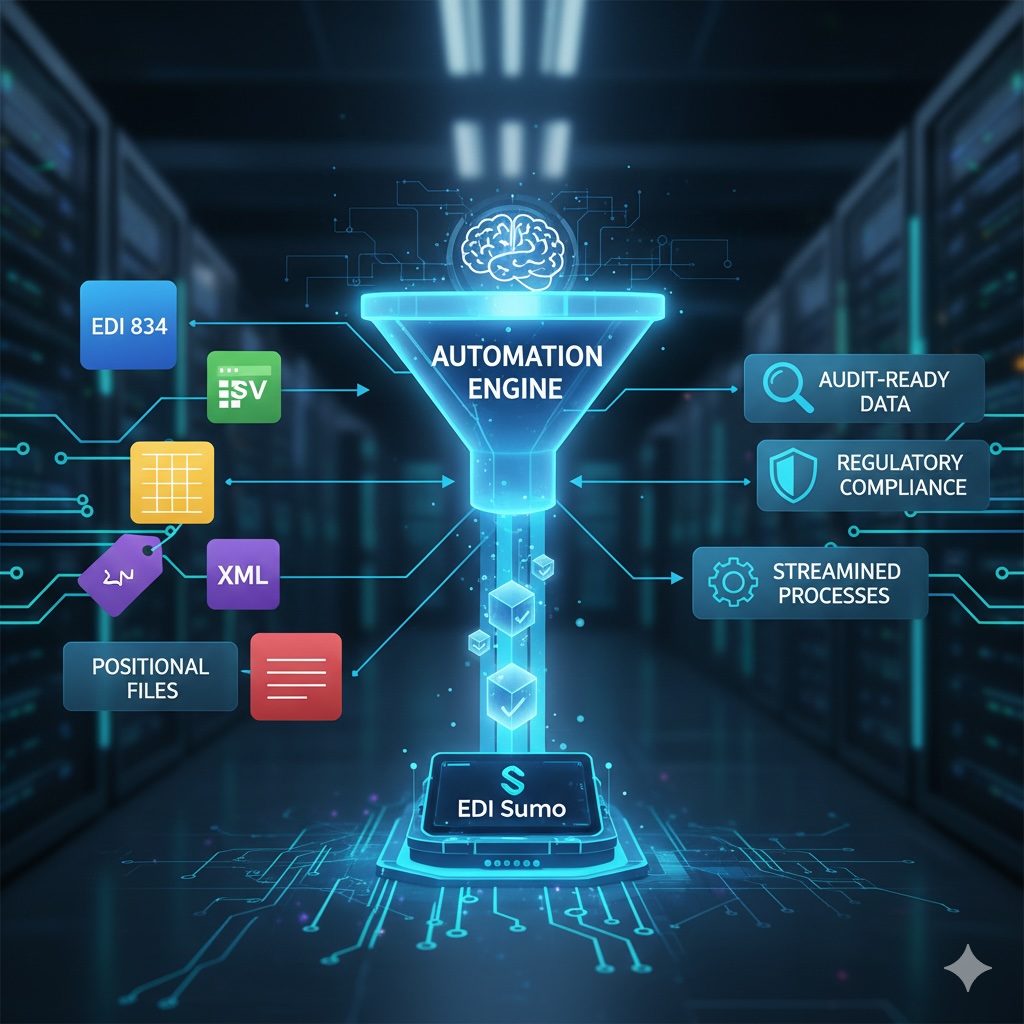
Health insurance payers today face a mounting challenge: hidden EDI (Electronic Data Interchange) errors quietly eating away at revenue, inflating costs, and putting organizations at risk of compliance violations. While the adoption of EDI standards has made it possible to process millions of claims and eligibility files quickly, the sheer pace and complexity mean that errors can slip past overworked teams—causing headaches for finance, compliance, and IT alike.
Why EDI Errors Are a Massive Problem for Health Insurance Payers
From the outside, EDI might just seem like a pipeline shuffling data efficiently between trading partners. The reality is more complex. EDI in health insurance must handle dozens of file formats—ANSI X12 like 834s and 837s, CSVs, XML, and more—each carrying sensitive enrollment or claims information bound by HIPAA and other regulations.
- File or Data Errors (invalid data, misaligned fields, missing segments, etc.) can result in claims being denied or eligibility updates failing to load, leading to member disruptions and potential revenue loss.
- Manual Processing Gaps make error-prone work nearly unavoidable—typos, overlooked file versions, or missed alerts may not be caught until it’s too late for remediation.
- Compliance Risks arise when incomplete or incorrect EDI records aren’t flagged and remedied. HIPAA violations or missed audit trails can trigger severe financial and reputational penalties.
Manual Error Detection: Why It's No Longer Sustainable
Historically, organizations have relied on EDI coordinators or IT teams to pull daily exception reports, hand-check error logs, and respond reactively to issues. This is not just an inefficient use of highly skilled staff; it ultimately means that:
- Errors are discovered hours or days too late, after they’ve impacted claims, cash flow, or compliance.
- Support teams lack real-time visibility—so resolving member or provider complaints is a slow, frustrating process.
- Data silos make it difficult for leaders to understand the size, scope, or financial impact of ongoing EDI problems.
What Does Automated Error Detection Look Like in Practice?
At EDI Sumo, we’ve worked with payer organizations who want more than basic logging. They want a proactive, automated system that makes error detection—across eligibility, claims, enrollments, and more—practically effortless. Here’s what that really means:
- Real-Time Monitoring of all EDI file exchanges, regardless of source or format, enabling teams to spot and resolve issues before they can propagate downstream.
- Automated Discrepancy Alerts delivered instantly to the right people (not buried in exception logs) so teams can fix errors before SLAs are missed or data is loaded into production.
- Deep Data Validation at multiple layers—including custom rules for specific payer policies—so that more than just obvious structural problems are caught.
- Unified Dashboards and Role-Based Access so that support, IT, and compliance teams are always in sync—with a single source of truth for every file, event, and transaction.
- Comprehensive Audit Trails that record every data movement, correction, and user action, critical for HIPAA compliance and audit readiness.
Key Benefits: Real-World Impact on Revenue and Compliance
Automated error detection in health insurance EDI may sound like an IT problem, but the effects ripple throughout the business. Here’s what it delivers in practice:
- Faster, Cleaner Claims Processing: Preventing flawed claims from entering the pipeline means rejections drop and cashflow improves because payers aren’t stuck in a back-and-forth with providers or having to resubmit.
- Revenue Leakage is Contained: Every single error that results in a denied or delayed claim is revenue that might never be recovered. Automated systems let teams catch and fix issues at the source—before they become lost revenue.
- Audit-Ready, Every Day: With full audit trails and immutable logs, compliance teams always have the reporting they need to sail through audits—even if regulators come calling on short notice.
- Employee Productivity Soars: When manual exception processing is replaced with automation and dashboards, skilled IT or enrollment staff spend less time firefighting and more time on high-value, strategic work.
Deep Dive: The Core Features of Automated EDI Error Detection
Let’s break down the technology and practices that make a true difference for payer organizations, based on real-world solutions we’ve helped deploy at EDI Sumo.
1. Multi-Format, Multi-Source Data Handling
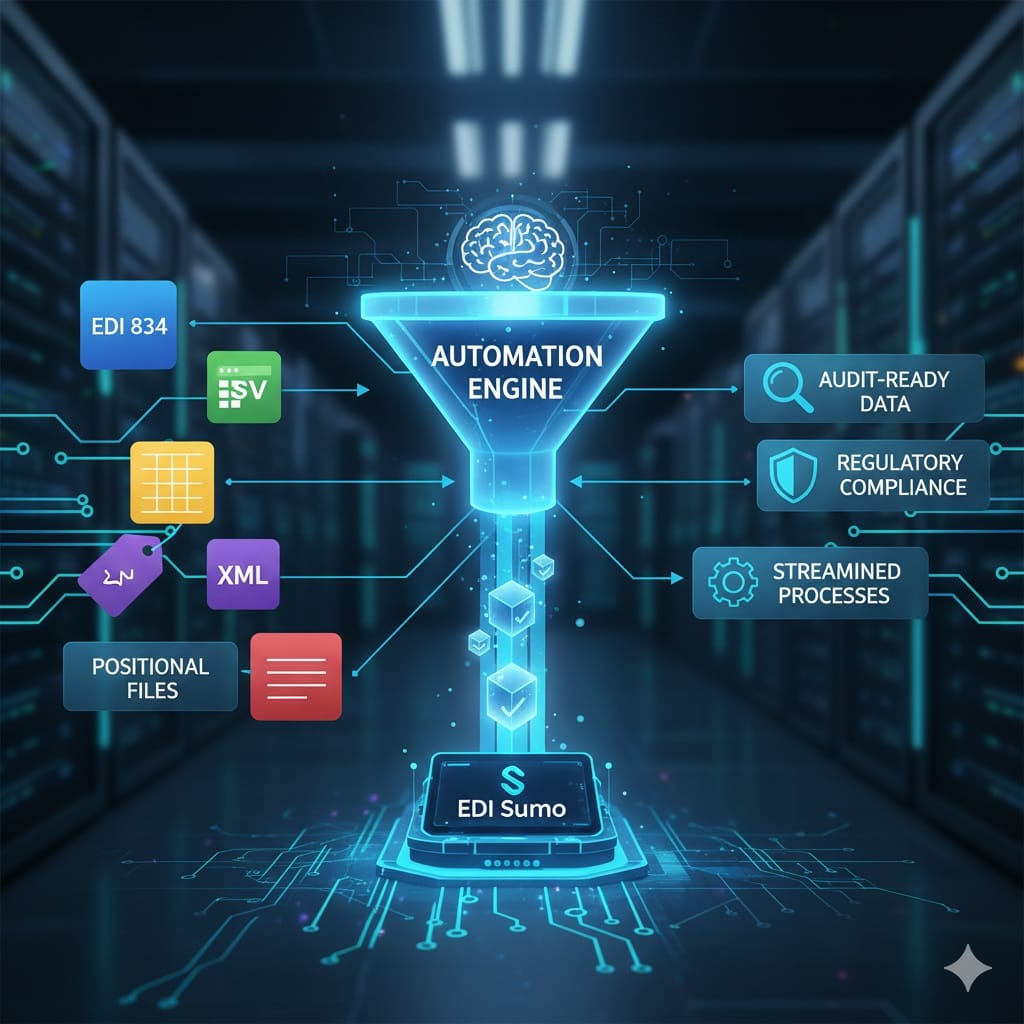
Health insurance payers rarely work with just one format or source. Automated detection means supporting enrollment and claims data in EDI 834, EDI 837, CSV/Excel, XML, and proprietary positional files—without manual mapping or conversions. Our platform handles all formats and keeps the source-of-truth metadata, so teams can validate apples to apples every time.
2. Layered Validation: More than Syntax Checks
Simple file validation doesn’t go far enough. True error detection includes:
- WEDI/SNIP Levels 1-7 checks (from basic syntax to semantic integrity)
- Custom Payer Rules that are unique to each business (e.g., member age ranges, effective date overlaps, payer-specific segment requirements)
- Real-Time Performance Metrics—tracking not just file delivery, but each transaction’s timeliness and success rates
3. Alerting and Remediation Workflows
Automated emails or dashboard alerts route the right errors to the right users (enrollment, claims, compliance, IT, etc.)—so resolutions happen rapidly and central support teams aren’t left in the dark. This ensures issues get resolved before impacting SLAs or member/provider experience.
4. Complete, Centralized Audit Trails
No more lost logs or ambiguous change histories. Every touchpoint—file upload, parse, edit, approval, fix, or re-transmit—is logged and timestamped, providing a rock-solid compliance record.
5. Seamless Integration with Claims and Enrollment Systems
Automated error detection is only useful when it’s actually part of your business process. Our platform integrates with leading claims management and enrollment tools, making sure that clean, validated data flows into production systems, eliminating costly data overloads and re-work.
Moving Beyond Error Detection: Building a Culture of Proactive EDI Management
While automated error flagging and correction are crucial, the real value comes when payer organizations build a culture and infrastructure around proactive EDI management. This allows everyone—from customer service to compliance—to:
- Catch issues at the source, not after the fact
- Enable business teams to resolve discrepancies without relying on IT for every exception
- Make data accessible, actionable, and trusted throughout the enterprise
We’ve found that, by getting these fundamentals right, our clients not only minimize revenue leakage and lower compliance risk—they also gain a major competitive advantage in speed, transparency, and member satisfaction.
Get Ahead of Risk: Now Is the Time to Automate
At EDI Sumo, we’ve helped payers:
- Reduce EDI operating costs and avoid SLA penalties
- Accelerate clean data load to claims/enrollment systems
- Strengthen compliance posture, making audits easier than ever before
- Empower staff at all levels, cutting through the noise and putting the right data in the right hands
Ready to see how automated error detection can protect your revenue and reputation? Learn more about Claims Management, Eligibility Processing, and discover how our next-gen platform can streamline and safeguard your EDI infrastructure. Get in touch or schedule a demo—let’s tackle compliance and revenue leakage together.





.png)

.png)


.png)

