

The Subsidy Cliff Is Here: Navigating the Q1 Data Storm as ACA Enhanced Credits Expire

.png)

The enhanced ACA subsidies are officially gone, and the fallout is hitting payer operations in real-time. With millions of members suddenly ineligible for the credits they relied on for the last four years, Q1 is set to be a gauntlet of plan switches and billing inquiries. To survive this shift, payers must move beyond reactive support. Addressing the root causes of enrollment errors and payment delays is now the only way to prevent a wave of member churn from turning into a long-term fiscal headache.
How is the Subsidy Expiration Impacting Q1 Enrollment and Billing?
The expiration of enhanced ACA subsidies on Dec. 31, 2025, has triggered an immediate and massive shift in the individual market. For payers, the "subsidy cliff" is a live challenge. With millions of members seeing their premiums more than double overnight, health insurance organizations are seeing these three immediate trends in Q1:
- Aggressive Plan Downgrading: Members who previously held Gold or Silver plans are migrating to Bronze or "Catastrophic" plans to keep monthly costs manageable.
- Surge in Mid-Period Terminations: As the first invoices of 2026 hit bank accounts, we are seeing a sharp increase in non-payment terminations as families realize they can no longer afford the unsubsidized rates.
- High-Volume, Multi-Format Traffic: Enrollment traffic is spiking as members scramble to change plans before the Jan. 15 deadline. Payers are struggling with a "data deluge" of 834 files, CSVs, and XMLs from exchanges, brokers, and direct-to-consumer portals.
Critical Operational Friction Points
As members adjust to the 2026 pricing landscape, your teams should be prepared for:
- Enrollment Data Discrepancies: A spike in error rates caused by the rapid movement between plan types and the loss of automated "Special Enrollment Period" (SEP) eligibility that previously smoothed these transitions.
- Billing & Reconciliation Delays: Increased disputes over "Net Premium" vs. "Gross Premium" as members question why their tax credits have vanished or significantly decreased.
- Reset Confusion: Intense claims inquiries as members hit significantly higher out-of-pocket maximums and deductibles compared to the 2021-2025 period.
Step-by-Step: Managing the 2026 Enrollment Data Deluge
To keep your teams ahead of the Q1 volatility, focus on real-time intake and monitoring as we head toward the Jan. 15 enrollment deadline.
Centralize Multi-Format File Intake
With millions of members shopping for more affordable plans, payers are receiving files from more sources than ever—including state exchanges, direct brokers, and new HSA-eligible plan platforms.
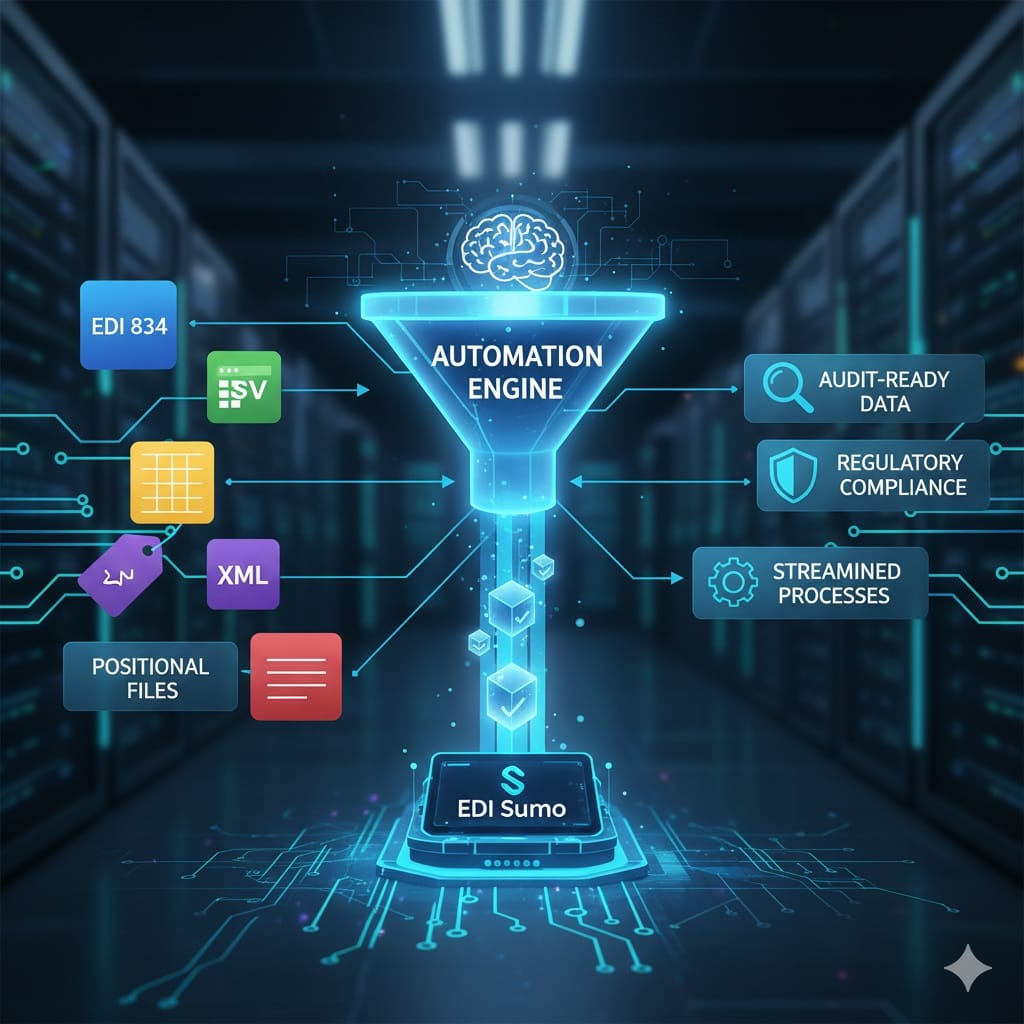
Manage all incoming enrollment files through a single secure channel. Systems like EDI Sumo are designed to ingest and normalize EDI 834, Excel, CSV, and XML formats.
- Automate Now: Use SFTP drop folders to pull files from every trading partner hourly, not daily.
- Normalize Subsidy Data: Ensure your system can flag members whose subsidy status has changed from "Enhanced" to "Standard" or "None" to prevent immediate billing errors.
Establish Real-Time Validation and Error Alerts
In 2026, you cannot afford to wait 24 hours to find a mapping error. Use custom rules to flag discrepancies the moment they arrive—especially regarding premium calculations which are fluctuating wildly due to the subsidy expiration.
- Automated Alerts: Set triggers for high error rates on files coming from specific brokers or exchanges.
- Identify "Subsidy Mismatches": Tailor your validation to flag files where the expected premium tax credit (APTC) doesn't align with the new 2026 federal poverty level (FPL) thresholds.
- Empower Your Team: Ensure your EDI coordinator is alerted via real-time dashboard notifications rather than sifting through technical logs.
Enable Organization-Wide Data Access
In a year defined by high churn, your Customer Service and Billing teams need the same data as your IT team. Role-based dashboards allow your staff to answer member questions about "Why did my premium double?" with accurate, real-time data.
- Real-Time Visibility: Your dashboard should display live file processing stats and pending discrepancies.
- Audit Trails for Compliance: With the expiration of the subsidy repayment caps in 2026, having a clear audit trail of member changes is critical for both internal audits and federal compliance.
Billing and Claims: Managing the Cascade
The data errors you catch in enrollment today prevent the claims disasters of tomorrow.
- The Deductible Reset: As members move to Bronze or Catastrophic plans to save on premiums, they face much higher deductibles. Automated validation of EDI 837 files ensures that claims are processed correctly against these new, higher out-of-pocket limits.
- Mid-Cycle Adjustments: As Congress debates potential subsidy extensions in January, be prepared for a wave of mid-cycle premium adjustments. (While a House vote is expected this month, success remains uncertain, making data-driven agility your only reliable strategy for now.)
- Direct Downstream Integration: Ensure your "clean file" outputs feed directly into your core claims and billing platforms. This eliminates the manual re-keying errors that often spike during the high-volume Q1 period.

Common Pitfalls and How to Handle Them in Real-Time
- Legacy Data Mapping Lag: Relying on manual spreadsheet updates during the final weeks of Open Enrollment (ending Jan. 15) is now a critical risk. With 2026 gross premiums up 26% and net costs doubling for many, any delay in processing an 834 file can lead to members being double-billed or incorrectly terminated.
- "Subsidy Cliff" Data Inconsistencies: The return of the 400% FPL income cap means many members are transitioning from heavily subsidized Silver plans to Bronze or HSA-eligible plans. If your enrollment, billing, and claims systems aren't synchronized, a member might be verified for a plan but billed at an unsubsidized rate, causing immediate churn.
- Slow Error Resolution: In Q1 2026, an unresolved discrepancy leads to a phone call from a frustrated member whose premium just tripled. You must be able to drill into member-level audit history to see exactly when their APTC (Advanced Premium Tax Credit) status changed.
- The IT Bottleneck: With Open Enrollment traffic remaining high despite the subsidy lapse, customer service teams need direct portal access. Don't let member inquiries about 2026 plan changes get stuck in an IT ticket queue.
Proven Strategies for the 2026 Transition
- Audit "Subsidy Mismatch" Files Now: Prioritize the processing of files where a member’s income is near the 400% FPL threshold. These are the records most likely to contain errors regarding the newly returned "subsidy cliff."
- Automate 277/990 Tracking: Handle the current spike in acknowledgments by automating your report generation. This ensures that the Exchange knows exactly which enrollments were accepted before the Feb. 1 coverage start dates.
- Stress Test for 2026 Repayment Rules: Since the repayment caps for excess tax credits were removed starting this year, your audit trails must be flawless. Members who received too much credit will now have to repay the full amount at tax time; your data is their only defense.
- Verify HSA Compatibility: CMS expanded HSA rules for 2026, making all Bronze and Catastrophic plans eligible. Ensure your EDI 834 intake correctly flags these plans so that members can open and fund their HSAs without delay.
- Real-Time Security Monitoring: With the high volume of churn, confirm that your role-based access controls (RBAC) are strictly enforced. As you give more teams access to data to handle the Q1 surge, maintaining HIPAA-compliant encryption for data in transit and at rest remains the baseline.
Security and Compliance
Even during this period of high churn and administrative pressure, security cannot be sidelined. Ensure your platform provides:
- Multi-Factor Authentication (MFA) for all staff accessing member files.
- Full Audit Trails to track every change in subsidy eligibility or plan selection.
- Advanced Encryption (AES-256) for all member PII (Personally Identifiable Information).
Additional Resources for Your Team
- If you want a deeper dive into why data format standardization matters, read Why Data Format Standardization Is Critical for Healthcare Insurance Operations
- Explore strategies for turning EDI transaction data into insights in Turning EDI Transaction Data Into Actionable Insights.
Preparing for Uncertainty with the Right Tools
If you are responsible for claims and enrollment operations in health insurance, Q1 will likely bring both high scrutiny and spikes in data complexity. You may want to reach out for a walk-through of solutions designed to manage multi-format intake, automate validations, and give teams the data visibility they need across enrollment and claims. EDI Sumo offers these capabilities to help payers meet high standards for clean, accessible, and secure data. If you want to see this in action, connect with us for a demo with our team.





.png)

.png)


.png)

