

From Batch to Real-Time: Monitoring Strategies that Protect SLAs and Performance Guarantees

.png)

Data flows are the lifeblood of health insurance. Whether it’s an employer’s nightly EDI 834 enrollment file or thousands of EDI 837 claims arriving by the minute, monitoring these data streams is an operational foundation. Payers operate in an environment where SLA violations can result in serious costs, compliance risks, or unhappy members, and the difference between catching issues in hours versus seconds can define reputation and revenue alike. Our experience with EDI Sumo continually reinforces that fusing modern real-time monitoring with insightful batch analytics is the best insurance for your SLAs.
Understanding Batch and Real-Time Monitoring in Healthcare EDI
Let’s take a practical view of why both batch and real-time strategies matter for payers, and how the transition from one to the other drives continuous improvement across enrollment, claims, and compliance operations.
What Is Batch Processing?
- Data is collected and stored, then processed at scheduled times (e.g., nightly, weekly).
- Used for large files like EDI 834 enrollment or EDI 837 claims transactions, historical analysis, and regulatory reporting.
- SLA or error reports are only available after the batch finishes, which means issues might go undetected until it’s too late.
Batch is reliable for compliance audits, but reactive in nature. For example, if an EDI 834 batch fails at 2am, you might not know until the workday starts, while SLA clocks have been quietly ticking.
The Power of Real-Time Monitoring
- Data is validated and processed as it arrives (within seconds).
- Immediate alerts for errors in EDI 277 acknowledgments, 999 transaction failures, or eligibility mismatches.
- Empowers operational and compliance teams to act right away, reducing risk of SLA violations, faster remediation, and better overall data quality.
For payers, this means catching a duplicate member in EDI 834 enrollment or detecting a spike in EDI 837 claim denials as they happen, not hours later.
Why the Transition Matters: The SLA Protection Journey
Combining batch and real-time strategies lets you maintain the assurance of comprehensive, auditable batch archives while unlocking the agility of real-time corrections and incident response. Here’s why this matters to us and our customers:
- Real-time validation protects SLAs at every moment, with automated alerts for missed enrollments, missing dependents, or sudden error trends in claims files.
- Batch audits provide regulatory-compliant reporting and back-up verification for any disputed transaction or compliance event.
- Operational transparency means business teams don’t have to wait for IT to run a script or generate a report; visibility is instant and self-serve.
7 Steps to Building an Integrated Monitoring Strategy
- Clearly Define SLA Requirements
Work with business, compliance, and IT leadership to document the exact metrics that define a breach: e.g., EDI 834 must be 99.99% accurate and process within four hours of receipt. Codify these as part of trading partner agreements and internal goals. - Select Tools That Support Both Real-Time and Batch Monitoring
Choose platforms built for healthcare EDI, able to process and validate EDI 834, 837, 999, and 277 in both batch and streaming modes, while providing real-time dashboards and alerting. Tools should support compliance with HIPAA and enable effortless audit trails. - Automate Rich Alerts and Role-Based Notifications
Don’t just flag errors, send them, with context, to the right people. Ops teams need actionable details for EDI exceptions, while business users need summaries that empower self-service. Prioritize platforms that support customizable workflows and instant escalation. - Standardize Data Across Formats
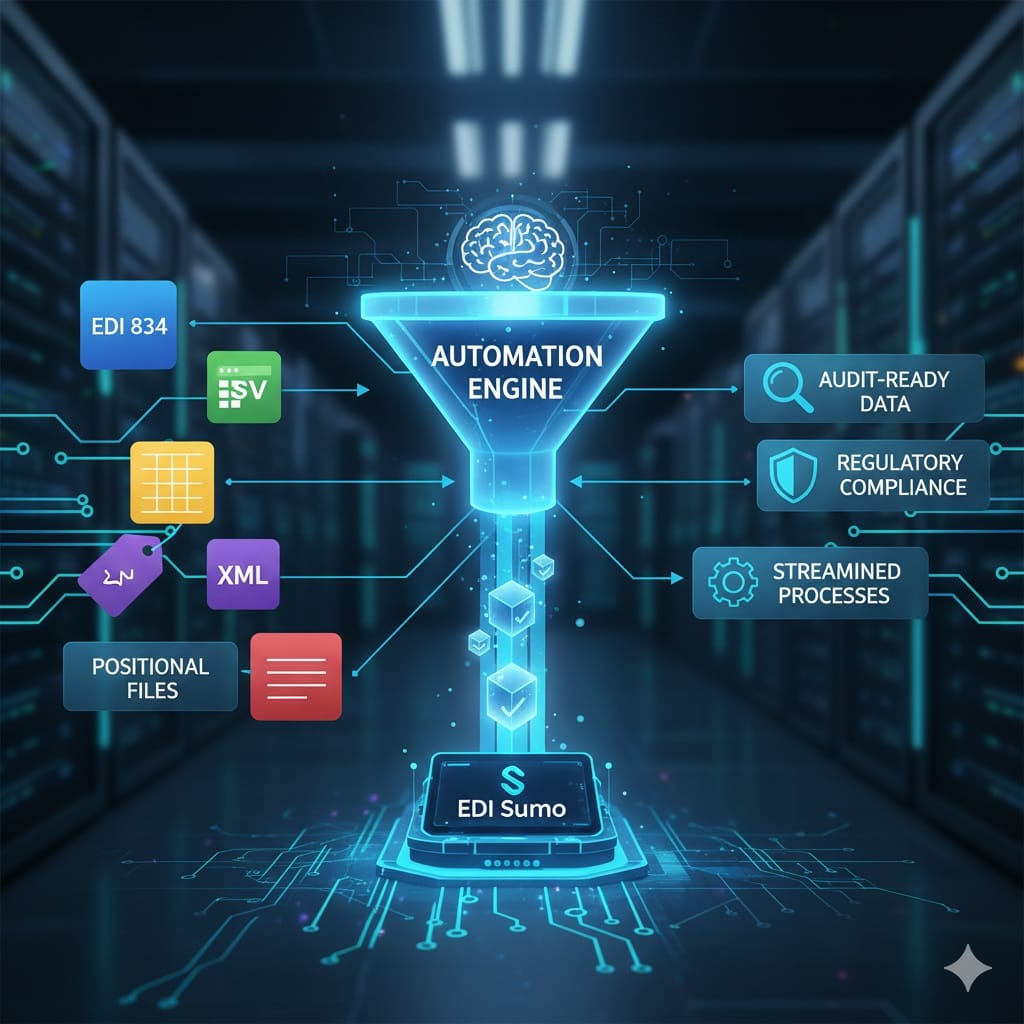
Enrollment or claims data can arrive in EDI, CSV, XML, or even positional text files. Solutions like EDI Sumo handle cross-format validation and standardization, ensuring no bad data misses an alert, no matter how it arrives. - Run Batch and Real-Time Monitoring in Parallel During Transition
Validate real-time catches what batch would have caught (and more), and use batch outputs for regulatory submissions and historical analysis. This transition period gives you confidence in automation and lets teams adjust without risk. - Provide Transparent Reporting and Enable Business Access
Stakeholders should have access to dashboards that slice performance by trading partner, file type, or error type, equipping them for proactive improvement. Weekly reviews help spot trends and identify root causes before they escalate. - Ensure Robust Data Security and Compliance
Data flows must be secured with encryption, access controls, and audit trails. Look for solutions with built-in HIPAA compliance and features like multi-factor authentication (MFA) to protect sensitive health information.

Healthcare EDI Transaction Focus: Where Monitoring Drives the Most Value
1. EDI 834 – Enrollment Data
Enrollment files define who has coverage, when, and at what level. Even a single missed dependent or erroneous date can trigger costly downstream issues. Real-time monitoring helps us:
- Catch enrollment errors or mismatches as files arrive
- Proactively alert enrollment directors if a trading partner’s file volume is off-pattern
- Ensure record-level audit trails for later compliance review
2. EDI 837 – Claims Transactions
Every 837 file is a potential payment and a compliance risk if not processed promptly and accurately. Real-time monitoring delivers:
- Visibility into claim errors, denials, or pended files as soon as they happen
- Faster correction cycles, protecting prompt-pay SLAs and customer satisfaction
- Immediate documentation for audits
See also: Turning EDI Transaction Data into Actionable Insights
3. EDI 999 & 277 – Acknowledgements and Error Reports
999s certify that inbound files are structurally sound, while 277s report on claim status. Real-time visibility makes it possible to:
- Flag dropped or rejected files in time to resubmit inside SLA windows
- Detect trends in specific error codes or partners, fueling continuous improvement
- Eliminate manual sifting through large error files post-factum
Dive further: The KPIs That Drive EDI Success in Health Insurance
4. SNIP Levels – Transaction Validation
Validating transactions at all WEDI/SNIP levels (1–7) helps identify syntactical and business logic errors before data hits core processing. Incorporating real-time SNIP validation mitigates compliance risk and prevents downstream manual corrections.
Learn more: Implementing SNIP Level Validation
Key KPIs for Monitoring SLA Performance
- Uptime Percentage: Aim for >99.99% availability for critical feeds
- Error Rate: Number and rate of errors per 1,000 transactions
- Processing Time: Seconds or minutes from file receipt to data load
- Data Completeness & Accuracy: Percent of valid, matchable records
- Compliance Violations: Immediate alerts and reports for SLA breaches
Best Practices for Moving from Batch to Real-Time
- Start by parallelizing your new real-time monitoring with existing batch processes. This builds trust and surface overlaps or inequities in your reporting. Gradually switch critical data flows (e.g., EDI 834s, urgent claims) to full real-time alerting.
- Educate both IT and business users on new dashboards and self-serve analytics. Empower business teams to resolve non-technical errors directly.
- Continuously review and refine alert thresholds and escalation paths. Your initial settings will need tuning as workflows mature and real-world patterns emerge.
- Maintain routine archival batch jobs for historical, regulatory, and dispute support. Audit trails and batch summaries will always matter for compliance.

Action Steps for CIOs and EDI Leadership
- Map your key SLA-driven transactions and compliance outcomes (enrollment, claims, acknowledgments).
- Pilot a real-time monitoring suite alongside your existing tools, focusing on high-volume or high-risk trading partners.
- Review internal incident logs and SLA reports weekly, not just monthly or quarterly. Use this data to adjust policies and escalation paths.
- Expand integration across all formats and partners, using standardized workflows for exceptions and escalation.
Final Thoughts Towards Secure, Proactive, and SLA-Proof Data Operations
The future of data monitoring in healthcare isn’t about choosing between batch and real-time; it’s about uniting both for complete coverage. As regulatory requirements tighten and business expectations soar, payers who invest in this dual approach can exceed SLAs, reduce operational headaches, and build core trust with partners and members alike. From enrollment to claims and every compliance step in between, agile monitoring is essential infrastructure.
If you’re ready to see how this looks in action, schedule a conversation or demo with us at EDI Sumo. We’re always eager to show how healthcare payers can protect their performance guarantees with clarity, speed, and confidence.





.png)

.png)


.png)

