

EFT/ERA Match Rates Stuck? 9 Tweaks That Fix Reconciliation Blind Spots

.png)

Whether you’re a CIO, an IT Director, or a hands-on EDI Coordinator, you know the pain of EFT and ERA mismatch: cash unapplied, reconciliation running late, and manual detective work that drags your EDI and finance teams away from strategic priorities. In the healthcare payer world, these challenges are not just nuisances—they threaten timely revenue recognition, SLA commitments, and operational efficiency.
Below are the most common reconciliation blind spots and the practical changes that actually improve match rates.

Understanding EFT/ERA Reconciliation Challenges
Electronic Funds Transfer (EFT) means payment lands in your providers’ bank accounts swiftly. The Electronic Remittance Advice (ERA)—delivered as the EDI 835—details the who, what, and why for each deposit. The industry’s goal is simple: reliably match deposits with corresponding ERAs for hands-free, same-day posting and faster revenue cycles. Yet, match rates can stall at frustrating levels due to:
- Mismatched or inconsistent payer IDs and routing numbers.
- Data entry errors in enrollment setups.
- Formatting quirks—think CSV versus EDI versus XML quirks.
- Siloed systems creating data visibility gaps.
- Lack of standardization across trading partners.
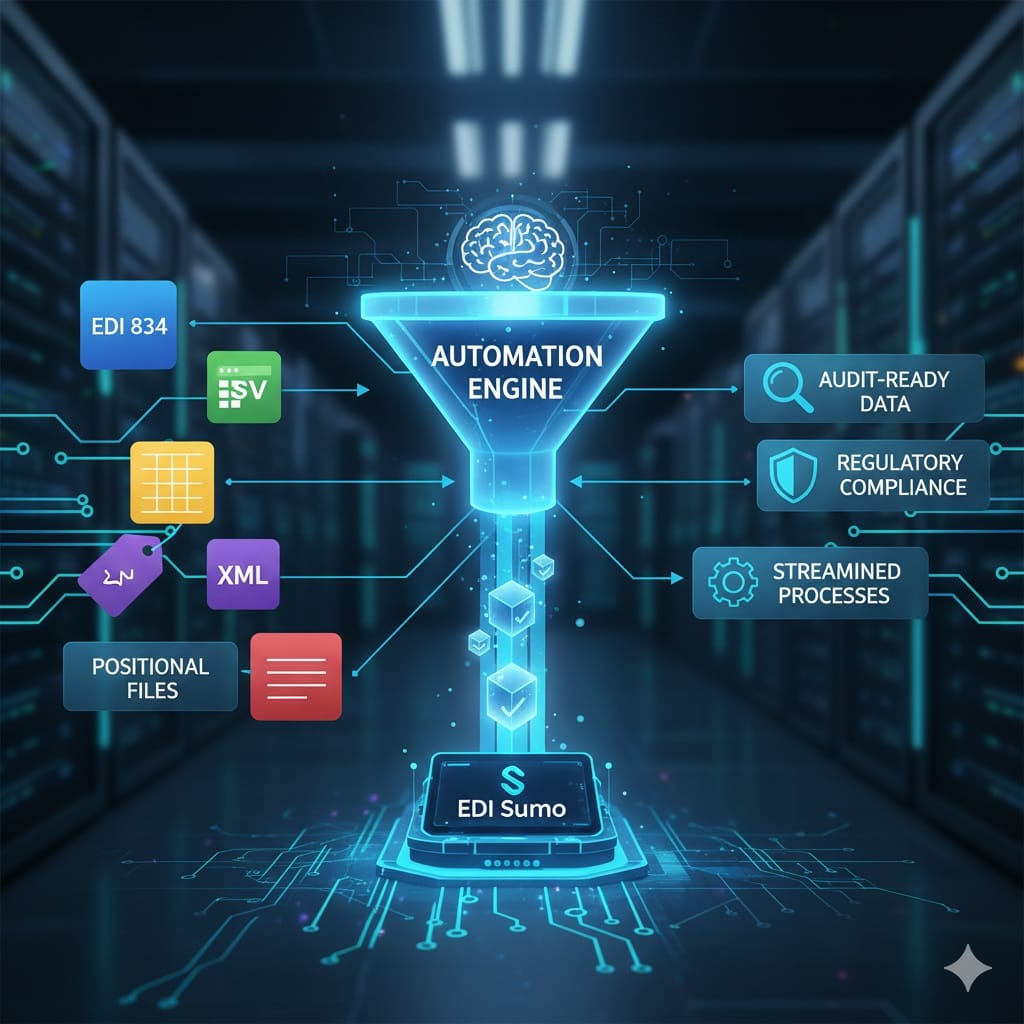
As a result, busy insurance teams face mounts of unapplied cash, delays in A/R close, and a constant threat of compliance issues. Real-time monitoring, unified dashboards, and clean integrations, like those we support at EDI Sumo, have become essential to unblocking these bottlenecks.
9 Detailed Tweaks to Fix Reconciliation Blind Spots
After years of supporting enrollment, eligibility, and claims operations across health, vision, and dental payers, here’s what actually moves the needle on EFT/ERA reconciliation. Each action is described with implementation focus and actual use-case value.
1. Centralize All Payer IDs, Routing Data & Enrollments
Fragmented payer details are reconciliation poison. Consolidate payer identifiers, banking data, and status of each ERA/EFT enrollment in one auditable view—ideally in a dashboard with real-time updates. Start with your highest-volume relationships. A unified approach slashes duplicate enrollment requests, reduces typos, and brings instant clarity. We’ve seen teams achieve complete (100%) ID accuracy within a week of launching this step.
2. Enforce Same-Day Reconciliation Habits
Delay is the enemy of clarity. Build a daily discipline to match that day’s bank deposits with their ERA/835 documentation coming in. Require a TRN (Trace Number) match before payments are posted. Drive toward at least 90% matches on Day 0, reducing the need for month-end triage and costly error resets. Everyday habits help expose exceptions fast.

3. Use Rule-Based Three-Way Auto-Matching
A best-practice process connects the incoming deposit, the ERA, and the original claim using trace numbers. Add fuzzy matching for patient names or service dates when exact traces don’t align. Configurable rules handle split payments or multi-claim bundles, enabling >90% of matches to be posted automatically. This stops countless hours of manual linking. If you’re not yet leveraging these paths, your staff is paying in sweat equity.
4. Pilot With Small Batches and Tune As You Scale
Test new reconciliation logic with a controlled sample. Download one ERA, map service lines, post a defined batch (like $10,000), and double-check totals with your deposit. Review and adjust CARC/RARC crosswalks on any discrepancies. This pilot prevents up to 80% of issues that would otherwise surface only at full rollout and minimizes learning curve risks. Gradually ramp volume after proof of reliability.
5. Enable Fuzzy Matching for Outlier Claims
Certain complex or split claims will defy exact reconciliation logic—especially partial payments, timing variances, or corrections. Layer in AI-powered logic to associate keys like service dates, dollar amounts, or member IDs when standard trace or check numbers fall short. This additional layer can boost match rates for edge cases by up to 15% and alert teams immediately when true exceptions need review.
6. Monitor Weekly KPIs and Drive Issue-Spotting Huddles
Numbers don’t lie: Track the hours from ERA receipt to posting (shoot for under four hours), percentage of auto-posted volume (over 90%), and unapplied cash (under 1%). When these KPIs stall, gather teams for short, focused weekly huddles to trace persistent issues to their root—whether upstream enrollment gaps, misconfigured mappings, or new trading partner errors. This iterative discipline powers lasting improvement.
7. Integrate Split Claims and Automated 990/277 Generation
Manual split posting and secondary claims handling is a notorious time sink. Ensure your ERA processing supports auto-generation of 990s and 277s, triggers claim splits accurately, and closes out each episode with full audit trails. This not only speeds posting, but enables airtight compliance with HIPAA and simplifies preparation for any audit.
8. Prioritize High-Volume Partners for Full Digital Enrollment
Most unapplied cash comes from just a handful of major trading partners. Secure first-round ERA/EFT enrollment and connectivity with your top 20% (by transaction or dollar volume) before rolling out new workflow logic to all partners. Use multi-touch outreach—calls, reminder emails, and clear cutover deadlines (like "Paper checks end Q2") to drive adoption that gives you immediate impact with minimal change effort.
9. Close the Loop with Pre-Treatment Eligibility Verification
Many of the hardest-to-match payments begin with eligibility mismatches. Add a layer of automated, real-time eligibility checks (for example, leveraging multi-format feeds like EDI 834, CSV, and XML) right before treatment is authorized. This ensures that downstream ERA and EFT transactions match what’s expected, reducing denials, rework, and ultimately boosting reconciliation rates on the backend.

Are Better Match Rates Truly Achievable?
Absolutely. When payers bring together these nine focused improvements—consolidating identifiers, enforcing daily routine, layering in automation, piloting with feedback loops, and blending advanced logic—true transformation follows:
- Match rates soar from 60% toward 95-98% in well-tuned environments.
- Manual posting hours shrink by up to 50%.
- Unapplied cash and A/R days decrease, improving both compliance and cash flow.
- Audit response speed and accuracy increases with clean, real-time trails.
Of course, as with any EDI transformation, success comes from a blend of clear business rules, cross-department collaboration, and capable systems that put visibility in the right hands.
Bringing It All Together
We help bring clarity at a business and technical level, integrating seamlessly with claims and eligibility platforms with enterprise-grade compliance, robust audit trails, and actionable insights for every team involved.
If your organization is ready to move beyond blind spots, standardize payments, and turn reconciliation into a competitive advantage, we invite you to connect with us directly. Let’s reclaim the revenue, insight, and operational calm your organization deserves.





.png)

.png)


.png)

