

Claims Payment Automation in 2026: Aligning 835/EFT with Faster, Cheaper Payer Disbursements

.png)

Payer organizations are standing at a crossroads in 2026. As healthcare claims disbursement moves rapidly towards real-time, automated processing, the alignment of 835 Electronic Remittance Advice (ERA) and Electronic Funds Transfer (EFT) is at the forefront for CIOs and IT leaders who want to transform operations, cut costs, and serve providers better. For us at EDI Sumo, who help health, dental, and vision payers tackle EDI complexities, the real story is that automation is no longer just about speeding things up; it's about making every payer dollar and every provider interaction count, all the way from the first claim to the last payment reconciliation.
Why Claims Payment Automation Is Critical in 2026
It's not news that manual claims payment in healthcare is slow, fragmented, and costly. Administrative overhead, long payment cycles, and error-prone handoffs have been the norm for years. What’s changing in 2026 is the combination of mounting regulatory pressure, industry-wide adoption of 835/EFT standards, and much greater provider expectations. In our work, we see every day how fragmented EDI and legacy processes can cost payers more than just money: They slow down service, drain IT resources, and erode provider trust.
The 835 ERA and EFT: More Than Just Formats
The 835 ERA file is more than a technical requirement—it's the data backbone for automating how payments get documented and reconciled. When paired with direct deposit via EFT, it creates a full digital loop: payers can generate machine-readable remittance information, link it unambiguously to payments, and providers get clear, fast answers without support calls or manual matching.
The result? Less time spent on phone tag or ledger balancing, fewer errors, and much faster cycles, from claims adjudication to cash in the provider’s bank.
What's Pushing the Change? Trends Shaping the 2026 Claims Payment Landscape
- Mandatory Electronic Payments: Major insurers have set deadlines for migrating away from check payments to EFT driven by both efficiency and compliance with regulations. Payers still relying on paper checks need a roadmap for transition, as lagging could mean increased costs and compliance headaches.
- Provider Demands for Transparency: Providers now expect real-time tracking of payment status and reasons for discrepancies, demanding up-to-date, clear remittance data.
- Pressure to Reduce Administrative Waste: Industry estimates point to billions in avoidable administrative costs from slow or manual claim and payment cycles. Efficiency is now a boardroom priority for payers looking to compete aggressively in 2026’s market.
- Regulatory Compliance: New rules push for API-based integration and faster responses to authorization and payment requests, making automated, standardized data a necessity.
Moving Beyond "Patchwork": The True Value of End-to-End Automation
When payers unify their entire claims disbursement pipeline—adjudication, payment, remittance, and reporting—they unlock cascading benefits. At EDI Sumo, we’ve seen that the biggest gains happen at integration points, not just in isolated automation. For instance:
- Unified Data Visibility: Role-based dashboards and audit trails mean finance, EDI, and customer service see the same, real-time picture of claim and payment status. This dramatically cuts down on blind spots and escalations.
- Automated Reconciliation: 835 files, when paired with EFT, can be matched and posted to provider systems without manual intervention. Discrepancies are flagged instantly, with notification alerts replacing after-the-fact error reporting.
- Compliance Tracking: Systems designed for HIPAA and payer-specific rules can audit every payment step, providing regulators and auditors with granular logs on demand.
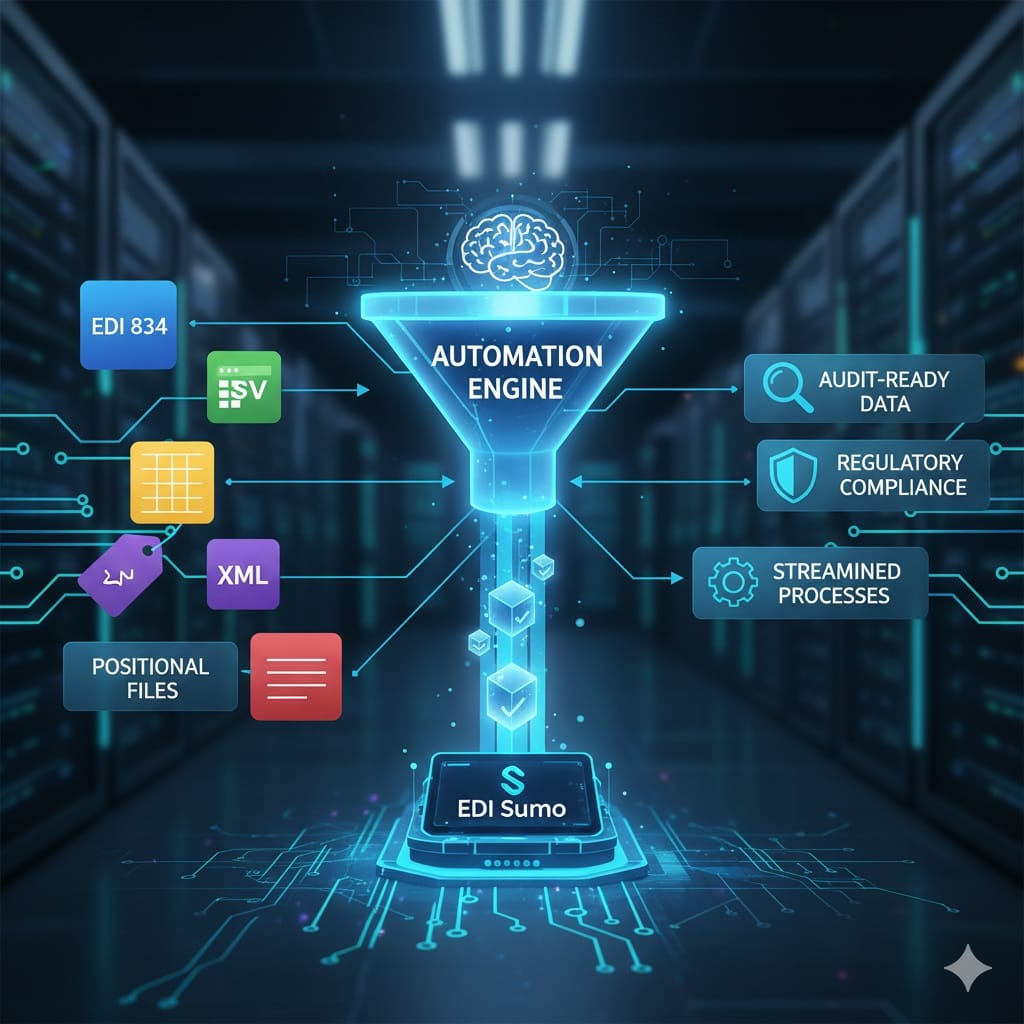
It's worth noting that in our experience, handling multiple data formats (EDI, CSV, XML) and legacy system integration is a sticking point for many payers, which is why modular, format-agnostic tools are crucial for full automation.

How to Prepare: A 5-Step Roadmap for Payers Ready to Automate
- Assess Your Current Payment Architecture: Take stock of every payment flow including formats used, touchpoints, error rates, and reconciliation process. Involve IT, finance, and operations for a 360-degree view. This baseline is your launchpad.
- Prioritize 835 ERA Standardization: Ensure claims systems and any third-party processors can generate compliant 835 files. Compliance with the ANSI X12 specification and WEDI/SNIP validation is critical, and it's best to start with your highest-volume provider relationships.
- Develop an EFT Transition Plan: Work with your banking partners and payment processors to configure EFT for all payments and communicate change timelines to your provider networks. Parallel runs between checks and EFT can ease the shift, but sticking to a firm transition schedule is key.
- Deploy Real-Time Monitoring: Invest in monitoring tools that detect payment issues, generate instant alerts, and offer real-time dashboards showing cycle times, errors, and provider satisfaction. This continuous feedback loop helps surface and resolve root causes quickly.
- Integrate Provider and Payer Systems: Build secure interfaces with provider RCM systems to enable end-to-end electronic posting and reconciliation of remittance data. For providers with legacy setups, plan for phased onboarding and alternative formats as needed. Incremental wins can drive adoption across your provider ecosystem.
How to Tackle Common Roadblocks
- Legacy Systems: Many payers still rely on mainframes, siloed platforms, or bolt-on applications. Middleware or cloud-based translation layers can help standardize outputs and bridge formats.
- Provider Technology Diversity: Not all providers are ready for automated posting, so maintaining alternative remittance formats and ongoing provider education is key during the transition.
- Organizational Change: Staff who formerly handled manual reconciliation will need new responsibilities. Invest in training and role shifts toward exception-handling, process monitoring, and analytics.
The Payoff: Financial and Strategic Advantages of True Claims Payment Automation
Based on what we and other industry leaders see, payers who modernize their payment infrastructure can expect:
- Up to 75% faster reconciliation cycles, freeing up finance and customer service resources for higher-value work
- Reduced payment errors and disputes, which means lower support costs and better provider relationships
- Enhanced compliance with regulatory requirements (audit trails, timing standards, HIPAA), lowering exposure to fines or penalties
- Accelerated payments to providers, helping them manage cash flow and improving payer reputation through reliability
These improvements aren’t theoretical. They’re being realized by payers, big and small, who embrace data standardization, automated monitoring, and deep provider integration through solutions engineered for the modern EDI landscape.
Taking the Next Step With a Modern EDI Partner
If achieving seamless payment automation—including 835/EFT alignment—sounds daunting, you aren't alone. The good news is that you don't have to reinvent the wheel. Using platforms that bring unified dashboards, multi-format translations, and automated audit trails can substantially cut your timeline and risk.
Conclusion
Claims payment automation is no longer optional. It’s the most critical lever for cutting costs, hitting regulatory targets, and building a provider network that actually wants to do business with you.
Ready to put these principles into action and see how EDI Sumo can help your organization move faster with less friction? Get in touch for a closer look at our approach to putting EDI power back in the hands of business users and claims teams.





.png)

.png)


.png)

