

837 NTE Segments: When Claim Notes Help and When They Trigger Rework

.png)

The NTE segment in the 837 claim is a double-edged sword for payers. Used selectively, it provides just enough context to prevent unnecessary rejections, pends, and avoidable follow-up on claims. Used as a "catch-all" for missing or messy data, it becomes a source of downstream rework, SLA risk, and compliance headaches. EDI Sumo helps payer operations leaders implement NTE rules and visibility across all 837 feeds, ensuring that claim notes drive efficiency rather than creating work for IT and claims teams. This comprehensive guide explains where NTE segments genuinely add value, where they hurt, and how you can bring your usage under control for cleaner claims workflows.
Executive summary for payer leaders
- The NTE segment is optional in the 837 format, used for both claim and service line notes. While X12 defines its structure, payers must set and enforce usage policies.
- Strategic use—such as timely filing waiver documentation, required caregiver details, or specific telehealth indicators—improves claim outcomes and reduces unnecessary rejections or pends.
- NTE misuse—such as storing diagnosis codes or essential claim details in free text—generates manual review, inconsistent adjudication, and audit friction.
- State and commercial plans increasingly enforce strict requirements for NTE content and format. Noncompliance triggers rejections and process inefficiency.
- Centralized governance and technology to standardize, analyze, and validate NTE segments can reduce NTE-driven rework by a significant margin, as seen by organizations using EDI Sumo.
- EDI Sumo provides enterprise-wide normalization and enforcement of NTE rules across 837 claims, eliminating reliance on raw EDI inspection and reducing IT ticket volume.
Many payers and EDI professionals experience the NTE segment as both a safety valve and a cost center. Providers and trading partners often use the segment to convey context, while operations teams must sift through this free text—sometimes finding gold, often uncovering more confusion. In this article, you'll find a definitive approach for when to require, tolerate, or restrict NTE, along with tested steps for rolling out proper usage policies across your enterprise.
What is the NTE Segment in 837 Files?In the X12 837 format, the NTE segment is a free-form note segment that can appear at both the claim level (Loop 2300) and the service line level (Loop 2400). Key components include:
- NTE01: A reference code, most often set to ADD, though some states require additional codes (e.g., CER, DCP) for specific business scenarios.
- NTE02: Up to 80 characters of narrative or structured text, defined by payer policy and companion guides.
The structure is defined in TR3, but actual content requirements are left to payers and their specific implementation guides. Payer organizations must enforce these requirements to prevent variability across provider networks and lines of business.
When NTE Segments Help Claims ProcessingThere are scenarios where NTE is the correct or only place for critical claim information:
Timely Filing Waiver and Exception DocumentationMany plans use NTE to record an approved timely filing waiver, typically as Claim Note in Loop 2300 (NTE*ADD*TFW:1234567890~). EDI Sumo users find this reduces pend volume by enabling systems and teams to bypass standard edits for these exceptions.
Caregiver Details in Home- and Community-Based Services (HCBS)When caregiver information is required for certain Medicaid or waiver services, state guides specify an NTE format such as NTE*ADD*CG:SMITH JOHN|RELATION:SPOUSE~. This provides clarity for the claim examiner and reduces audit risk downstream.
Telehealth and Anonymous Consumer ReportingCertain behavioral health programs require NTE to carry anonymous consumer code and telehealth modifiers (NTE*ADD*aaaaaa|bb~). Enforcing a specific format enables automated processing and clean reporting.
Line-Level Clinical QualifiersFor procedures requiring additional context—such as anesthesia end time—EDI Sumo helps enforce use (NTE*ADD*ANES END:1530~) so that adjudication logic can calculate duration and reimbursement accurately.
When NTE Segments Create Rework or CostImproper NTE use often reflects underlying issues in EDI mapping, provider onboarding, or policy enforcement. Common problems include:
- Storing core claim data in notes: Providers sometimes place ICD diagnosis codes, service modifiers, or place of service in NTE, bypassing structured fields. This leads to adjudication errors and manual review.
- Long, unstructured narratives: When NTE02 is used as a chat box, assessors must read and interpret text, slowing down throughput and increasing compliance risk if inappropriate PHI is included.
- Inconsistent formats between lines of business: Without centralized validation, you may see dozens of allowed NTE patterns, making automation impossible and audit preparation more difficult.
- Conflicting claim-level and line-level notes: If claim-level notes are meant to apply to all lines but line-level notes contradict them, systems and people must interpret, which can lead to inconsistent payment results and disputes.
- Is there an appropriate field for this data elsewhere in the 837? If yes, require that field, not NTE.
- Is the information required for adjudication, compliance, or contract management? If so, define a structured note and enforce with validations.
- Can a reviewer process the note in under 30 seconds? If not, the information likely belongs in an attachment or core field, not NTE.
Successful payers using EDI Sumo define and enforce clear policies that specify:
- Explicitly allowed NTE types (timely filing, specific state waivers, HCBS caregiver details)
- Forbidden uses (diagnosis descriptions, procedure modifiers, site info that belong elsewhere)
- Required formats for each NTE use (NTE01, NTE02 including prefixes and separators)
- Rules for which notes override others in cases of conflict
- Retention and privacy policies for note content
This guidance is shared in companion guides and onboarding, and codified as system rules. EDI Sumo enables organizations to apply these policies centrally, regardless of the inbound format or channel.
Metrics to Monitor NTE Impact- Share of 837 claims and lines containing NTE segments, by product and provider
- Rate of NTE-related rejections and pends (track back to 277CA edits and internal workflow codes)
- Average handling time for NTE-included claims compared to standard claims
- Most frequent NTE patterns to identify training or mapping issues
- Compliance-critical NTE completion (required by contract or regulatory guide)
Many payers find that only a fraction of claims with NTE segments correspond to legitimate business needs. EDI Sumo dashboards, audit trails, and pattern summary tools make these insights visible to operations and IT leadership.
Patterns of Good vs Harmful NTE Use Claim-Level NTE That Prevents a RejectionNTE*ADD*TFW:9876543210~
- Matches expected prefix and format
- System recognizes and bypasses waiver edits
NTE*ADD*ANES END:1530~
- Precisely formatted data parsed for adjudication
NTE*ADD*DX:E119 HTN, MOD:25,59, SITE:LEFT LEG~
- Core data improperly placed, increasing rework
- Obstructs analytics and reliable reporting
EDI Sumo enables payer organizations to visualize, normalize, and enforce NTE segment use across all enrollment, eligibility, and claims data streams. The platform:
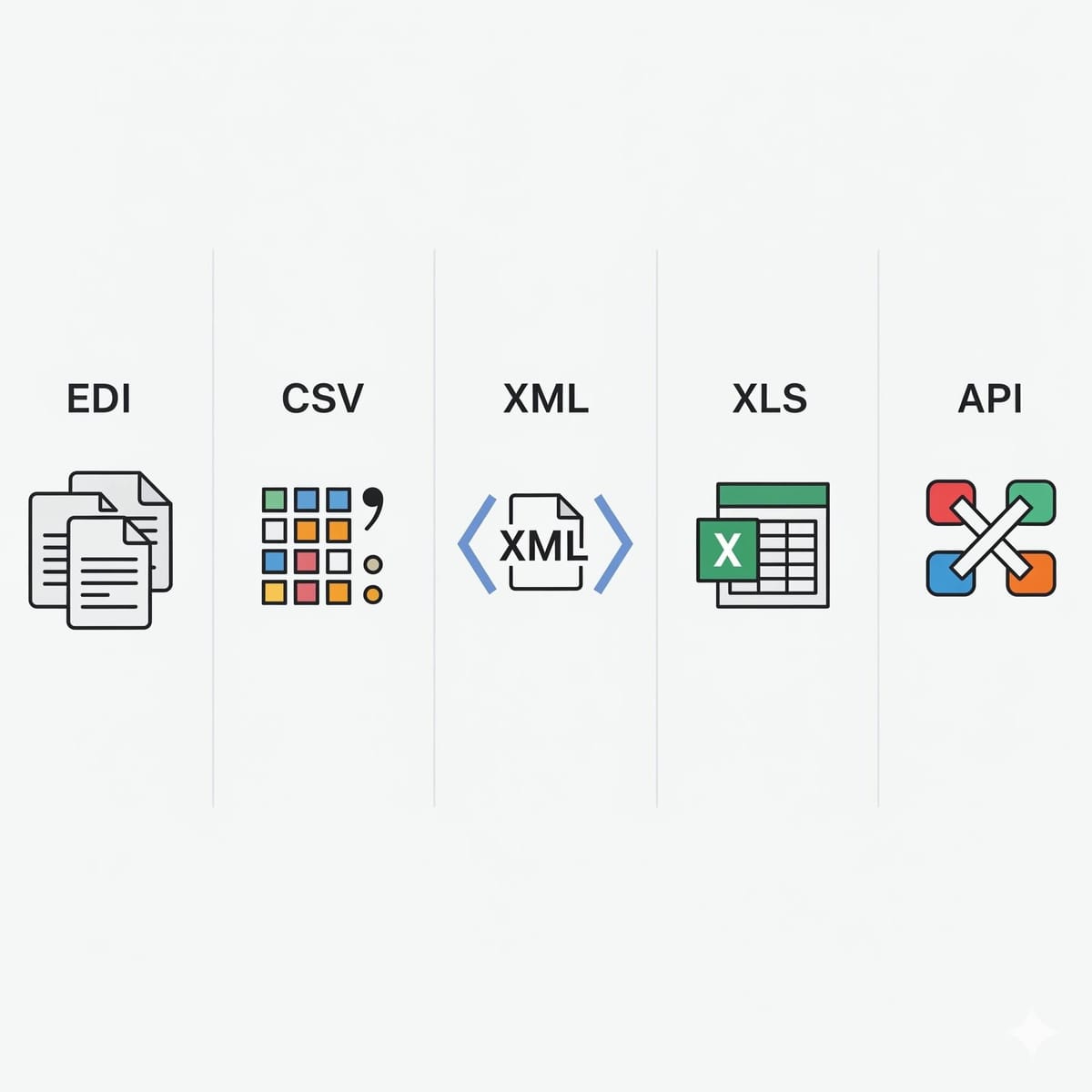
- Ingests 837, 834, 277, 999, and non-EDI flat files so you have consistent NTE data across all formats and trading partners
- Builds configurable validations to align NTE usage with companion guides and business policies, flagging misuse in real time
- Offers dashboards and pattern analysis so you can see which providers, products, or channels drive the most NTE rework
- Empowers customer service and claims teams with direct access to structured claim notes—reducing dependency on IT intervention
- Automates audit trails and monitoring, critical for compliance and transparency
Organizations using EDI Sumo have reported reductions in NTE-driven rework and improved SLAs for claims adjudication, especially where product and state requirements had previously produced conflicting patterns.
6-Month Roadmap: Bringing NTE Under Control- Month 1: Baseline current NTE usage—identify claim volume, top note patterns, and obvious mapping issues
- Month 2: Categorize business-critical notes versus noise—quantify rework and compliance exposure
- Month 3: Draft, refine, and sign off on a unified NTE policy, involving EDI, claims, and compliance teams
- Months 4-5: Deploy validations and rule-based checks in your EDI platform or via EDI Sumo, starting with soft warnings before full rejection
- Month 6: Reassess metrics, adjust patterns as needed, and prepare internal/external training materials
Even large multi-plan payers can expect substantial improvements in NTE quality and a reduction in rework within a couple of planning cycles.
FAQs for Payers on 837 NTE Segment UsageShould NTE ever contain required claim data?
Only if your companion guide requires this and there is no appropriate structured field. For regulated use cases—such as state-mandated caregiver reporting—follow the enforced format. Otherwise, insist on the core segment for essential claim elements.
Should we ban NTE altogether?
A blanket ban can break claims pipelines that depend on state or line-of-business requirements. Instead, maintain a focused allow list with validation for format, content, and context.
How are NTE issues reflected in acknowledgments and error files?
NTE errors typically appear as rejections or pend codes in 277CA acknowledgments but do not echo full note text. Proper error mapping and dashboard views (like those in EDI Sumo) make cause and resolution transparent.
Can we analyze NTE content with AI or NLP?
Yes—many payer analytics teams explore NTE usage patterns to drive future edits, audit regimes, and policy change. Standardizing NTE across all feeds is essential for meaningful insights. EDI Sumo’s normalization features greatly accelerate this capability.
The NTE segment is not going away. It is a flexible, but risky tool. Whether it remains a compliance and operational drain or becomes an efficient claims accelerator depends on disciplined data governance and powerful EDI tools.
If you want to visualize your NTE patterns, enforce payer-level note rules, and make claim notes accessible to business teams, EDI Sumo provides the platform and know-how. To explore real data ownership, improvement strategies, and tailored workflows for your products, you can connect with EDI Sumo at 877-551-9050 or info@edisumo.com for a discussion or demo.
For further reading on related claims validation processes and EDI policies, you may also find value in our detailed post on EDI 837 transaction explained for payers and our guide to EDI rejection triage.




.png)

.png)


.png)

